Table of Contents >> Show >> Hide
- Why Vintage Light Fixtures Still Shine
- Vintage vs. Antique vs. Reproduction: Know What You’re Buying
- Safety First: Wiring, Codes, and UL Ratings
- Where to Shop for Vintage Light Fixtures
- How to Evaluate a Vintage Fixture Before You Buy
- Installing Vintage Fixtures in a Modern Home
- Styling Ideas: Using Vintage Lighting Room by Room
- Common Mistakes to Avoid with Vintage Light Fixtures
- Real-World Experiences with Vintage Light Fixtures
- Conclusion: Let Your Old House (or New House) Shine
There’s a special kind of magic that happens when you flip a switch and a century-old fixture flickers to life in your living room. It’s like inviting history to happy hour. Vintage light fixtures don’t just brighten a roomthey add character, craftsmanship, and a little bit of drama that brand-new catalog lights can’t quite fake.
But buying and using vintage lighting isn’t as simple as grabbing the prettiest chandelier at the flea market and screwing in a bulb. There are real safety issues, sizing mistakes to avoid, and style choices that can make your home feel curated and charmingor like a prop warehouse from a time-travel movie.
In the spirit of This Old House, this guide walks you through how vintage fixtures work in modern homes: what to look for when you’re shopping, how to handle wiring and safety, and smart ways to mix antique lighting into today’s interiors without blowing a fuse (literally or aesthetically).
Why Vintage Light Fixtures Still Shine
Before LED strips and smart bulbs, lighting was a craft. Vintage and antique fixtures were often made from solid brass, bronze, hand-cut glass, or porcelain. The detailscast finials, hand-etched globes, real patinaare the sort of things that would cost a small fortune to reproduce today.
Beyond looks, vintage lighting offers:
- Quality materials: Heavy metal, thick glass, and solid workmanship that outlasts fast-fashion lighting.
- Sustainability: Reusing existing fixtures keeps them out of landfills and reduces demand for new manufacturing.
- Uniqueness: You’re less likely to walk into a friend’s house and see the same fixture you got on “Super Flash Sale Tuesday.”
- Historic charm: In older homes, period-appropriate fixtures tie the architecture together like good trim or original doors.
Designers also love vintage lighting because it instantly adds depth. A single antique pendant in a modern kitchen can make the space feel collected instead of copy-pasted from a catalog.
Vintage vs. Antique vs. Reproduction: Know What You’re Buying
When you start shopping, you’ll see a jumble of termsvintage, antique, retro, “vintage-inspired.” They aren’t just marketing fluff; they can hint at age, value, and how much work the fixture may need.
Basic terminology
- Antique: Generally 100 years old or more. Think early 1900s gas-and-electric fixtures, Art Nouveau, or early Art Deco pieces.
- Vintage: Usually 20–99 years old. Mid-century modern pendants, 1960s swag lamps, and 1970s smoked-glass globes fall here.
- Retro or vintage-style: Newly made fixtures that mimic older styles. They’re typically up to modern electrical codes, but you don’t get the same patina or history.
There’s nothing wrong with a good reproductionespecially when you want the look of a 1920s schoolhouse pendant without worrying about brittle cloth wiring. Just be clear on what you’re paying for: authenticity, aesthetics, or a mix of both.
Common types of vintage fixtures you’ll see
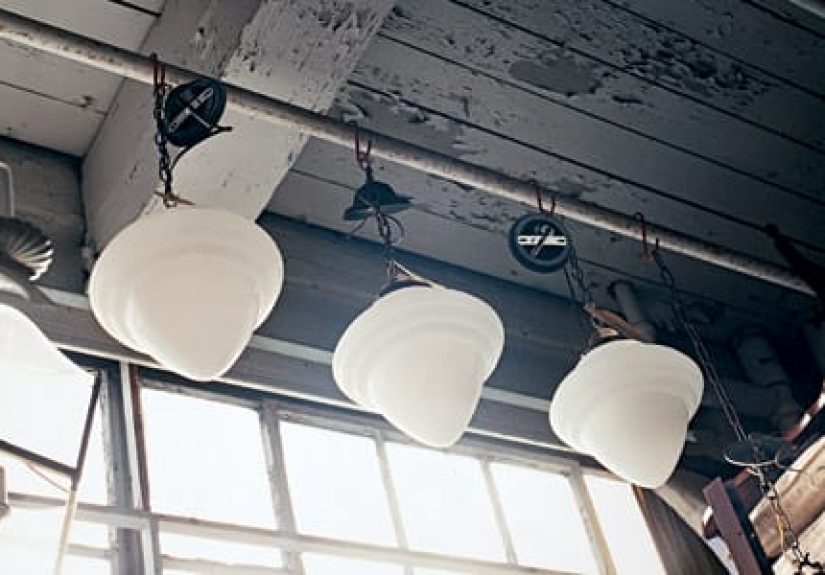
- Schoolhouse pendants: Opal glass shades on simple metal hardware; perfect for kitchens, hallways, and mudrooms.
- Art Deco and mid-century pendants: Streamlined shapes, frosted or ribbed glass, geometric or atomic lines.
- Chandeliers: From ornate crystal tiers to rustic wrought iron designs that originally hung in dining rooms and parlors.
- Wall sconces: Great for baths, hallways, and bedrooms; many older homes used pairs of sconces instead of one big overhead fixture.
- Industrial fixtures: Enamel factory lights, explosion-proof cage fixtures, and bulkhead lightsfantastic for lofts and kitchens.
Safety First: Wiring, Codes, and UL Ratings
Here’s the not-so-glamorous truth: the wiring inside a vintage fixture is usually the weakest link. Rubber insulation can crumble, cloth wiring can fray, and old sockets might not handle modern bulbs safely. That stunning 1920s pendant is useless if it’s a fire hazard.
When rewiring is a must
Plan on rewiring if you notice any of the following:
- Cloth-covered or brittle-looking wires
- Cracks, burn marks, or loose parts around the socket
- No ground wire on a metal fixture
- Evidence of “creative” DIY repairs from decades past (electrical tape holding the universe together)
Professional rewiring typically includes replacing the cord with a modern, UL-rated wire, installing a grounded plug or ground connection, updating the socket and switch, and checking that everything meets current safety standards. In many markets, lamp repair shops and UL-listed restoration companies specialize in this sort of work and charge a modest fee compared to the cost of the fixtureand the cost of an electrical fire.
UL listing and why it matters
UL (Underwriters Laboratories) is a safety organization that tests electrical products. A UL label (or an equivalent testing lab mark) indicates that a fixture, as built, meets specific safety standards. Many original antique fixtures predate UL labeling or lost their labels long ago, but if you’re installing a vintage piece in new construction or planning to go through an electrical inspection, a UL-listed fixture or certified restoration can be essential.
Some restoration shops can rebuild a vintage fixture with UL-listed components and issue documentation that inspectors recognize. This can be especially important in:
- New builds that must pass strict inspections
- Multifamily buildings or rentals
- Wet or damp locations (bathrooms, covered porches, exterior entries)
Hire a pro when in doubt
If your home’s wiring is older (knob-and-tube, cloth-wrapped cable, or ungrounded circuits), combining that with a DIY-rewired antique fixture is asking for trouble. Many electricians are happy to install vintage fixtures as long as they’re properly rewired. If you’re dealing with a converted gas fixture, multi-arm chandelier, or anything involving heavy weight or odd mounting hardware, bringing in a professional isn’t overkillit’s common sense.
Where to Shop for Vintage Light Fixtures
The fun part is the hunt. The less fun part is realizing that “bargain of the century” needs $300 worth of repair. Knowing where to shopand what each source is good forcan save you money and heartbreak.
Architectural salvage yards
Salvage yards are gold mines for period-appropriate fixtures pulled from old houses, schools, theaters, and factories. You’ll often find:
- Matching sets of sconces for a hallway or bathroom
- Large entry pendants, lanterns, or exterior lights
- Unusual shades and globes you can pair with new hardware
Pros: Great character pieces, often historically accurate for older homes, and you can see the fixture in person. Cons: Wiring is rarely updated, prices can vary wildly, and pieces may be missing parts.
Specialty vintage lighting dealers and restorers
These shops clean, repair, and rewire fixtures before selling them. Some can customize drop length, finish, or shade style. You’ll pay more than at a flea market, but you’re paying for safety and expertise. Many also offer UL-certified work, which is especially helpful for fixtures going into kitchens, baths, or exteriors.
Online marketplaces and auctions
Platforms like eBay, Etsy, Chairish, and online architectural salvage shops offer a huge range of optionsbut you lose the ability to inspect the wiring and weight in person. To shop safely:
- Ask for photos of the wiring, socket, and backplate.
- Check measurements carefully (vintage fixtures can be surprisingly large or small).
- Factor in shipping, especially for heavy chandeliers or fragile glass shades.
Flea markets, estate sales, and thrift stores
These are your best bets for bargains and quirky one-offs. You might find a $15 brass sconce that just needs a new shade and a fresh cord. You might also find a cracked porcelain socket held together by dust and optimism. Go in with realistic expectations and a willingness to walk away.
How to Evaluate a Vintage Fixture Before You Buy
You’ve spotted a beautiful fixture. Before you hand over your money, run through a quick checklist.
1. Check the structure
- Is the frame bent, cracked, or badly repaired?
- Are any arms wobbly or loose?
- Is the canopy/backplate intact and large enough to cover your junction box?
2. Inspect the finish
Patina is good; flaking lead paint is not. Light tarnish on brass can be cleaned or left for character. Deep corrosion on steel or pot metal may mean structural weakness or a long restoration project.
3. Examine glass and shades
Replacement shades can be expensive and hard to match. Look for chips around the fitter (the edge that sits in the holder) and hairline cracks. If one shade is missing, make sure you can live with mismatched replacements or the hunt for a matching set.
4. Think about scale and clearance
Many old fixtures were designed for taller ceilings or smaller rooms than modern layouts. Measure:
- Total drop: From ceiling to bottom of fixture.
- Fixture width: Especially important for hallways and dining spaces.
- Headroom: For walkways, you generally want at least 7 feet of clearance.
5. Consider bulb type and brightness
Some antique fixtures were never meant for high-wattage bulbs. Plan to use LEDs, which put out more light with less heat and lower wattage. Look at how many sockets there are and whether you’ll need supplemental lighting (like table lamps or sconces) in the same space.
Installing Vintage Fixtures in a Modern Home
Once your fixture is safely rewired and inspected, it’s time for the fun part: putting it to work.
Match the fixture to the room’s job
- Task lighting: Over kitchen islands or in reading nooks, choose fixtures that direct enough light downward.
- Ambient lighting: Chandeliers and semi-flush mounts provide general illumination for living rooms and bedrooms.
- Accent lighting: Sconces and small pendants highlight artwork, mirrors, or architectural details.
Be mindful of moisture and outdoor exposure
Not every vintage fixture belongs in a bathroom or on a porch. Damp and wet locations require specific ratings and more robust construction. If you’re determined to use a vintage piece in a bathroom, keep it away from direct shower spray and ask a pro about the safest location and wiring approach.
Blend old fixtures with modern bulbs
LED bulbs are your secret weapon. You can choose warm color temperatures (2700–3000K) to mimic the soft glow of old incandescent bulbs while keeping your electric bill and heat output down. For clear glass shades, filament-style LED bulbs give you that classic exposed filament look without the energy waste.
Styling Ideas: Using Vintage Lighting Room by Room
Entryway
A vintage lantern or small chandelier sets the tone the second someone walks in the door. Pair it with a simple console table and a mirror, and you’ve just created a welcoming, layered first impression. In older homes, swapping a builder-grade flush mount for a period-style pendant can instantly make the foyer feel more intentional.
Kitchen
Try a pair of schoolhouse pendants over the island or a row of industrial enamel shades over a long counter. Mix them with modern under-cabinet lighting so you get both style and functionality. A vintage fixture over the breakfast nook can make a small corner feel like a cozy café.
Dining room
An antique chandelier over the table is a classic movejust size it correctly. A common rule of thumb is that the chandelier diameter in inches should be about the width of the table in feet (for example, a 36-inch-wide table pairs well with a 24–30 inch chandelier). Add a dimmer switch so you can go from bright for homework to candlelit mood lighting for dinner.
Bathroom
Vintage-style sconces on either side of the mirror provide flattering, even light. Just ensure they’re safe for the space and that drippy, fabric shades aren’t too close to water. Your electrician can help you choose the right location and backplate mounting.
Bedroom and living spaces
In bedrooms, a vintage flush mount or small chandelier adds charm without eating up too much headroom. In living rooms, combine a vintage ceiling fixture with modern floor and table lamps to layer light and keep the room flexible for everything from movie nights to reading marathons.
Common Mistakes to Avoid with Vintage Light Fixtures
- Ignoring wiring: “It lights up!” is not the same as “it’s safe.” Always assume old wiring needs attention.
- Overloading circuits: Adding a big chandelier with multiple bulbs to an already overloaded circuit can cause tripping and overheating.
- Going too matchy-matchy: A vintage fixture in every room can look like a stage set. Mix in modern lighting for balance.
- Buying purely on looks: If a fixture is the wrong size, wrong scale, or impossible to mount, no amount of beauty will fix it.
- Forgetting maintenance: Crystal and glass attract dust. Make sure you’re willing to clean all those little droplets once in a while.
Real-World Experiences with Vintage Light Fixtures
The “vintage lighting journey” usually starts the same way: you fall in love with a piece, drag it home, and then realize you have questionsso many questions. Homeowners, DIYers, and old-house lovers have shared a lot of similar experiences that are worth learning from.
The “mystery chandelier” story
One common tale goes like this: someone spots a beautiful brass chandelier at an estate sale for a steal. It’s dusty, a little crooked, and missing a couple of candle sleeves, but the bones are gorgeous. They bring it home, hang it temporarily from a hook in the garage, and discover that only half the sockets worksometimes. A visit to a local lamp shop reveals frayed wires, a cracked center body, and mismatched sockets from several past “repairs.”
The fix? A full professional rewiring, new candle sleeves, and a straightening of the frame. The cost is more than the purchase price, but the result is a safe, unique chandelier that still comes out cheaper than many high-end new fixtures. The lesson: factor potential restoration into your budget, and don’t assume that “working” means “safe.”
Using vintage lights to tell your home’s story
Owners of older homes often report that adding period-appropriate lighting is the moment the house feels truly “right.” A 1920s bungalow with a simple vintage schoolhouse light in the hallway, a glass-shaded pendant in the breakfast nook, and brass sconces in the bathroom suddenly feels cohesive. The fixtures echo the age of the home while still working with modern paint colors, tile, and hardware.
In newer homes, people use vintage lighting to counteract what they sometimes call the “builder basic” feel. A 1990s or 2000s house with boxy, generic fixtures can instantly look more custom when you swap in an antique lantern at the entry, a mid-century pendant in the dining room, or industrial sconces flanking the fireplace.
The scale and clearance surprise
Another lesson that comes up again and again: always measure. Homeowners sometimes fall for huge theater or school fixtures, only to realize later that their ceilings are too low and the fixture feels like a UFO hovering over the room. Others discover that a petite, darling pendant looks lost over a large dining table.
Experienced buyers keep a small tape measure in their bag and note ceiling heights at home. They’ll even bring a quick sketch with room dimensions to flea markets and salvage yards so they can check scale on the spot. It’s not glamorous, but it’s the difference between “wow” and “why did we do that?”
Mixing old and new without chaos
People who’ve lived with vintage lighting for years often describe a balancing act. Too much old can feel cluttered; too much new can feel flat. The sweet spot is usually a mix: one statement vintage piece in each key space, supported by simpler, modern fixtures elsewhere.
For example, a homeowner might use:
- A vintage glass pendant over the kitchen sink
- New but classic-style island pendants
- Under-cabinet LED strips for modern function
Or they’ll pair an ornate vintage chandelier in the dining room with streamlined, new sconces in the adjacent hallway. The old pieces become focal points instead of visual noise.
Living with maintenance and quirks
Finally, the people who are happiest with their vintage light fixtures understand that these pieces aren’t “set it and forget it.” Crystals need cleaning, shades need dusting, and screws sometimes need tightening. But those small moments of care become part of the relationship with the housealmost like polishing a favorite piece of furniture or oiling an old wooden door.
The payoff is big: when guests walk in and say, “Wow, where did you get that light?”, you get to tell a storyabout the flea market find, the salvage yard hunt, the restoration process, and how that fixture turned your not-so-special ceiling box into a highlight of the room.
Conclusion: Let Your Old House (or New House) Shine
Buying and using vintage light fixtures isn’t just about saving money or being sustainableit’s about giving your home personality. With a little knowledge, a healthy respect for electrical safety, and an eye for proportion, you can bring old fixtures into modern spaces in a way that feels effortless and intentional.
Whether you live in a 120-year-old farmhouse or a brand-new townhouse, a well-chosen vintage fixture can ground the room, tell a story, and make every time you flip the switch feel just a bit more special. That’s the kind of everyday magic This Old House has always celebratedand now you can, too, every time the lights come on.