Table of Contents >> Show >> Hide
- What Exactly Is a Leather Mid Credenza?
- Why Leather + Mid-Century Is a Match Made in Design Heaven
- Where a Leather Mid Credenza Works Best
- Buying Guide: How to Choose the Right Leather Mid Credenza
- How to Style a Leather Mid Credenza Like a Designer
- Care & Maintenance: Keep the Leather Beautiful
- Common Mistakes (That Make a Great Credenza Look… Not Great)
- If Leather Isn’t Right for You: Similar Looks, Different Materials
- Final Take
- Real-World Experiences: Living With a Leather Mid Credenza (Extra)
A leather mid credenza is the furniture equivalent of a great haircut: it makes the whole room look more expensive,
even if you’re wearing sweatpants and your “art” is a framed takeout menu. It’s low, sleek, storage-packed, andwhen leather enters
the chatunexpectedly warm and tactile.
This guide breaks down what a leather mid-century credenza is, why it works, how to shop for one without regret, how to style it like a
grown-up, and how to care for leather so your credenza ages like a classic watch (not like a banana).
What Exactly Is a Leather Mid Credenza?
Let’s translate the name into real life:
- Credenza: a long, low storage cabinet often used in dining rooms, living rooms, or offices.
- Mid-century: inspired by mid-century modern designthink clean lines, functional shapes, and legs that look like they do Pilates.
- Leather: typically leather-wrapped door fronts, panels, or drawer faces (sometimes the top), paired with wood or metal framing.
In other words: a mid-century modern credenza that swaps some “all wood, all the time” vibes for the richness of leather. It’s part storage,
part statement piece, part “yes, I have my life together,” even if the inside is 70% mystery cords.
Why Leather + Mid-Century Is a Match Made in Design Heaven
1) Texture that doesn’t try too hard
Mid-century furniture tends to be visually calmsmooth planes, simple geometry, minimal ornament. Leather adds just enough texture to keep that calm from
turning into “did we forget to decorate?”
2) Patina: the glow-up you don’t have to schedule
Quality leather can develop character over time (a gentle softening, subtle tonal shifts, that “lived-in but loved” look). If you like materials that
become more interesting as they age, leather is basically your soulmate.
3) Warmth that balances modern spaces
Leather and wood together can soften the edges of a very modern room full of hard surfacesstone, glass, metal, big screens, and minimalist walls.
A leather credenza can keep the space from feeling like an upscale waiting room.
Where a Leather Mid Credenza Works Best
Living room: media console with grown-up energy
A credenza’s low profile makes it a natural media console. Look for cord cutouts, ventilated backing (or enough interior space for airflow),
and a top deep enough for a soundbar base or TV legsunless you’re wall-mounting.
Dining room: buffet, bar, and “where did we put the good napkins?”
In a dining room, a credenza acts like a buffet/sideboard hybrid: store plates, linens, serving pieces, and that one fondue set you swear you’ll use again.
Leather fronts can elevate the whole zone without needing a full formal dining set.
Entryway: instant “welcome home” moment
If you have the depth clearance, a credenza can work as an entry landing pad: keys, mail, sunglasses, and a tray that makes it look intentional.
Bonus: the storage hides the stuff you don’t want guests to see five seconds after they walk in.
Home office: the secret weapon of tidy backgrounds
Behind a desk or along a wall, a credenza is perfect for files, printers, and supplies you want nearby but not photobombing every video call.
A mid-century credenza keeps the office looking designed, not “I live inside my inbox.”
Buying Guide: How to Choose the Right Leather Mid Credenza
Step 1: Nail the size (before you fall in love)
- Length: common sizes range from about 50–80 inches. Bigger rooms can handle longer; small rooms benefit from slimmer lengths.
- Height: credenzas are usually lower than many sideboards. Decide if you want it to sit under art, under a TV, or stand alone.
- Depth: for media use, confirm it can accommodate devices and cable bends (especially if it sits close to the wall).
- Clearance: measure door swing space and walkway paths. Nothing ruins the vibe like a cabinet door that can only open 37%.
Step 2: Choose the storage layout that matches your life
Different interiors serve different habits. Ask yourself what you’re actually storing:
- Adjustable shelves for flexible storage (bar setup today, board games tomorrow).
- Drawers for small clutter (remotes, candles, paperwork, the “misc” category that’s doing a lot of work).
- Closed doors if you value calm visuals and hate dusting.
- Open bays if you need easy access for electronics or baskets.
Step 3: Understand the leather (this is where regrets are born)
Leather isn’t one thing. The finish affects look, feel, and maintenance:
- Aniline: softer, more natural-looking, and more prone to showing marks. Gorgeous, but not “I have toddlers and three pets” easy.
- Semi-aniline: still natural-looking, but with some protectionoften a practical sweet spot.
- Pigmented/protected: more durable and lower-maintenance, typically better for busy households.
If the credenza’s leather is the star of the show, ask how it’s finished and how it’s meant to be cleaned.
Also clarify whether it’s genuine leather, top-grain, full-grain, bonded leather, or faux leather.
Those labels can mean very different things for longevity and feel.
Step 4: Look at the frame and build like you’re judging a sandwich
A credenza is a big rectangle. If it’s flimsy, it will flex, rack, or sagespecially as it fills with heavy items.
Look for:
- Stable materials (solid wood, quality plywood, reputable veneers) and legs that don’t wobble.
- Doors and hardware that feel solid, align well, and don’t scrape.
- Soft-close hinges if you enjoy peace and quiet (and intact fingers).
- Weight capacity if you plan to place a TV or heavy objects on top.
Step 5: Plan the room pairing
A leather mid-century credenza plays nicely with walnut, oak, brass, black metal, linen, bouclé, and stone.
It also loves contrastlight walls with dark leather, or dark walls with caramel leather. Just decide whether you want it to blend in or stand out.
How to Style a Leather Mid Credenza Like a Designer
Use height on purpose
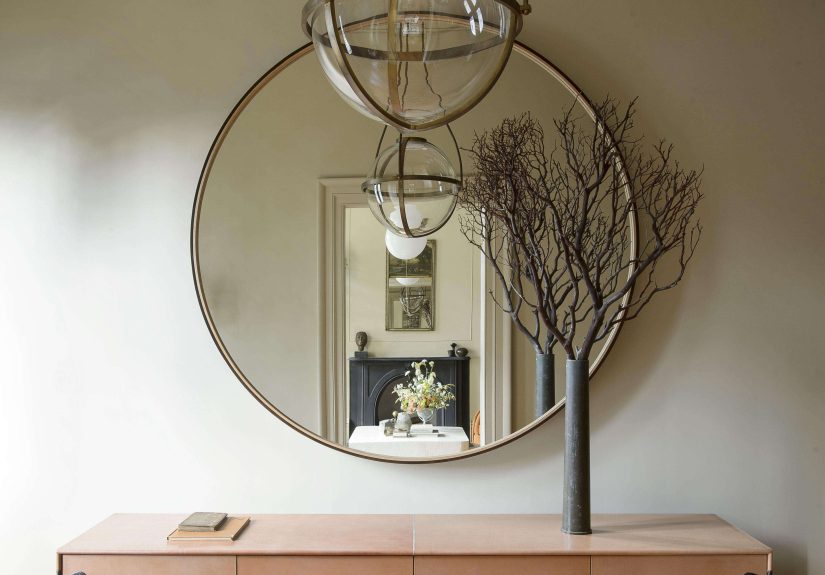
Credenzas are low, so the eye often wants something above them: a large piece of art, a mirror, or a bold wall feature.
The goal is to make it feel anchored, not like it showed up early to the party and is waiting for everyone else.
Create a “moment,” not a museum
- One tall item (lamp or vase)
- One medium item (stack of books or sculpture)
- One grounding item (tray, bowl, or low greenery)
Keep the leather visible
If you bought a leather-front credenza, don’t hide the best part behind a marathon of tiny objects.
Leave breathing room so the leather and lines can shine.
Two easy styling formulas
Formula A: Calm + modern
- Lean a large framed print above the credenza
- Add a linen-shade lamp on one side
- Use a stone tray for remotes and matches
- Finish with a single sculptural vase
Formula B: Warm + collected
- Hang a round mirror centered above
- Place a ceramic bowl for keys/mail
- Add two stacked books and a small plant
- Include one personal object (framed photo, vintage piece)
Care & Maintenance: Keep the Leather Beautiful
Weekly: dry dusting (your easiest win)
Use a soft, dry microfiber cloth to remove dust. Dust seems harmless until it teams up with friction and turns into micro-sandpaper.
Monthly: gentle clean, then dry
For light grime, use a slightly damp cloth and a leather-safe cleaner (or a mild soap-and-water mix if the manufacturer approves).
Always test in a hidden spot first. Wipe gently, then dry with a clean, soft clothno soaking, no scrubbing like you’re mad at it.
Spills: faster is always better
Blot immediately (don’t rub), and avoid dumping water on the area. If a stain starts to set or you’re dealing with ink, proceed carefully:
some DIY methods can strip color or damage protective coatings. When in doubt, a leather-specific product or professional repair is worth it.
Conditioning: a little, occasionally
Many leather-care guides recommend conditioning periodically (often around every 6–12 months, depending on leather type, climate, and use),
but follow the care instructions for your specific piece. Over-conditioning can leave residue; under-conditioning can leave leather dry and dull.
Placement matters more than people admit
Keep leather away from direct sunlight and heat sources (radiators, vents, fireplaces). Sun and heat can dry leather and contribute to fading or cracking.
If your layout forces sunlight exposure, add curtains, UV film, or rotate décor occasionally so one section isn’t always taking the hit.
Common Mistakes (That Make a Great Credenza Look… Not Great)
- Overloading the top: the credenza starts looking like a storage shelf with a secret identity.
- Ignoring cord strategy: visible cable tangles can undo the whole “clean mid-century” vibe.
- Using harsh cleaners: alcohol-heavy or abrasive products can dry leather and damage finishes.
- Putting it in direct sun: leather is durable, not invincible.
- No wall anchoring when needed: if you’re placing a TV on top or have kids climbing, stability becomes non-negotiable.
If Leather Isn’t Right for You: Similar Looks, Different Materials
- All-wood mid-century credenza: timeless, easier maintenance, still warm.
- Cane or woven panels: adds texture and vintage character, great for airy rooms.
- Lacquered fronts: sleek, modern, often easier to wipe clean.
- Metal + wood: more industrial, still works with mid-century lines if kept simple.
Final Take
A leather mid credenza is a rare furniture win-win: it brings storage and style without eating up visual space.
Choose the right size, understand the leather finish, prioritize a solid build, and style it with restraint so the materials can do the talking.
Care for it gently and consistently, and it’ll keep your room looking intentionalpossibly even on laundry day.
Real-World Experiences: Living With a Leather Mid Credenza (Extra)
People often buy a leather mid-century credenza for the looks, and then keep loving it for the way it quietly fixes everyday clutter problems.
One common “aha” moment happens about a week after it arrives: the room instantly feels calmer because the surface area is large enough to be useful,
but the cabinet space is what really changes behavior. Remotes, chargers, paperwork, and the random items that float around a living room finally get a home.
The funny part is how quickly you start protecting that clean top like it’s a sacred altar“Please don’t put your gym bag on the leather.”
Another experience people mention is how leather changes the vibe compared to an all-wood piece. Wood is classic, but leather reads a little more tailored.
It’s the difference between a crisp blazer and a cozy sweaterboth great, different energy. In mixed-material rooms (think metal coffee table, stone counters,
neutral sofa), the leather-front credenza becomes a warm bridge that makes everything feel more intentional. And because mid-century shapes are so clean,
the leather doesn’t look fussy; it looks like a deliberate texture choice.
If you use the credenza as a media console, real life will teach you two things fast: cord management is your best friend, and ventilation is not optional.
People who plan for cords (power strip mounted inside, cable clips, tidy routes through cutouts) end up with a setup that looks “designed.”
People who don’t… end up with the classic “octopus behind the TV” situation. The good news is that a credenza makes it easier to hide the mess than most
open TV standsjust don’t pack electronics so tightly that they can’t breathe.
Owners in sunny rooms often discover that placement matters more than they expected. Leather can be resilient, but sustained direct sun can cause fading
in a way that’s not dramatic overnightmore like a slow-motion “why is this side lighter?” mystery. The practical fix is usually simple: shift the piece,
add a curtain, or use UV protection on the window. The lesson is that leather rewards small preventative habits. The more you treat it like a natural material,
the more it stays handsome.
Maintenance is also less intimidating than it soundsonce you get into a rhythm. People who dust it weekly and wipe small marks quickly tend to report that
the leather stays rich and even. Those who ignore it for months often notice the surface getting dull or dry, then scramble with too much product at once.
The “experience-based” takeaway is that leather likes consistency, not drama. Gentle cleaning, light conditioning when needed, and a soft cloth beat
aggressive scrubbing every time.
Finally, there’s the styling experience: the first attempt is usually “I put 27 things on top and now it looks like a thrift store shelf.”
Then you editone lamp, one tray, one statement object, and suddenly it looks magazine-ready. Leather especially benefits from breathing room.
The best-looking setups tend to leave part of the top empty on purpose, letting the material and silhouette be the feature. In other words:
sometimes the most stylish thing you can put on your credenza is… nothing. (And yes, that is deeply annoying, but it works.)