Table of Contents >> Show >> Hide
- How Cartoons Disappear: The Rude, Boring Reasons Behind a Very Dramatic Loss
- The Legends: Characters Time Erased (and the Clues They Left Behind)
- Oswald the Lucky Rabbit: The Star Who Got “Traded” Like Sports Talent
- Bosko: The Original Looney Tunes Star Who Got Upstaged by the Future
- Buddy and Beans: The “Almost” Icons Before Porky Took the Crown
- The Noid: When an Ad Mascot Became a Pop-Culture Gremlin (and Then Left the Room)
- The California Raisins: The Band That Sold Fruit and Then Vanished Like a Tour Bus at Dawn
- Cool Spot: The 7UP Dot Who Became a Character (and Then a Memory)
- Why These Lost Cartoon Icons Still Matter
- How to (Re)Discover Characters Time Left Behind
- Conclusion: Time Can Erase, But We Can Rewind
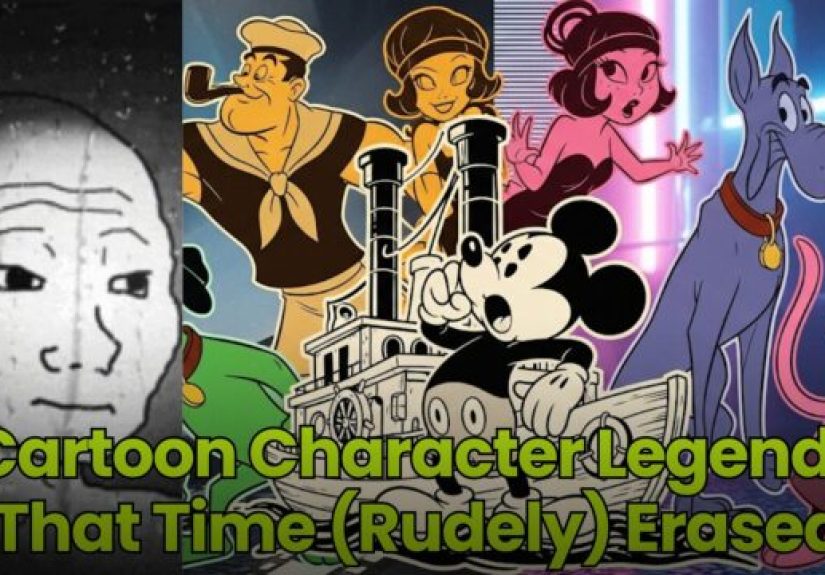
Cartoon characters are supposed to be immortal. They don’t age, they don’t pay taxes, and they can get hit by an anvil every Tuesday without filing a single insurance claim. And yetsomehowtime still manages to delete them. Not with a dramatic villain monologue, either. More like a studio memo, a rights dispute, a shifting cultural mood, or one executive saying, “What if we… never speak of this again?”
This is a love letter (with a few playful side-eyes) to the forgotten cartoon characters who were once everywhereon screens, cereal boxes, lunchboxes, and in your brain at 2 a.m.and then got quietly ushered into pop-culture witness protection. We’ll look at why they vanished, what they meant, and how some of them are sneaking back into the modern world like they just took a very long bathroom break.
How Cartoons Disappear: The Rude, Boring Reasons Behind a Very Dramatic Loss
1) Rights, contracts, and corporate musical chairs
In animation history, “beloved character” and “legally uncomplicated” rarely share the same room. A character can be wildly popular and still vanish because the wrong company owns the wrong piece of paper. When ownership changes hands, a cartoon icon can go from “national treasure” to “we can’t stream this without summoning twelve lawyers and a cursed fax machine.”
2) The distribution trap: when reruns stop running
Most characters don’t die. They just stop getting reruns. And when you’re not on broadcast blocks, cable rotations, VHS shelves, DVDs, or a streaming menu, you’re basically living in an attic labeled “miscellaneous.” Once Saturday morning cartoons faded and kids’ viewing habits shifted, entire casts of characters lost their main habitat: the weekly ritual of pajamas, sugar cereal, and parental indifference.
3) Culture changesand sometimes it’s a necessary edit
Some characters didn’t just fade; they were actively removed because they were built on stereotypes that aged like milk in a hot car. That’s not “cancel culture,” it’s “we learned something.” The catch is that sometimes the cleanup also buries historically important context. The result is a weird gap where you can’t easily study what happenedonly feel its absence.
4) Preservation: film doesn’t last forever (and neither do archives)
Old animation was stored on formats that weren’t designed for eternity. Between decay, disposal, and neglect, some cartoons became rare not because they weren’t loved, but because nobody prioritized keeping them safe. The tragedy is that “it’s just cartoons” has been used as an excuse to treat pieces of American cultural history like yesterday’s coupons.
The Legends: Characters Time Erased (and the Clues They Left Behind)
Oswald the Lucky Rabbit: The Star Who Got “Traded” Like Sports Talent
Oswald is the kind of character who makes animation history feel like a soap opera written by accountants. He was an early breakout star tied to Walt Disney’s studio erathen he slipped away through contract control and rights ownership, pushing Disney to create a certain replacement mouse you may have heard of. Oswald’s story is less “fell out of favor” and more “lost in the paperwork of destiny.”
What makes Oswald especially fascinating is that he didn’t just remain a footnote. Years later, he became a symbol of legacyproof that intellectual property can carry emotional weight, not just a price tag. In other words: a cartoon rabbit became a corporate priority because the history mattered. And that’s both oddly wholesome and extremely modern.
Bosko: The Original Looney Tunes Star Who Got Upstaged by the Future
Before the Looney Tunes universe turned into the chaotic, rubbery masterpiece we associate with Bugs Bunny and Daffy Duck, it had earlier starscharacters built to carry a series while the studio figured out what its “voice” was. Bosko was one of those foundational figures: an early recurring character who helped set the stage for what Warner Bros. cartoons would become.
So why is Bosko a “forgotten cartoon character” for many viewers today? Partly because the studio evolved fast. Once the big stars arrived, the earliest entries felt like prototypesimportant, but not always promoted. And when old black-and-white shorts fell out of rotation, entire eras of animation history got quietly shoved to the side. Bosko didn’t disappear because he failed; he disappeared because the franchise outgrew its baby photos.
Buddy and Beans: The “Almost” Icons Before Porky Took the Crown
Animation is full of characters who were meant to be the next big thinguntil audiences said, “Nah, we like the side character better.” Early cartoon studios experimented constantly, swapping leads the way modern apps swap button colors. Buddy arrived as a new face in the Looney Tunes lineup after earlier shifts in talent and production. Then came Beans the Cat, positioned for stardom… right up until Porky Pig’s popularity made it clear who the real headliner was.
The lesson here is harsh but useful: pop culture doesn’t reward “planned greatness.” It rewards whoever makes people laugh, quote, and rewatch. Buddy and Beans are historically significant, but significance doesn’t guarantee streaming banners. They’re the early draft charactersvital to the story, but rarely framed on the wall.
The Noid: When an Ad Mascot Became a Pop-Culture Gremlin (and Then Left the Room)
If you grew up around 1980s advertising, you remember the era’s special brand of confidence: everything could be a mascot, and every mascot could be a mini-cartoon universe. Enter the NoidDomino’s claymation troublemaker whose whole purpose was to sabotage your pizza. He wasn’t subtle. He was basically chaos in a red suit with the energy of a toddler who just discovered espresso.
Then the Noid faded. Part of the story involves how easily advertising campaigns can burn bright and burn out. Another part involves the strange reality that pop culture can collide with real life in uncomfortable ways, creating myths and misunderstandings that brands would rather not keep re-airing forever. The Noid is the perfect example of a character who feels legendary precisely because he’s not constantly being reintroduced. He’s an artifact from a loud erawhen marketing was practically a Saturday morning cartoon itself.
The California Raisins: The Band That Sold Fruit and Then Vanished Like a Tour Bus at Dawn
The California Raisins didn’t just sell raisins. They turned raisins into celebrities. That sentence should not be possible, and yet it happened. With clay animation swagger, soulful music, and merchandising muscle, the Raisins became a full-blown cultural momentcrossing from advertising into TV specials, products, and a kind of “you had to be there” pop phenomenon.
So why do they feel erased now? Because advertising icons are built on timing. When the campaign ends, the character’s “home” disappears. They don’t have a narrative universe that naturally keeps growing; they have a marketing budget that eventually gets reassigned. The Raisins are a reminder that cartoon fame can be wildly real and incredibly temporarylike a hit single that still slaps, but hasn’t been played on the radio in years.
Cool Spot: The 7UP Dot Who Became a Character (and Then a Memory)
At some point, America collectively decided that brand logos should also have personalities. Cool Spotliterally an anthropomorphic red dot from the 7UP logorode that wave with an attitude, a pair of shades, and a surprisingly robust presence in 1990s pop culture, including video games. This was the golden age of “advergames,” when snacks and soda didn’t just sponsor entertainment; they were the entertainment.
But ad mascots live and die by brand strategy. When campaigns shift, mascots can vanish overnight. Cool Spot didn’t fall from gracehe simply stopped being needed. And that’s the cruelest erasure of all: not a scandal, not a flop, just a calendar reminder that marketing moved on.
Why These Lost Cartoon Icons Still Matter
They’re a map of American media habits
These characters trace how Americans watched cartoons: the rise of broadcast blocks, the reign of Saturday morning cartoons, the pivot to cable networks, and the current streaming era where “discoverability” depends on algorithms and licensing deals. When a character disappears, it’s often because the pipeline changednot because the character suddenly became unfunny.
They reveal what the industry valued at different times
Some eras valued musical novelty. Some valued mascot-driven advertising. Some valued toyetic designs and fast syndication. You can practically read the business strategy in the character designs. When you study forgotten cartoon characters, you’re not just doing nostalgiayou’re doing media archaeology with better punchlines.
They raise a preservation question we keep dodging
Libraries, archives, and preservation groups have worked hard to keep film history from evaporating, but animation has often been treated as disposable. That’s changingslowly. The more we value classic animation history as art and cultural record, the less likely future characters will be “rudely erased” by neglect, lost formats, or corporate shrugging.
How to (Re)Discover Characters Time Left Behind
Look beyond the streaming home page
Streaming services are great at giving you what’s trending and terrible at giving you what’s historically important. For deep cutsearly shorts, rare runs, obscure seasonsyou’ll often find more success with specialty collections, libraries, archives, or curated film programs than with the “Because you watched…” row.
Follow the archivists, not just the influencers
Animation preservation is a real field. Archivists and historians often surface restored shorts, production notes, and contextual essays that explain why something mattered. If you want to understand how a character vanishedand what that says about the industrythose are your best guides.
Collect context with the content
When an old character makes you wince, don’t just click away. Learn why it was made, how it was received, and why it’s handled differently now. That’s not excusing the pastit’s understanding it. The goal is better media literacy, not a nostalgia filter that pretends everything was perfect in 1957.
Conclusion: Time Can Erase, But We Can Rewind
Cartoon characters aren’t just entertainmentthey’re snapshots of American creativity, commerce, technology, and taste. Oswald’s rights saga shows how business shapes art. Bosko, Buddy, and Beans reveal how quickly studios iterated to find iconic formulas. The Noid, Cool Spot, and the California Raisins prove that “cartoon character” isn’t limited to TV; it can be a marketing myth that becomes real culture for a while. Time erased them rudely, but not completely. The evidence is still thereif you know where to look.
Field Notes: 5 “Been There” Experiences for Hunting Forgotten Cartoon Characters (Without Needing a Time Machine)
1) The thrift-store VHS safari. There’s a particular thrill in finding a battered VHS tape labeled something like “Cartoon Fun Vol. 3” with a handwritten sticker and no useful details. You pop it in (or, realistically, you find someone who still owns a VCR), and suddenly you’re watching a character you haven’t seen since childhoodor one you’ve never heard of at all. The experience is half media discovery, half archaeology, and half “how is this tape still alive?” (Yes, that’s three halves. Welcome to the math of nostalgia.)
2) The deep-dive rabbit hole that starts with one name. You hear “Oswald” or “Bosko” in a documentary clip, and five minutes later you’re reading about studio contracts, animation techniques, and why certain shorts vanished from TV rotation. It’s a surprisingly fun kind of research because it’s not just triviait’s a story with plot twists. You go in looking for a cute character and come out understanding how the entire entertainment industry learned to guard its intellectual property like a dragon guarding a spreadsheet.
3) The “ask an older relative” oral-history moment. If you ever want to feel time bend, ask a parent, aunt, uncle, or older neighbor what cartoons they remember that “nobody talks about anymore.” You’ll get titles you’ve never heard, plus extremely confident descriptions that may or may not be accurate (“I swear there was a cartoon where the dog ran the post office!”). The point isn’t perfect recallit’s realizing how huge these characters were in their own eras, even if modern platforms treat them like they never existed.
4) The museum/archive mindset shift. The first time you browse an archive catalog and see animation listed alongside major historical film, something clicks: this isn’t disposable fluff. It’s cultural documentation. That moment changes the way you watch older shorts. You start noticing techniques, music choices, and how jokes were built for theaters versus television. You also start appreciating the quiet heroism of preservation workbecause “keeping the funny stuff safe” turns out to be a serious mission.
5) The rewatch with adult eyes (and better context). Revisiting a “lost cartoon icon” as an adult is like re-reading a childhood book and noticing the themes you missed. Some characters still charm you instantly. Some feel dated. Some make you cringe. But that range of reactions is the experience. You’re not just consuming contentyou’re tracking how humor, standards, and storytelling evolved. And sometimes you discover the best part: a character you assumed was gone is quietly resurfacing in new projects, references, or restored releases, like they never stopped auditioning for a comeback tour.
In the end, the most satisfying experience isn’t simply finding a forgotten cartoon characterit’s feeling the larger timeline connect. The past stops being a dusty box and becomes a living library. And suddenly, time’s rude erasure looks a lot less permanent.