Table of Contents >> Show >> Hide
- Why Shoes Are the Ultimate “Small Canvas, Big Ideas” Design Object
- What the Virtual Shoe Museum Vibe Gets Right
- How to “Read” an Avant-Garde Shoe Like a Designer
- The Gallery: 30 Extraordinary Shoe “Pics” From a Virtual Shoe Museum Mood Board
- What These Designs Reveal About the Future of Footwear
- How to Enjoy a Virtual Shoe Museum Without Falling Into a 3-Hour Scroll Hole (Good Luck)
- Extra : The Experience of Falling in Love With Extraordinary Shoes
- Conclusion
- SEO Tags
If you’ve ever looked down at your perfectly normal sneakers and thought, “Wow, my feet are underachieving,” welcome. You’re among friends. The Virtual Shoe Museumcurated by Liza Snooklives in that glorious zone where footwear stops being “something you wear” and starts being “a tiny architectural thesis you strap to your body.” It’s part gallery, part design rabbit hole, and part reminder that humans will reinvent the concept of “shoe” every time we discover a new material, a new machine, or a new way to be delightfully extra.
This article is a guided, scroll-worthy tour through the kind of jaw-dropping designs that show up in the Virtual Shoe Museum universeshoes as sculpture, shoes as tech, shoes as personality, and shoes as “please don’t let me trip on a staircase in front of everyone.” Along the way, we’ll unpack why extraordinary shoe designs happen, how designers pull them off, and what to look for when a shoe is clearly auditioning for a museum pedestal. And yes: you’ll get a gallery of 30 “pics”captioned like you’re walking through a virtual exhibit with a friend who can’t stop pointing.
Why Shoes Are the Ultimate “Small Canvas, Big Ideas” Design Object
Shoes are weirdly powerful. They’re tiny objects with huge emotional range. They can signal status, culture, identity, rebellion, profession, nostalgia, and tastesometimes all at once. A shoe can be: “I run marathons,” “I collect vintage,” “I’m in a band,” “I attend art openings,” or “I just wanted to be comfortable and now my arch is in a committed relationship with support.”
From a design standpoint, shoes are also a perfect playground because they force contradictions to coexist: beauty vs. comfort, fantasy vs. physics, tradition vs. innovation. Designers get to bend rulesliterallywhile still respecting the reality that there’s a human body involved. Even the most “unwearable” concept shoe usually contains an argument about form, balance, materials, or meaning.
Three ingredients that make “extraordinary” footwear possible
- New materials: molded polymers, recycled composites, plant-based leathers, and experimental textiles.
- New tools: 3D modeling, scanning, lattice printing, and rapid prototyping that can iterate fast.
- New storytelling: shoes that reference nature, mythology, technology, personal history, or cultural symbols.
What the Virtual Shoe Museum Vibe Gets Right
A great “virtual museum” doesn’t just show objectsit curates connections. The most exciting shoe collections make you notice patterns: how designers treat the heel like a sculpture base, how platforms become architecture, how toe shapes echo different eras, and how materials tell you what a culture (or a decade) was obsessed with.
The Virtual Shoe Museum vibe is all about exploration and surprise: the “how is that even a shoe?” moment, followed immediately by the “wait, but it’s kind of brilliant” moment. That whiplash is the point.
How to “Read” an Avant-Garde Shoe Like a Designer
1) Start with the silhouette
Squint a little (respectfully). Is the shoe built around a classic pump shape with a wild detail, or is it a complete reimagining of where the foot even begins and ends? Silhouette is the first “headline.”
2) Follow the engineering
Where does the weight go? What’s doing the work: the heel, a hidden platform, an internal structure, a curved sole? Extraordinary shoes often look impossible until you spot the support logic.
3) Decode the materials
Materials are never random. Feathers say softness and theater. Acrylic says modernity and display. Lattice structures say tech. Reclaimed materials say sustainability (and sometimes a little bit of “I made this in a genius mood at 2 a.m.”).
4) Ask what the shoe is trying to say
Some shoes are about identity. Others are about humor. Others are about pushing manufacturing forward. A shoe can be a wearable mood board.
The Gallery: 30 Extraordinary Shoe “Pics” From a Virtual Shoe Museum Mood Board
Below are 30 designs and design-types that match the kind of experimental, artistic, and innovative footwear you’ll see in a serious shoe-obsessed collection. Think of each “pic” as a display card: quick to scan, fun to imagine, and dangerously effective at making you want to redesign your entire personality around footwear.
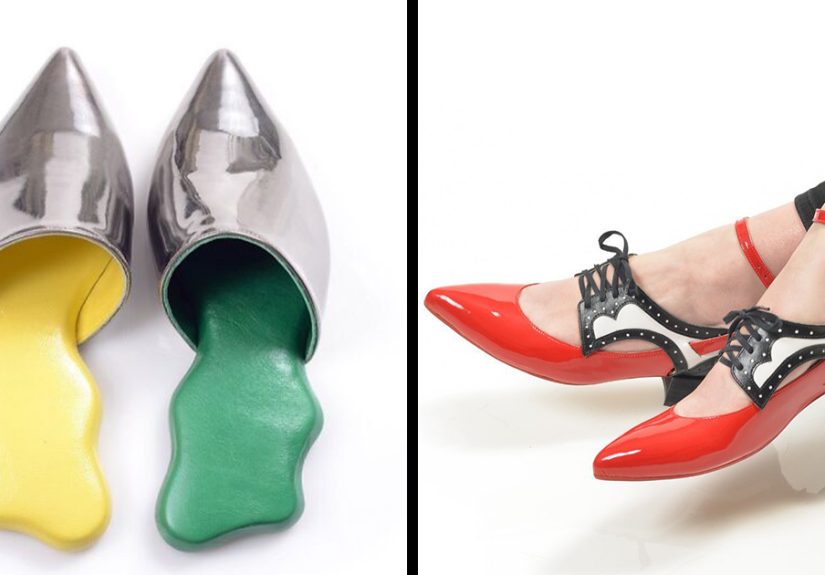
- Pic #1: The coral-lattice heel. A heel that looks grown, not madelike sea coral turned into structure. Often created via computational patterns and 3D printing.
- Pic #2: The “floating” heel illusion. Transparent supports or cleverly placed weight-bearing elements make the wearer look like they’re hovering.
- Pic #3: The architectural wedge. Less “shoe,” more “mini building.” Hard angles, bold planes, and a silhouette that could be a museum model.
- Pic #4: The extreme platform. Height as drama. Platforms turn walking into performanceand yes, they quietly demand respect.
- Pic #5: The sculpted toe box. Toe shapes that bend reality: elongated, squared, split, curled, or carved like a design object.
- Pic #6: The split-toe statement. A design that divides the toe area for a strong identity signalinstantly recognizable, instantly debated.
- Pic #7: The “wearable jewelry” shoe. Gem-like structures, metalwork, or crystal elements that treat the shoe like an accessory first and footwear second.
- Pic #8: The shoe-as-flower. Petal layers, floral textures, or botanical silhouettes that bloom around the foot.
- Pic #9: The feather-and-fantasy pump. Soft, theatrical, and unapologetically extralike the shoe is dressed for a gala you weren’t invited to (yet).
- Pic #10: The origami construction. Folded panels that create volume without heavy structurepaper-inspired geometry, sometimes executed in leather or textiles.
- Pic #11: The painted canvas shoe. A shoe that’s literally a painting: brushwork, illustration, collage print, or hand-done imagery as the main event.
- Pic #12: The “found object” heel. A heel formed from an unexpected itemlike a sculptural artifactturning the shoe into a walking exhibit.
- Pic #13: The mirrored or chrome finish. Reflective materials make the shoe a moving light effect. Great for photos. Also great for spotting crumbs you didn’t know existed.
- Pic #14: The translucent jelly look. Plastic and acrylic styles that feel playful, futuristic, and slightly mischievous.
- Pic #15: The “monster mouth” detail. Teeth-like textures, jagged edges, or organic forms that look alivefashion with a little bite (sometimes literally in shape).
- Pic #16: The sneaker-as-sculpture. A sneaker that uses exaggerated proportions, layered materials, and bold lines to push beyond sport into art.
- Pic #17: The 3D-printed one-piece shoe. A single-material approach where density changes replace stitching and assemblylike the shoe was “grown” by a machine.
- Pic #18: The lattice midsole performance look. Futuristic cushioning structures that are as much about visible engineering as they are about comfort.
- Pic #19: The molded bio-material shoe. A form that pops out of a mold, reducing seams and partsdesign meets sustainability goals.
- Pic #20: The “deconstructed classic.” A traditional loafer or pump with exposed seams, unusual cuts, or intentional incompletenesslike the shoe is showing its blueprint.
- Pic #21: The wearable collage narrative. Prints and graphics that feel personalsymbols, memories, and visual storytelling layered into the upper.
- Pic #22: The illusion boot. A boot that plays with expectationsskin-like panels, trompe l’oeil textures, or shapes that trick your eye from across the room.
- Pic #23: The “museum slipper.” Comfortable silhouettes reimagined as artproof that cozy and curated can be the same sentence.
- Pic #24: The myth-inspired heel. Dragon scales, celestial themes, armor referencesfantasy translated into materials and hardware.
- Pic #25: The kinetic shoe. Moving partshinges, flaps, transformsturning each step into a tiny mechanical performance.
- Pic #26: The “negative space” shoe. Cutouts and voids that make the shoe feel like a sculptureair becomes part of the design.
- Pic #27: The nature-texture sole. Soles that look like bark, stone, waves, or topographic mapsterrain-inspired and tactile.
- Pic #28: The cultural remix. A respectful blend of historical silhouettes and modern constructionwhere tradition becomes a launchpad, not a cage.
- Pic #29: The “icon shoe” homage. Designs that nod to legendary footwear momentscinema, runway history, or museum-held classicswithout copying them.
- Pic #30: The “I can’t believe it’s wearable” masterpiece. The ultimate category: when the shoe looks impossible, but the engineering is so smart it actually works.
What These Designs Reveal About the Future of Footwear
Extraordinary shoe designs aren’t just eye candy. They often preview what becomes normal later: lighter structures, fewer parts, new materials, and more personalization. The fashion world tends to flirt with the future in public, then quietly incorporate the best ideas into everyday products.
Trends that keep popping up
- On-demand manufacturing: making shoes closer to when (and how) someone actually orders them.
- Customization and fit: scanning, modeling, and adjusting structure to the wearer.
- Sustainability pressure: fewer components, less waste, and materials that reduce environmental impact.
- Hybrid identity: sneakers borrowing from couture, heels borrowing from architecture, and everything borrowing from tech.
How to Enjoy a Virtual Shoe Museum Without Falling Into a 3-Hour Scroll Hole (Good Luck)
The trick is to scroll like a curator, not like a doomscroller. Pick a theme for five minutesheels, transparent materials, floral shapes, 3D-printed structuresand watch how different designers solve the same problem. Then reward yourself with one totally impractical favorite you’d “wear” purely for main-character energy.
Also: if you ever feel guilty for loving wild shoes you’d never wear, remember that museums are full of objects that weren’t designed to be convenient. They were designed to be interesting. Shoes can be art without apologizing for it.
Extra : The Experience of Falling in Love With Extraordinary Shoes
There’s a very specific kind of joy that happens when you browse a collection like the Virtual Shoe Museum: your brain starts switching modes. At first, you’re practical. You think about comfort. You think about weather. You think, “Could I walk from a parking lot to a restaurant without needing a support team?” And thensomewhere around the fifth outrageous heelyou stop asking permission for your imagination to have fun.
The experience feels a little like walking through an art museum where every painting is also a tool. Except the tool is “a thing that goes on your foot,” which somehow makes it even more impressive. Shoes are already intimate objects; they move with you, they carry you, they absorb the rhythm of your day. So when a shoe becomes sculptural or futuristic, it doesn’t just sit there like art on a wallit suggests a whole new way of moving through the world.
And the funniest part is how quickly you begin to rationalize the irrational. A shoe made of translucent latticework? “Honestly, breathable. Practical.” A heel shaped like a tiny piece of coral reef? “It’s basically nature-inspired ergonomics.” A platform that looks like it was borrowed from a sci-fi movie set? “That’s not extra, that’s transportation.” Your brain becomes a charming little lawyer arguing in defense of fashion’s weirdest ideas.
If you’ve ever visited a sneaker exhibitor even just stood in a store staring at a display wallyou know the feeling: shoes trigger memories. Your first pair of “cool” shoes. The pair you wore until the soles were practically writing goodbye letters. The shoes you bought for an event and kept because they made you feel like a slightly braver version of yourself. Experimental shoe design taps that same emotional circuitry, just turned up to eleven. Instead of “I felt confident,” it becomes, “I felt confident and slightly aerodynamic.”
What makes the Virtual Shoe Museum style of experience especially addictive is the variety: one moment you’re looking at something that could be a museum artifact, the next you’re staring at a shoe that looks like wearable architecture, and thenbamsomething playful shows up that reminds you design can be joyful on purpose. It’s like scrolling through a global conversation between artists, engineers, and people who refuse to let the concept of “shoe” get too comfortable.
The best takeaway isn’t “I need to own these shoes” (your ankles would like a word). It’s the mindset shift: once you’ve seen how far footwear design can go, you start noticing details everywhere. A seam placement. A heel angle. A material choice. A silhouette that’s doing more than one job. Ordinary shoes become less invisible. And the next time someone says fashion is shallow, you can smile politelybecause you’ve seen a shoe that is basically a small, wearable argument about art, technology, and identity. And that’s deeper than most of us get before lunch.
Conclusion
Extraordinary shoe designs aren’t just about looking wild (though they definitely do). They’re about how creative people solve constraints, tell stories, and prototype the future in a form you can actually wear. The Virtual Shoe Museum, curated by Liza Snook, is a perfect place to see that creativity in motionone surprising silhouette at a time.