Table of Contents >> Show >> Hide
- What Is an IPO, Really?
- Why Companies Decide to Go Public
- Who Is Involved in the IPO Process?
- How the IPO Process Works, Step by Step
- 1. The company decides it is ready to explore going public
- 2. Advisors and underwriters are selected
- 3. Due diligence and the organizational meeting begin
- 4. The registration statement is drafted
- 5. The SEC reviews the filing and sends comments
- 6. The company prepares for life as a public company
- 7. The roadshow begins
- 8. Book building and pricing happen
- 9. Shares are allocated and the stock starts trading
- 10. The post-IPO period begins
- Common IPO Terms You Should Know
- What Can Go Wrong During an IPO?
- IPO vs. Direct Listing vs. SPAC
- Why the IPO Process Matters to Investors and Founders
- Experiences and Lessons From the IPO Journey
- Final Thoughts
- SEO Tags
An IPO, or initial public offering, is one of those business phrases people throw around like everyone was born knowing what it means. In reality, the IPO process is less “ring a bell and become famous” and more “survive months of legal drafting, financial scrutiny, investor meetings, and enough acronyms to make your head spin.” Still, for the right company, going public can be transformational.
At its core, an IPO is the process of taking a private company and selling shares to the public for the first time. That move can raise capital, create liquidity for early investors and employees, boost visibility, and give the company a public-market currency for future growth. It can also bring higher costs, more regulation, and a permanent seat under the world’s least forgiving spotlight: the quarterly earnings cycle.
If you have ever wondered how the IPO process works, what companies actually do before the opening bell, and why everybody keeps talking about underwriters, roadshows, S-1 filings, and lockup periods, this guide breaks it down in plain English. No MBA required. A strong coffee helps, though.
What Is an IPO, Really?
An initial public offering happens when a private company offers its stock to the investing public for the first time. Before the IPO, ownership usually sits with founders, employees, venture capital firms, private equity investors, and a handful of other private shareholders. After the IPO, anyone who buys the stock through public markets can become an owner.
That shift matters because it changes almost everything about the company. A business that was once judged mostly behind closed doors now has to disclose detailed financial information, answer to public shareholders, meet stock exchange requirements, and live with a share price that reacts to every earnings release, product delay, macro scare, and suspiciously dramatic CEO eyebrow movement.
In other words, an IPO is not just a fundraising event. It is a full identity change.
Why Companies Decide to Go Public
Most companies do not pursue an IPO just because they like paperwork. They go public for strategic reasons. The first is capital. Selling shares can bring in money to fund expansion, invest in research, pay down debt, build out operations, or pursue acquisitions.
The second is liquidity. Founders, early investors, and employees with stock options often want a clearer path to turning paper wealth into actual wealth. A public market can create that opportunity, even if many insiders are subject to temporary selling restrictions after the offering.
Then there is credibility. A listed company often gains higher visibility with customers, partners, and talent. Public stock can also become a useful tool for compensation and dealmaking. If a company wants to buy another company, stock can become part of the payment. That is a lot easier when the stock has a public price attached to it.
Of course, the trade-off is real. Public companies face reporting obligations, governance requirements, investor scrutiny, and a level of transparency that can feel like living in a glass house with earnings calls.
Who Is Involved in the IPO Process?
An IPO is a team sport, and not the fun kind with matching jackets. The company usually works with a long list of outside experts and internal leaders.
The company’s management team
The CEO, CFO, legal team, controller, and investor relations leaders help shape the story, prepare disclosures, and answer investor questions. If the management team cannot explain the business clearly, the roadshow will get uncomfortable fast.
Underwriters
These are usually investment banks. They help structure the deal, guide valuation conversations, coordinate marketing, build the order book, and often buy shares from the issuer to sell to investors. In a traditional IPO, underwriters are central to pricing and distribution.
Lawyers and auditors
Securities lawyers draft and review offering documents. Auditors help ensure the historical financial statements are ready for prime time. Prime time, in this case, means the SEC and every skeptical institutional investor on earth.
The SEC and the stock exchange
The Securities and Exchange Commission reviews the registration statement and disclosure. The exchange, such as Nasdaq or the NYSE, reviews whether the company satisfies listing standards, including governance, financial, and liquidity requirements.
How the IPO Process Works, Step by Step
1. The company decides it is ready to explore going public
This stage comes before any filing. Leadership and the board ask big questions: Is the business mature enough? Are the financial controls strong enough? Is there a compelling growth story? Is the market environment favorable? Can the company handle public-company reporting after the deal closes?
This is where reality politely kicks in. A company may have great revenue growth and still be nowhere near IPO-ready if its accounting systems are messy, governance is weak, or its internal controls are held together with optimism and spreadsheet tabs.
2. Advisors and underwriters are selected
Once the company is serious, it chooses underwriters, outside counsel, auditors, and other advisors. Lead underwriters usually help manage the timetable, recommend offering structure, coordinate due diligence, and advise on valuation and investor appetite.
This is also when the company begins shaping its equity story: why it matters, how it makes money, where it can grow, what risks it faces, and why public investors should care.
3. Due diligence and the organizational meeting begin
The IPO process typically starts in earnest with a detailed planning meeting. Everyone gets assigned workstreams, timelines, and responsibilities. Then comes due diligence.
Due diligence is exactly what it sounds like: a deep examination of the business. Advisors dig into financial statements, contracts, litigation, risk factors, intellectual property, operations, tax matters, compensation practices, and governance documents. If there is a skeleton in the closet, this is when everyone starts checking whether it has a filing obligation.
4. The registration statement is drafted
The key document is usually the Form S-1 registration statement. This filing contains a prospectus and a detailed description of the company, its business model, management team, financial statements, use of proceeds, risk factors, ownership structure, and other required disclosures.
Some issuers begin with a draft registration statement submitted for nonpublic review before publicly filing. That can give the company time to respond to SEC comments without broadcasting every early draft to the market.
5. The SEC reviews the filing and sends comments
After submission, the SEC reviews the registration statement and often sends back comments. These may ask for clarification, more detail, revised risk disclosure, accounting changes, or updated language. The company responds, amends the filing, and continues the back-and-forth until the staff’s major comments are resolved.
This stage is not a sign that anything is wrong. It is a normal part of the IPO process. Think of it less as getting yelled at and more as being edited by the world’s most serious proofreader.
6. The company prepares for life as a public company
While the SEC review is happening, the company is also building the machinery required for life after the IPO. That includes public-company governance, board committee structure, disclosure controls, financial reporting calendars, executive compensation frameworks, and investor relations planning.
This step is often underestimated. The IPO itself is a transaction. Being public is an operating model.
7. The roadshow begins
Once the deal is far enough along, management and the underwriters market the offering to institutional investors through a roadshow. Traditionally this meant a whirlwind of meetings across major financial centers. Today it can be a mix of in-person and virtual meetings.
During the roadshow, the company tells its story, answers investor questions, and helps the underwriters assess demand. Investors push on growth assumptions, margins, competition, risks, leadership credibility, and valuation. It is part presentation, part interrogation, part endurance test.
8. Book building and pricing happen
As investor indications of interest come in, the underwriters build an order book. This process helps them gauge demand and determine the final IPO price and the number of shares to allocate to different buyers. In a traditional IPO, pricing usually happens close to the listing date.
This is where art meets math. Price too high, and the stock may stumble. Price too low, and the company leaves money on the table. The goal is not just a flashy first day. It is a healthy start to public-market life.
9. Shares are allocated and the stock starts trading
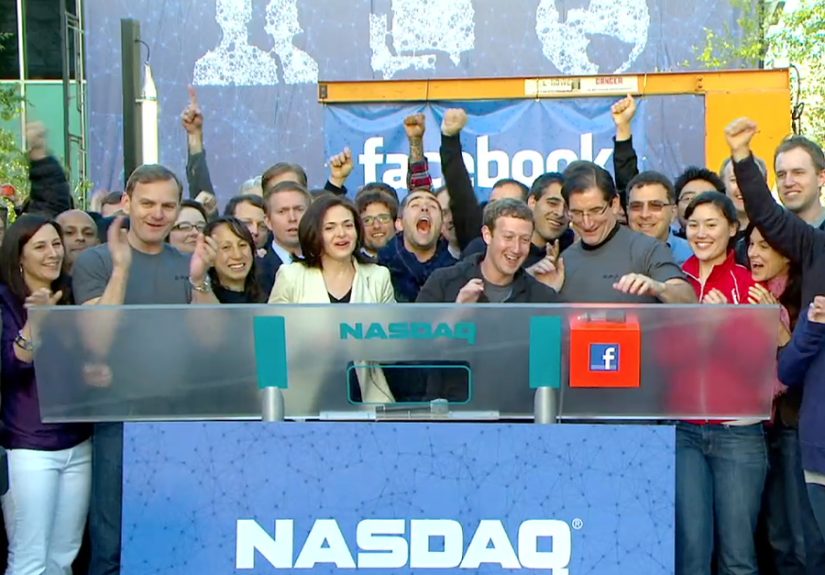
After pricing, shares are allocated to investors, the offering closes, and the stock begins trading on the chosen exchange. This is the moment most people picture when they think of an IPO: executives smiling, cameras flashing, somebody ringing a bell like they just defeated capitalism in hand-to-hand combat.
But the first day is only the opening scene. The real story begins after the ticker goes live.
10. The post-IPO period begins
Once public, the company must file ongoing reports, including annual, quarterly, and current reports as required. Leadership now has to manage not just the business, but also investor expectations, earnings guidance decisions, governance obligations, analyst attention, and share-price volatility.
In many IPOs, insiders are subject to a lockup period that restricts share sales for a certain time after the offering, often around 180 days. When that lockup expires, additional shares may hit the market, which can affect trading.
Common IPO Terms You Should Know
S-1 filing
The main registration statement used by many U.S. companies going public.
Prospectus
The offering document that explains the company and the deal to investors.
Underwriting
The process in which investment banks help structure, market, price, and distribute the shares.
Roadshow
A series of investor presentations used to market the IPO.
Book building
The collection of investor demand that helps determine pricing and allocation.
Lockup period
A temporary restriction that limits insider selling after the IPO.
Quiet period
A restricted communications period around the offering when certain promotional activity and research publication rules apply.
What Can Go Wrong During an IPO?
Quite a bit, actually. Market conditions can turn ugly at the worst possible time. Investors can balk at the proposed valuation. Financial results can weaken during the process. SEC comments can take longer than expected to resolve. Governance weaknesses can surface. Internal controls may not be ready. Risk factors may suddenly become very real.
And even if the offering gets done, a hot first-day pop is not always the victory it appears to be. A giant jump can mean the company priced too conservatively and raised less money than it could have. On the other hand, a weak debut can damage confidence before the company has even filed its first quarterly report.
That is why seasoned teams treat an IPO like a long campaign, not a one-day event.
IPO vs. Direct Listing vs. SPAC
A traditional IPO is still the best-known route to the public markets, but it is not the only one.
In a direct listing, a company becomes public without the traditional underwritten IPO structure. Existing shares can begin trading, and pricing is determined through the market’s opening auction. Some direct listing structures can also allow capital raising, depending on the framework and exchange rules.
Then there is the SPAC route, where a private company merges with a publicly listed shell company. That path can be faster in some cases, but it comes with its own complexity, regulatory scrutiny, and market baggage.
For most readers trying to understand how going public works, the traditional IPO remains the clearest model because it is the classic path: underwriters, S-1, roadshow, pricing, listing, and then the wild joy of learning that public investors have opinions about everything.
Why the IPO Process Matters to Investors and Founders
For founders, the IPO process is about more than capital. It is a stress test for strategy, operations, governance, and communication. It forces leadership to explain the business clearly, support the numbers, and prepare for relentless visibility.
For investors, the IPO process matters because it shapes the quality of disclosure, pricing discipline, and early trading dynamics. Reading the prospectus, understanding the risks, and knowing the difference between hype and fundamentals can make all the difference.
The IPO is not magic. It does not fix a broken business model. It does not guarantee long-term stock performance. What it does is convert a private company into a public one, with all the opportunity and pressure that comes with that transition.
Experiences and Lessons From the IPO Journey
One of the most interesting things about the IPO process is how often people who have lived through it describe the same emotional arc. At the beginning, going public sounds like a milestone. Halfway through, it starts to feel like a marathon run inside a filing cabinet. By the end, most executives realize that the IPO itself was not the destination. It was onboarding for a completely different kind of company.
Founders often enter the process thinking the hardest part will be convincing investors that the business is exciting. In practice, the harder job is proving that the company is durable. Public-market investors do not just want a flashy growth chart. They want repeatable revenue, credible margins, thoughtful governance, and leadership that can answer tough questions without sounding like it rehearsed a TED Talk in the mirror for three weeks.
CFOs usually learn this lesson even faster. In private markets, a finance team can sometimes survive with heroic effort, clever workarounds, and a few very stressed people who know where the numbers live. In an IPO process, that approach ages badly. Suddenly, monthly close timelines matter more. Internal controls matter more. Segment reporting matters more. Disclosure committees, audit committees, forecasting discipline, and documentation all matter more. A public company is expected to produce accurate information on schedule, every time, without drama. Wall Street is not famous for awarding participation trophies.
Employees have their own version of the experience. Before the IPO, stock options may feel abstract, like winning points in a game whose rules were explained by a lawyer in a hoodie. During the IPO process, those options begin to look more tangible. At the same time, employees often discover that liquidity is not always immediate. Lockups can delay sales, trading windows can limit timing, and tax planning suddenly becomes less boring than anyone expected.
Boards and legal teams usually come away with a different insight: storytelling matters, but consistency matters more. Every line in the prospectus, investor deck, roadshow script, and earnings framework must line up. A company that tells one story in marketing and another in its risk factors can create confusion fast. The market notices. So do regulators.
And then there is the day of listing. It is exciting, no question. There are photos, interviews, market open ceremonies, and a genuine sense of accomplishment. But many newly public executives say the most sobering moment comes the day after. The celebration is over, and now there is a stock chart, a shareholder base, a calendar of reporting deadlines, and a permanent public scorecard. The company has not finished the race. It has just entered a new league.
That may be the clearest real-world lesson of all: the best IPOs are usually not the ones that create the loudest buzz. They are the ones where the company is prepared for what comes after the buzz fades.
Final Thoughts
So, how does the IPO process work? In simple terms, a company decides it is ready, hires underwriters and advisors, performs due diligence, drafts and files a registration statement, responds to SEC comments, markets the deal through a roadshow, prices the shares, lists on an exchange, and then begins life as a public company.
Simple terms, yes. Simple process, absolutely not.
Going public can unlock capital, liquidity, and visibility, but it also demands discipline, transparency, and stamina. For companies that are prepared, an IPO can be a powerful step forward. For companies that are not, it can be a very expensive way to discover that public markets are not impressed by vibes alone.
If you want to understand going public, remember this: the IPO is not just about selling stock. It is about proving that a private company is ready to stand in public view and keep performing after the opening bell stops ringing.