Table of Contents >> Show >> Hide
- Why Suede Is So Easy to Stain
- What You Need Before You Start
- The Golden Rules of Cleaning Suede
- How to Clean the Most Common Suede Stains
- How to Clean Suede Shoes
- How to Clean Suede Clothing
- How to Clean Suede Bags, Hats, and Accessories
- How to Clean Suede Furniture and Upholstery
- What Not to Do With Suede
- How to Prevent Future Suede Stains
- When to Call a Professional Cleaner
- Experience-Based Lessons: What People Learn About Suede the Hard Way
- Final Thoughts
- SEO Tags
Suede is gorgeous, soft, and just dramatic enough to make you nervous every time a raindrop gets within five feet of it. One coffee splash, one sidewalk puddle, one greasy fingerprint from a burger you absolutely should have eaten with more dignity, and suddenly your favorite suede item looks like it lost a fight with real life.
The good news? Most suede stains are not a death sentence. The better news? You do not need a chemistry degree, a moon-phase chart, or a cleaning ritual involving twelve expensive products. What you do need is patience, a gentle hand, and the discipline to stop doing the one thing almost everyone does first: rubbing the stain like you are trying to erase your own bad decisions.
Whether you are dealing with suede shoes, a jacket, a bag, boots, or even suede-like upholstery, this guide walks you through how to clean stains the smart way. We will cover what works, what to avoid, when to use household helpers like cornstarch and white vinegar, and when it is time to let a professional step in and save the day.
Why Suede Is So Easy to Stain
Suede is made from the underside of animal hide, which gives it that soft, velvety texture known as the nap. That texture is exactly why suede looks luxurious and exactly why it stains so easily. The raised fibers can trap dirt, absorb moisture, and hold onto oil like it paid rent.
That means suede needs different care than smooth leather, canvas, or synthetic fabric. If you treat suede like a regular sneaker or a basic cotton jacket, it will punish your optimism immediately. The safest mindset is this: suede likes less. Less water, less scrubbing, less heat, less panic.
What You Need Before You Start
Before cleaning suede, gather a few basic tools. You do not need every item for every stain, but these are the usual all-stars:
- A suede brush or soft-bristled brush
- A suede eraser or clean pencil eraser
- Clean microfiber cloths or white cloths
- Cornstarch or baking soda for oil stains
- White vinegar or rubbing alcohol for spot cleaning
- A dry towel for blotting moisture
- Shoe trees or rolled towels for suede shoes and boots
- A suede protector spray for prevention after cleaning
One more thing: always test any cleaner on a hidden area first. Suede can react differently depending on its finish, dye, age, and level of previous neglect.
The Golden Rules of Cleaning Suede
1. Start Dry
If the stain is not actively wet, begin with a dry brush. Brushing removes loose dirt and often lifts surface marks before you even consider liquid. This is the suede version of checking if the device is plugged in before calling tech support.
2. Blot, Do Not Rub
Fresh spills should be blotted with a dry cloth or paper towel. Rubbing can push the stain deeper into the fibers and flatten the nap, which makes the mark harder to remove and the texture harder to restore.
3. Use the Least Moisture Possible
Suede and soaking are not friends. When a stain needs more than brushing, use just enough liquid to treat the spot. Damp is fine. Saturated is how regret begins.
4. Let It Dry Naturally
Never use a hair dryer, radiator, heater vent, or direct sunlight to speed things up. Heat can stiffen suede, alter the color, and leave the item looking crunchy and offended.
5. Restore the Nap at the End
Once the area is dry, brush it again to lift the fibers and blend the cleaned spot with the rest of the material. This finishing step is often what makes the difference between “clean enough” and “wait, was there ever a stain?”
How to Clean the Most Common Suede Stains
Dry Dirt, Dust, and Light Scuffs
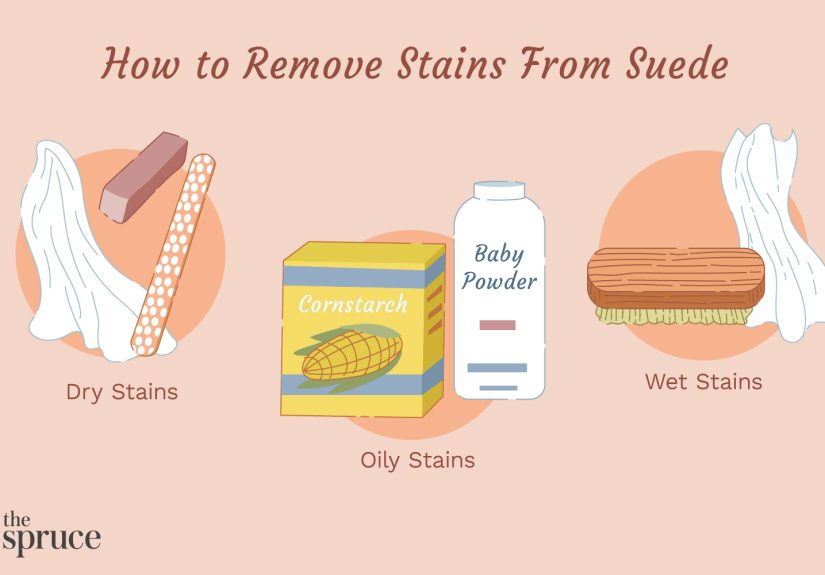
This is the easiest category. Let the suede dry completely if needed, then use a suede brush to sweep away dirt. Brush in one direction first, then lightly back the other way to lift the nap. For small scuffs, use a suede eraser or a plain pencil eraser and gently rub the mark until it fades. Brush again afterward.
Water Stains
Yes, suede can be stained by water, which feels rude but is true. If you have a water mark, the trick is usually to treat the area evenly rather than attacking one tiny spot. Lightly dampen a clean cloth and gently moisten the surrounding area so the stain blends rather than dries with a sharp ring. Blot away excess moisture with a towel, stuff shoes or bags to help them keep shape, and let the item air-dry completely before brushing.
Oil and Grease Stains
For fresh oil, blot first. Then sprinkle cornstarch or baking soda over the stain and leave it for several hours or overnight. The powder helps pull oil out of the suede. Brush it away gently and repeat if needed. Oil stains can be stubborn, so patience matters more than force. If you attack a greasy spot with water right away, you may turn a small stain into a bigger, darker one.
Mud
Let mud dry fully before touching it. Seriously. Wet mud on suede is basically a smearing contest you will lose. Once it is dry, tap off loose debris, brush away the remaining dirt, and use an eraser on any leftover marks. If a stain remains, a tiny amount of white vinegar on a cloth may help lift it.
Salt Stains
Suede shoes and boots often pick up white salt lines in winter. Mix a small amount of white vinegar with water, dampen a clean cloth, and gently blot the stained area. Do not soak the suede. Once the salt line lifts, blot with a dry cloth and let the item dry naturally. Brush to restore texture when finished.
Food and Drink Stains
Blot right away. For something like coffee or juice, remove as much moisture as possible, then allow the area to dry before deciding whether more treatment is needed. After it dries, brush the nap. If a mark remains, try a small amount of white vinegar or rubbing alcohol on a cloth, dabbing lightly. These evaporate faster than water and are often better for suede when used sparingly.
Ink or Mystery Stains
Ink is one of the trickiest stains on suede. If it is fresh, blot carefully and avoid spreading it. Once dry, a suede eraser may help with minor transfer. For deeper stains, rubbing alcohol on a cotton swab or cloth can sometimes lift the mark, but only use a small amount and always spot test first. If the item is expensive or sentimental, this is a good moment to stop being brave and call a professional cleaner.
How to Clean Suede Shoes
Suede shoes are the most common suede item people own and the most common thing they accidentally destroy with overconfidence.
- Remove laces and insert shoe trees or stuff the shoes with paper or towels.
- Brush off loose dirt with a suede brush.
- Use a suede eraser on scuffs and dry marks.
- For stains, dab with a cloth lightly moistened with white vinegar or rubbing alcohol.
- Blot excess moisture immediately.
- Let the shoes dry away from heat.
- Brush again to restore the nap.
- Finish with a suede protector spray once fully dry.
If your suede sneakers have rubber soles or trim, clean those separately with a mild soap-and-water cloth. Just keep the soapy water away from the suede upper. And no, do not toss suede shoes in the washing machine because “it worked for canvas.” Suede is not canvas. Suede is the coworker who says, “Per my last email,” and you should take the warning seriously.
How to Clean Suede Clothing
Suede jackets, skirts, pants, and vests need a lighter touch than shoes because the material is often thinner, softer, and more likely to show uneven cleaning. First, read the care label. If it says dry clean only, believe it. That is not a suggestion from a garment with trust issues. It is a boundary.
For small spot cleaning on suede clothing:
- Brush the area gently to remove surface dirt.
- Blot fresh spills with a clean cloth.
- Use cornstarch on oil spots and let it sit.
- Use a barely damp cloth with white vinegar or rubbing alcohol for minor marks.
- Let the item air-dry naturally on a hanger away from heat.
- Brush lightly once dry.
Do not scrub aggressively on sleeves, collars, or seams. Those high-contact areas already wear differently, and rough cleaning can create obvious texture changes. For large stains, full-panel discoloration, lining issues, or structured suede garments, a professional leather or suede cleaner is the safer call.
If the item is faux suede or microsuede, the care is different. Many faux suede items are more washable, but the care label rules the room. Follow it exactly.
How to Clean Suede Bags, Hats, and Accessories
Suede bags and accessories get hit with daily grime, body oils, hand lotion, cosmetics, and whatever mystery debris lives at the bottom of a tote bag. Start by emptying the item and brushing off loose dirt. For oily marks, use cornstarch. For spot stains, use a white cloth with a tiny amount of vinegar or rubbing alcohol and blot gently.
Because accessories often get touched more than they get cleaned, regular light maintenance matters. A quick weekly brushing does more for suede than one dramatic deep-clean after six months of chaos.
How to Clean Suede Furniture and Upholstery
This is where people get into trouble fast, because not all “suede” furniture is actual suede. Some sofas are natural suede, others are microsuede or synthetic upholstery, and those materials have different cleaning rules.
Check the tag or manufacturer guidance first. If it is real suede upholstery, use great caution and consider a pro for anything beyond surface maintenance. For routine care, vacuum with a brush attachment and lightly brush the nap. Blot spills immediately.
If it is synthetic suede or microsuede, look for the upholstery cleaning code. Some can handle water-based cleaners, some require solvent-based products, and some allow either. Ignoring the code is how one small spill turns into a couch-sized science experiment.
For a minor stain on synthetic suede, blot first, use only the cleaner approved for that cleaning code, and avoid soaking the cushion. Always let the area dry completely and then brush the fibers back into place.
What Not to Do With Suede
- Do not soak suede in water.
- Do not machine-wash suede shoes or delicate suede garments.
- Do not scrub hard in circles.
- Do not use direct heat to dry it.
- Do not use bleach or harsh household cleaners.
- Do not use dark-colored cloths that may transfer dye.
- Do not assume every internet hack belongs anywhere near suede.
- Do not keep cleaning forever if the stain is getting worse.
How to Prevent Future Suede Stains
The easiest suede stain to clean is the one that never happens. Not thrilling advice, but very effective.
- Apply a suede protector spray after cleaning and before first wear.
- Brush suede regularly to remove dust and surface soil.
- Avoid wearing suede in heavy rain, snow, or muddy conditions.
- Store suede shoes with shoe trees and suede clothing on sturdy hangers.
- Keep suede away from heat, humidity, and direct sunlight during storage.
- Address stains quickly before they settle in and get comfortable.
When to Call a Professional Cleaner
DIY cleaning is great for light stains, dry dirt, minor scuffs, and quick spill response. But some suede problems deserve professional help:
- Large oil stains
- Set-in ink
- Expensive jackets, coats, or vintage items
- Natural suede furniture
- Deep color loss or stiff patches after a failed cleaning attempt
- Anything labeled dry clean only
There is no trophy for ruining a suede jacket at home while refusing to admit you needed expert help two steps earlier.
Experience-Based Lessons: What People Learn About Suede the Hard Way
If you talk to people who wear suede regularly, their advice starts sounding less like cleaning instructions and more like life philosophy. The first lesson is almost always the same: suede rewards calm people. The moment you panic and start scrubbing with whatever is closest, whether that is a wet wipe, a paper napkin, or the corner of your shirt, the stain usually gets worse. People who have owned suede for years tend to move slowly. They blot first, they let mud dry, they test cleaners, and they do not assume “more product” means “better result.” That patience is usually the difference between saving an item and making it look like a failed craft project.
Another common experience is realizing that suede rarely needs one heroic cleaning session as much as it needs regular little ones. Owners of suede loafers, boots, and jackets often say the same thing: brushing for one minute after wear saves twenty minutes of stain removal later. Dust, body oils, sidewalk grime, and random everyday buildup are easier to remove when they are fresh. Left alone for weeks, they settle into the nap and start looking permanent. In other words, suede punishes procrastination with astonishing efficiency.
People also learn quickly that all suede items are not equal. A rugged pair of suede boots can often handle a careful spot treatment that would be too aggressive for a buttery-soft suede blazer. A synthetic microsuede dining chair may tolerate a cleaner that would absolutely wreck a genuine suede handbag. This is why experienced suede owners become label readers. They check care tags. They look up the brand’s guidance. They test a hidden spot. They stop guessing. Once you have accidentally darkened one sleeve or left a ring on one shoe, you become much less interested in improvisation.
There is also a universal oil-stain story. Somebody always thinks, “I’ll just dab it with water.” Suede, naturally, takes that personally. Then comes the discovery that powders like cornstarch or baking soda are much better first responders for greasy marks. Not glamorous, but surprisingly effective. The same goes for white vinegar or rubbing alcohol used in tiny amounts. These solutions sound almost too simple, which may be why people skip them and go looking for intense products instead. But time and again, gentle methods win.
Perhaps the most valuable real-world lesson is that suede maintenance is partly about timing and partly about expectations. Some stains disappear completely. Some fade enough that only you will know they were ever there. And some, especially on older or untreated suede, leave a faint memory behind. That does not always mean failure. Suede is a natural material, and a little character is not the end of the world. In fact, many long-time suede wearers would tell you that the goal is not to keep every item looking untouched forever. The goal is to keep it clean, soft, wearable, and good-looking enough that you still reach for it with confidence. A suede item that is cared for properly can age beautifully. A suede item that is over-cleaned in panic mode usually just ages loudly.
Final Thoughts
Cleaning suede stains is really a game of restraint. Brush first. Blot early. Use absorbent powder for oil. Use minimal liquid for spot treatment. Dry naturally. Restore the nap. Repeat only as needed. That approach works on suede shoes, many accessories, and some clothing, while more delicate or valuable pieces are often better handled by a pro.
So yes, suede is high-maintenance. But it is not impossible. With the right tools and a little patience, you can rescue most stains before they become permanent reminders of coffee runs, winter sidewalks, or that one taco you should have eaten over a plate.