Table of Contents >> Show >> Hide
- Before We Dive In: What These “Lessons” Really Are
- The 19 Photos (and the sneaky lesson each one taught me)
- Photo 1: The Golden Hour Silhouette That Almost Worked
- Photo 2: Window-Light Portrait, One Step From Great
- Photo 3: The “Why Is Everything Blurry?” Kids-in-Action Shot
- Photo 4: The Waterfall That Looks Like… Regular Water
- Photo 5: The Night Street Scene That Taught Me ISO Isn’t “Cheating”
- Photo 6: The Histogram Saved My Highlights (And My Ego)
- Photo 7: The Rule of Thirds… Until It Wasn’t
- Photo 8: The Alleyway With Leading Lines That Did the Heavy Lifting
- Photo 9: The Great Shot Ruined by One Trash Can
- Photo 10: Minimalism and the Power of Negative Space
- Photo 11: The Wide-Angle Portrait That Stretched Reality
- Photo 12: The Creamy Background (a.k.a. Depth of Field on Purpose)
- Photo 13: The Landscape That Needed “Everything in Focus”
- Photo 14: White Balance: The Day My “Warm Sunset” Turned Blue
- Photo 15: Rain, Reflections, and the Magic of Bad Weather
- Photo 16: The Decisive Moment (Or: Timing Beats Gear)
- Photo 17: The Sequence That Made a Stronger Story Than Any Single Frame
- Photo 18: Editing Isn’t a Rescue BoatIt’s a Sail
- Photo 19: The Caption That Changed How People Read the Image
- How to Practice These Lessons Without Buying Anything
- Bonus: of Real-World “I Learned This the Hard Way” Experience
- Conclusion: What the 19 Photos Were Really Teaching
If you’ve ever looked at a photo you took and thought, “Why does this feel… meh?”welcome. You’re among friends.
The good news is that most “meh” photos aren’t doomed by bad gear or bad luck. They’re usually missing one or two
small decisions: where the light comes from, what the frame includes (and excludes), or which camera setting you
traded away without realizing it.
Below are 19 photo momentseach one a tiny teacher. I’m describing the scene (because your screen can’t magically
summon my camera roll) and pulling out the practical lesson: composition techniques, exposure basics, focus choices,
and editing decisions you can try today. Think of this as a friendly photo walk, except you don’t have to pretend
you “totally meant” to shoot at ISO 6400.
Before We Dive In: What These “Lessons” Really Are
Photography lessons aren’t commandments. They’re more like training wheels: useful until you can ride with one hand
and a coffee in the other. You’ll see classics like the rule of thirds, leading lines, negative space, and the
exposure triangle (aperture, shutter speed, ISO). You’ll also see the less glamorous lessonslike “check the edges
of the frame” and “your white balance is lying to you.”
Ready? Let’s walk through the 19 photos.
The 19 Photos (and the sneaky lesson each one taught me)
Photo 1: The Golden Hour Silhouette That Almost Worked
A friend stands on a hill at sunset. The sky is gorgeousmy subject is a mystery blob. Lesson: when the background is
brighter than your subject, you’re making a silhouette unless you add light or expose for the face. Try moving so the
sun is off to the side, or use gentle fill flash to lift shadows without nuking the mood.
Photo 2: Window-Light Portrait, One Step From Great
Soft window light falls across someone’s face… and the far cheek disappears into shadow like it owes money. Lesson:
turn the body slightly toward the window, then bring the chin toward the light. If it’s still too contrasty, bounce a
little light back with a white wall, a reflector, or even a plain sheet of paper.
Photo 3: The “Why Is Everything Blurry?” Kids-in-Action Shot
Two kids sprint through a sprinkler. Joy everywhere, sharpness nowhere. Lesson: motion needs shutter speed. For fast
action, push to around 1/500s or faster, then compensate with aperture (wider) and ISO (higher). Blur is not a moral
failureit’s physics with attitude.
Photo 4: The Waterfall That Looks Like… Regular Water
I wanted silky flow. I got crunchy chaos. Lesson: slow shutter speeds (like 1/4s to several seconds) can turn moving
water into smooth streaks. Use a tripod or brace against something solid. If it’s bright, a neutral density filter
helpsotherwise your highlights may “blow out” into featureless white.
Photo 5: The Night Street Scene That Taught Me ISO Isn’t “Cheating”
City lights, wet pavement, neon reflectionsbeautifulplus enough noise to qualify as modern art. Lesson: higher ISO
brightens exposure but adds noise. Decide what matters: freeze motion, keep depth of field, or minimize noise. There’s
no perfect choice, only intentional trade-offs.
Photo 6: The Histogram Saved My Highlights (And My Ego)
A white dress in sun looked fine on the back screen… until I got home and discovered the fabric had zero detail.
Lesson: use the histogram and highlight warnings. If tones are slammed against the right edge, you’re clipping
highlights. Slightly underexpose and recover shadows later if needed.
Photo 7: The Rule of Thirds… Until It Wasn’t
A sailboat sits perfectly on a third line. It’s pleasantand a little predictable. Lesson: the rule of thirds is a
strong default for balance, horizons, and portraits. But once you know it, break it on purpose: center a subject for
symmetry, or push it to the edge for tension and drama.
Photo 8: The Alleyway With Leading Lines That Did the Heavy Lifting
An alley narrows into the distance. The lines guide the eye right to a person at the endno shouting required.
Lesson: leading lines (roads, fences, shadows, architecture) create depth and direction. Start the line near the
edge of the frame so the viewer steps into the scene.
Photo 9: The Great Shot Ruined by One Trash Can
Perfect moment, perfect light… and a trash can photobombing the corner. Lesson: check the edges of your frame before
you click. Tiny distractions become huge once the photo is frozen. Move your feet, change angle, or crop intentionally.
Photo 10: Minimalism and the Power of Negative Space
A lone tree in snow with a big, quiet sky. It feels calm, not empty. Lesson: negative space isn’t “unused space.”
It’s breathing room that isolates the subject and shapes emotion. If a frame feels cluttered, remove things until
the subject can speak at a normal volume.
Photo 11: The Wide-Angle Portrait That Stretched Reality
I shot a close portrait with a wide lens and my subject’s nose became… enthusiastic. Lesson: focal length and distance
change perspective. Wide lenses exaggerate near features when you get close. Step back and use a longer focal length
for more flattering proportions.
Photo 12: The Creamy Background (a.k.a. Depth of Field on Purpose)
A coffee cup sharp, the background dreamy. Lesson: shallow depth of field comes from a wide aperture (lower f-number),
longer focal length, and getting closer to the subject. If your background won’t blur, change distance and lens choice
before blaming your camera.
Photo 13: The Landscape That Needed “Everything in Focus”
A mountain scene where the foreground flowers were mushy. Lesson: deep depth of field needs a smaller aperture (like
f/8–f/16), careful focus placement, and stable shooting. In landscapes, focusing a bit into the scene (not always at
infinity) often keeps more of the frame acceptably sharp.
Photo 14: White Balance: The Day My “Warm Sunset” Turned Blue
The sunset looked like honey in real life, but my photo looked like a sad aquarium. Lesson: auto white balance can
neutralize warm light. Set a daylight or cloudy preset, dial in Kelvin, or shoot RAW so you can adjust color
temperature later without wrecking skin tones.
Photo 15: Rain, Reflections, and the Magic of Bad Weather
A stormy street gave me mirror-like puddles and glowing signage. Lesson: “good light” isn’t only golden hour. Overcast
skies soften shadows; rain adds reflections; fog simplifies backgrounds. Bad weather is basically a free production team,
just with worse hair.
Photo 16: The Decisive Moment (Or: Timing Beats Gear)
A cyclist passes through a shaft of light at the exact second a pedestrian turns their head. Lesson: storytelling lives
in timing and gesture. Watch the scene, predict the moment, and shoot the instant the story “clicks.” Burst mode helps,
but patience helps more.
Photo 17: The Sequence That Made a Stronger Story Than Any Single Frame
One photo showed a chef. Three photos showed the story: hands prepping, flame rising, plated dish. Lesson: sequence and
varietywide, medium, tightpull viewers through. Visual storytelling is about giving the eye something new to discover
from frame to frame.
Photo 18: Editing Isn’t a Rescue BoatIt’s a Sail
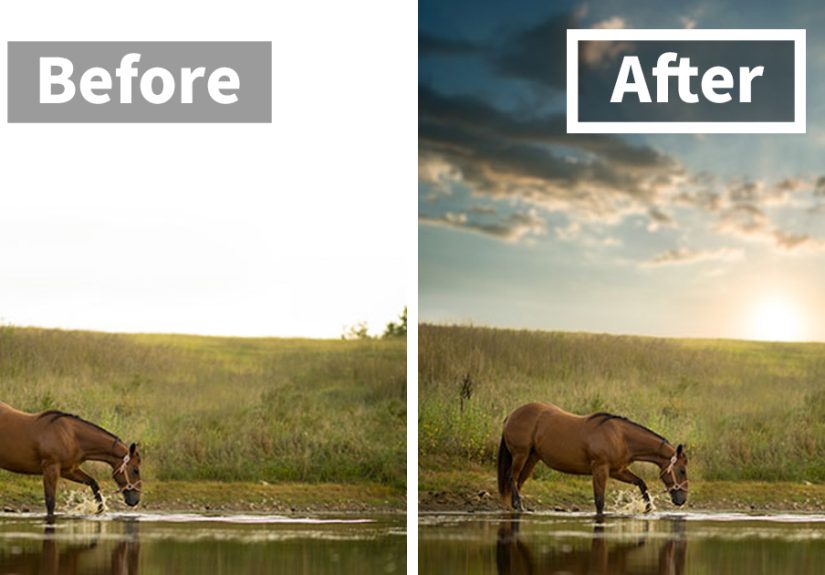
I underexposed a scene and tried to “fix it in post.” The shadows turned crunchy. Lesson: post-processing works best
when the file is solid. Learn to recover highlights and shadows gently, watch for banding/noise, and use the histogram
in editing software to steer tonal balance.
Photo 19: The Caption That Changed How People Read the Image
A photo of hands holding an old letter feels sentimental. A caption explaining whose letter it was becomes powerful.
Lesson: context mattersespecially online. Thoughtful captions, filenames, and metadata help viewers (and search engines)
understand what they’re seeing without guessing.
How to Practice These Lessons Without Buying Anything
Do a “One Variable” Walk
Pick one conceptleading lines, negative space, or shallow depth of fieldand shoot for 20 minutes using only that idea.
Your brain learns faster when it’s not juggling ten new tricks at once.
Bracket Your Exposure (Even If You Think You Nailed It)
Take one shot as you normally would, then one slightly darker, one slightly brighter. Compare later. This trains your
eye for highlights and teaches you when the camera meter is being overly optimistic.
Study Your “Failures” Like a Detective
Instead of “this photo is bad,” ask: is the problem light, composition, focus, timing, or color? Most issues are just
one category. Fixing one category at a time is how you level up quickly.
Bonus: of Real-World “I Learned This the Hard Way” Experience
Here’s the funniest truth about photography: the camera is brutally honest, but the photographer is wildly optimistic.
In the moment, everything feels cinematicthen you get home and discover your “moody shadow” is actually just an
underexposed face, your “minimalist composition” is actually a street sign growing out of someone’s head, and your
“bold creative blur” looks suspiciously like you sneezed mid-shot.
The biggest shift happens when you stop treating every photo like a final exam and start treating it like a lab.
In a lab, you’re allowed to test one change at a time. If your subject is moving and your image is blurry, don’t
change everythingchange shutter speed first. If the photo is sharp but flat, don’t panic-buy a lenschange the
direction of light by moving your subject closer to a window or turning them so light skims across the face.
If the colors look wrong, don’t drown it in filtersset a white balance preset or shoot RAW and adjust temperature
with intention.
Another “field note” lesson: your feet are an underrated piece of equipment. When a background is messy, the fix is
often two steps left. When a subject feels cramped, the fix might be stepping back and letting negative space do its
calming work. When a portrait looks distorted, the fix is stepping back and using a longer focal length. Tiny movements
change relationships in the frameforeground to background, subject to light, viewer to story.
And then there’s timingtiming is where you feel like a wizard. But it’s not magic; it’s attention. Good timing comes
from watching patterns: people pause at the curb, waves rise in sets, clouds open and close like curtains. If you can
predict the next beat, you can place your subject in the right spot and wait for the scene to complete itself.
That’s how “luck” starts showing up more often.
Finally, editing: it’s best used as refinement, not resurrection. When you expose with careespecially protecting
highlightsyour edits become lighter touches: gentle contrast, controlled shadows, subtle color temperature nudges.
The moment you rely on extreme recovery to “save” a file, the image fights back with noise, muddy color, and weird
textures. Editing is a handshake, not a hostage negotiation.
If you take one thing from these 19 photos, let it be this: every “mistake” is a breadcrumb. Follow it. Identify what
went wrong, adjust one decision next time, and repeat. That’s the whole game. And yessometimes the breadcrumb leads
to a trash can in the corner of your frame. Crop it out and move on. You’re learning.
Conclusion: What the 19 Photos Were Really Teaching
These 19 photos aren’t about memorizing rules. They’re about noticing: noticing light direction, noticing edges,
noticing what your settings are trading away, and noticing the story inside the moment. When you practice noticing,
your photography improves fastbecause your camera stops being a mystery box and starts becoming a tool you can steer.