Table of Contents >> Show >> Hide
- The 16 guest bedroom ideas
- 1) Start with the bed: make it genuinely comfortable
- 2) Layer bedding like a hotel (but keep it human)
- 3) Offer a “choose-your-own” pillow lineup
- 4) Add blackout or room-darkening window treatments
- 5) Create a nightstand “landing zone” that actually works
- 6) Make charging effortless (and impossible to miss)
- 7) Use layered lighting: soft, task, and “don’t trip” light
- 8) Keep the decor welcoming, not intensely personal
- 9) Make space in the closet and drawers (yes, really)
- 10) Add a luggage rack or bench (aka: the suitcase solution)
- 11) Include a chairor at least a perch
- 12) Add texture for instant coziness
- 13) Control sound: rugs, curtains, and a simple white-noise option
- 14) Keep the temperature adaptable
- 15) Go multipurpose with smart beds for small rooms
- 16) Set out “tiny luxuries” that make people feel cared for
- A quick guest room checklist
- Real-world hosting experiences that make guest rooms better (about )
- Conclusion
A great guest bedroom is basically a love letter that says, “I’m glad you’re here,” without requiring you to
write anything sentimental (or worseperform hospitality). The goal is simple: help visitors sleep well,
feel oriented, and enjoy a little privacyso everyone wakes up happier. And no, you don’t need a
magazine-ready makeover. You need comfort, good lighting, smart storage, and a few “oh wow, you thought of that”
touches that make your space feel intentional instead of like a room where laundry goes to contemplate its life choices.
Below are 16 practical, style-forward guest bedroom ideas that balance design and real-life hosting. They work for
small spare rooms, multipurpose offices, and full-on guest suites. Pick a few and you’ll see the difference immediately:
fewer midnight stumbles, fewer “where do I plug this in?” questions, and more “I slept so well” compliments (the currency
of hosting).
The 16 guest bedroom ideas
1) Start with the bed: make it genuinely comfortable
If your guest bed feels like a “fine, I guess” situation, your whole room will, too. Prioritize a supportive mattress,
a clean mattress protector, andif neededa quality topper to soften or firm things up. A comfortable bed is the fastest
way to make the room feel like a retreat instead of a storage annex with a pillow. If your bed is a sleeper sofa, upgrade
it with a topper and better pillows.
2) Layer bedding like a hotel (but keep it human)
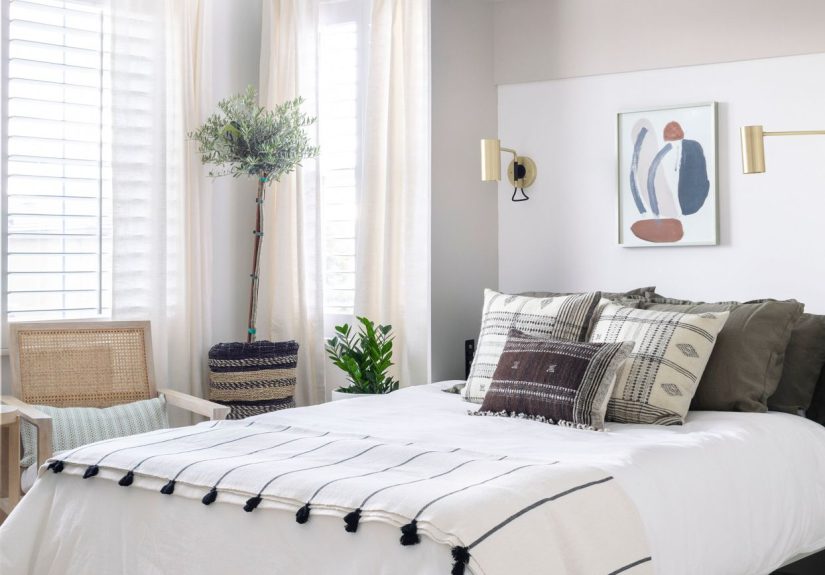
Layering isn’t about decorative pillows that multiply overnight. It’s about options: crisp sheets, a breathable blanket
or coverlet, and a duvet/comforter, plus a throw at the foot of the bed for temperature swings. This gives guests control
(and makes your bed look “done” even if the rest of the room is still getting its life together).
3) Offer a “choose-your-own” pillow lineup
People are surprisingly passionate about pillowssoft, firm, high loft, low loft. Make it easy: put two sleeping pillows
on the bed and stash one or two alternatives in the closet. Labeling isn’t required, but you can fold a note like “Extra
pillows in the closet” if you want to feel like the concierge of your own home.
4) Add blackout or room-darkening window treatments
Light is greatuntil it’s 6:03 a.m. and your guest’s internal alarm clock is screaming. Room-darkening curtains (or a blackout
liner) instantly boost sleep quality and privacy. If full blackout isn’t your style, pair woven shades with lined panels for a
softer look that still blocks glare.
5) Create a nightstand “landing zone” that actually works
The nightstand is mission control. Include a lamp, a coaster, tissues, and a spot for glasses or a phone. If you don’t have
space for a table, mount a small shelf or choose a narrow wall-mounted ledge. Bonus points for a carafe of water with a glass
it reads thoughtful, not try-hard.
6) Make charging effortless (and impossible to miss)
Guests never forget their phonejust the charger. Add a power strip with USB ports near the bed, or place a small charging station
on the nightstand. Hide the cords neatly, but don’t hide the outlet. This is one of those upgrades that makes people feel instantly
cared for (and prevents the “may I borrow…” scavenger hunt).
7) Use layered lighting: soft, task, and “don’t trip” light
Overhead lighting is fine for finding a missing sockless great for winding down. Aim for at least two light sources: bedside lamps
or sconces for reading, plus ambient light (a floor lamp or table lamp across the room). Add a small night light in the hallway or
near the bathroom path so guests aren’t navigating by memory at 2 a.m.
8) Keep the decor welcoming, not intensely personal
Your guest room doesn’t need to showcase your entire life story. Choose art that feels calm and broadly appealinglandscapes, abstracts,
photography, or a simple gallery wall. Avoid turning the room into a family photo museum where your guest feels like they’re sleeping in
someone else’s nostalgia. A few curated pieces feel intentional without being… a lot.
9) Make space in the closet and drawers (yes, really)
The easiest way to make guests feel at home is to give them a place to put their stuff. Clear a few hangers, empty a drawer, and add a small
basket for “extra blankets” or “hair dryer / iron.” If you can’t offer drawers, provide hooks behind the door or wall pegs so bags and jackets
aren’t living on the floor like abandoned pets.
10) Add a luggage rack or bench (aka: the suitcase solution)
Suitcases need a home. A folding luggage rack is classic and compact; a bench at the foot of the bed looks polished and doubles as a landing
spot for bags. This one change reduces clutter and makes the room feel more like a real guest suite. Plus, it saves your comforter from becoming
a suitcase shelf.
11) Include a chairor at least a perch
A guest bedroom feels more livable when there’s somewhere to sit that isn’t the bed. If you have room, add a small accent chair with a side table
for coffee or reading. Tight on space? A slim stool, an ottoman, or a wall-mounted fold-down seat still signals, “You can hang out here.”
12) Add texture for instant coziness
Texture is the shortcut to “restful.” Think: a soft rug, a quilted coverlet, linen curtains, a knit throw, or a woven basket. Even a simple,
neutral color palette feels richer when textures vary. If your guest room is minimal, texture keeps it from feeling sterilelike a perfectly
clean hotel room that also somehow feels like a waiting room.
13) Control sound: rugs, curtains, and a simple white-noise option
Guests sleep differently in unfamiliar spaces. Soft surfaces help: an area rug, lined curtains, and upholstered elements dampen echo. If your home
is lively (kids, pets, enthusiastic plumbing), consider a small white-noise machine or a fan. It’s a quiet luxury that helps guests fall asleep
faster and stay asleep longer.
14) Keep the temperature adaptable
Not everyone sleeps the samesome guests want an Arctic breeze; others want cozy hibernation. Provide an extra blanket and a lighter throw, plus a
fan if the room runs warm. If your thermostat is complicated, leave a small card with simple instructions (and your preferred “don’t freeze the pipes”
boundaries, phrased politely like a grown-up).
15) Go multipurpose with smart beds for small rooms
If your spare room is also an office, you can still host comfortably. Daybeds, trundles, sleeper sofas, and Murphy beds let the space work year-round
without feeling cramped. The trick is styling: treat the bed as a bed (real bedding, real pillows, real lighting), not as a couch pretending it’s fine.
16) Set out “tiny luxuries” that make people feel cared for
Thoughtful extras are what guests remember. A small basket with travel-size toiletries, spare toothbrushes, snacks, and a note with the Wi-Fi password
can feel delightfully hotel-like. Add a fresh hand towel, a water glass, maybe a book or local guide. The vibe you’re aiming for is: “You’re welcome here,”
not “I built an Airbnb in my house.”
A quick guest room checklist
- Sleep comfort: clean sheets, layered blankets, extra pillow options
- Nightstand basics: lamp, coaster, tissues, water option
- Charging: visible outlets, power strip/USB charging
- Lighting: bedside lighting + soft ambient light + night light
- Storage: empty drawer/closet space, hangers, hooks
- Privacy: room-darkening curtains or blinds
- Comfort extras: fan/white noise, throw blanket, simple house notes (Wi-Fi, thermostat)
Real-world hosting experiences that make guest rooms better (about )
Here’s the funny thing about guest bedrooms: the “best” ones aren’t always the fanciest. They’re the ones that anticipate the small, real-life moments
that happen when someone sleeps in a new place. The first moment is the arrival shuffleyour guest walks in, sets down a bag, and scans the room to
answer three silent questions: “Where do I put my stuff? Where’s the light? Where do I charge my phone?” If you’ve solved those in the first 30 seconds,
you’ve already won.
In practice, surface space matters more than most people expect. Guests tend to travel with a little pile: phone, glasses, lip balm, water bottle, book,
earbuds. If there’s nowhere to set that down (or the only surface is a decorative stack of fragile items), their stuff migrates to the floor, the bed, or
your nicest throw pillow. A clear nightstand, a small tray, or even a floating shelf keeps the room feeling calmand keeps guests from feeling like they’re
“messing up” your styling.
Lighting is the second big real-life issue. It’s not about drama; it’s about dignity. Nobody wants to stumble around in the dark trying to find a switch in
a new room, especially when jet lag (or holiday cookies) are involved. A bedside lamp with an easy-to-reach switch, plus a night light that softly marks the
path to the door, prevents the classic “I didn’t want to wake anyone” panic. It also makes guests feel independent, which is surprisingly relaxing when you’re
staying in someone else’s home.
Temperature is the stealth comfort factor. Guests are politesometimes too politeso they won’t always tell you they’re sweating or shivering. The easiest fix
is to offer options without a conversation: an extra blanket in the closet, a lighter throw on a chair, and a fan available if needed. A short, friendly note
like “Extra blankets + fan in the closet” can remove awkwardness entirely. You’re not micromanaging; you’re empowering.
Then there’s the “forgotten item” category. Even organized travelers forget something. Stocking a small basket with a few basics (toothpaste, a spare toothbrush,
hand lotion, simple pain reliever, bandaids) can feel like a lifesaverespecially for last-minute visits. The trick is moderation: a neat, curated kit feels
thoughtful; a cluttered pile feels like you’re offloading your bathroom cabinet. Add a couple of snacks or a mini water station and your guest room instantly
shifts from “spare bedroom” to “welcome retreat.”
Finally, the most consistent “wow” reaction comes from something simple: making space. A few empty hangers, a cleared drawer, and a spot for a suitcase tell
guests they’re not an inconveniencethey’re expected. And if you want to be extra charming, leave a tiny note with the Wi-Fi password and a lighthearted line
like, “Make yourself at home. Yes, you can absolutely take the good pillows.”
Conclusion
A welcoming guest bedroom isn’t about perfectionit’s about comfort, clarity, and a few considerate details that help someone settle in fast. Focus on the bed,
lighting, charging, storage, and temperature flexibility first. Then add texture, calming decor, and a couple of small luxuries to make the room feel like a
restful getaway. Your guests will sleep better, feel more at ease, and (ideally) leave your throw pillows exactly where they found them.