Table of Contents >> Show >> Hide
- Two Types of Theft, One Giant “Yikes”
- Why People Get Caught So Fast
- The Real Cost: It’s Not “Drama,” It’s a Business Risk
- Copyright, Fair Use, and the Myth of “But I Found It Online”
- The Platform Reality: “Unoriginal” Can Mean Demonetized
- “Claiming the Apartment” Is a Trust Problem, Not a Decor Problem
- How to Build Influence Without Becoming a Copy-Paste Cautionary Tale
- If Your Work Gets Stolen: Practical (Non-Dramatic) Next Steps
- Conclusion: Originality Isn’t Optional When Your Income Depends on Trust
- Real-World Experiences: What It Feels Like When Your Work Gets Lifted (And Why It Stings So Much)
The internet has two unbeatable superpowers: (1) remembering everything and (2) getting emotionally invested in a lie it can fact-check in 12 seconds.
So when an influencer turns “borrowing inspiration” into “borrowing reality,” the backlash isn’t just likelyit’s basically scheduled programming.
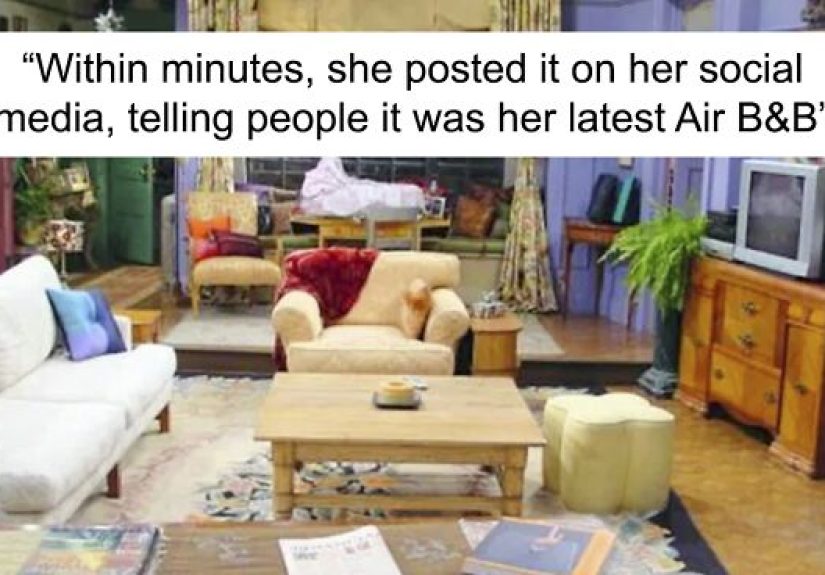
This article unpacks a viral-style scenario that’s been making the rounds online: a creator with a habit of reposting other people’s work finally got caught when she presented a famous fictional apartmentrecognizable to about a billion peopleas her “new place,” complete with an invented backstory.
The details vary depending on where you heard it, but the takeaway is consistent: the fraud wasn’t impressive; the confidence was.
Let’s talk about why influencer content theft (and “fake flexing” with someone else’s space) is more than cringe. It’s a trust implosion that can trigger platform penalties, brand breakups, and a long-term reputation dent that no ring light can blur.
Two Types of Theft, One Giant “Yikes”
What makes these blowups so sticky is that they usually combine two sins that the internet hates equally:
stealing creative work and stealing credibility.
One is about taking someone’s content. The other is about taking someone’s life (or at least their living room).
1) Content theft: “I made this” when you absolutely did not
Reposting a photo, script, reel, meme, or caption as if you created it isn’t “collaboration.” It’s plagiarism with a Wi-Fi signal.
Even if the original creator never “goes legal,” audiences can spot it through watermarks, reverse image search, ormy personal favoritethe comments section doing free forensic accounting.
2) Lifestyle theft: claiming a setting you don’t own
Claiming a friend’s apartment, a staged home, a rental, or a well-known TV set as your own crosses into something darker: deception as a brand strategy.
And the higher your platform, the more this can look like consumer manipulationespecially if you’re using that “life” to sell products, collect sponsorships, or market a persona.
Why People Get Caught So Fast
Influencers sometimes act like the internet is a goldfish. It’s not. It’s an elephant with receipts.
Here’s why the “caught” part happens at warp speed:
- Fandoms have PhDs in trivia. If you “move into” a famous fictional apartment, someone will recognize the doorknob.
- Visual fingerprints are real. Distinctive decor, layouts, art, and even lighting can be traced to original sources.
- Platforms reward repetition… until they punish it. The same content reposted everywhere might perform, but it also becomes easier to flag.
- Creators talk. The creative community is smaller than it looks, and DMs travel faster than gossip at a family barbecue.
The irony is that a lot of content theft starts because someone wants attention without effortand ends with attention they can’t control.
The Real Cost: It’s Not “Drama,” It’s a Business Risk
When a creator is exposed for reposting stolen work or faking a lifestyle, brands and platforms don’t just see “mess.” They see:
liability, instability, and audience trust erosion.
That’s three strikes in the influencer economy.
Brands care because trust is the product
Most influencer marketing is built on one fragile idea: “I’m a real person you can believe.”
If your content is proven unoriginalor your “real life” is revealed as borrowedbrands may worry that everything else is also… creatively interpreted.
And nobody wants their lipstick campaign living next to a scandal captioned “You guys I’ve ALWAYS lived here 😌” with 8,000 comments saying “That’s literally a TV set.”
Platforms care because unoriginal content degrades the feed
Platforms want users to stay scrolling, not to feel like they’re trapped in a never-ending rerun of the same clip with different usernames.
That’s why major platforms increasingly describe “unoriginal” or “reused” content as a problemespecially when it’s reposted without meaningful changes.
Copyright, Fair Use, and the Myth of “But I Found It Online”
Quick note: this is general information, not legal advice. But the basics matter, because “I didn’t know” is not a magical shield.
Social posts can be copyrighted (yes, even that photo you “borrowed”)
In the U.S., copyright generally protects original works the moment they’re created and fixed in a tangible formlike photos, videos, writing, and graphics.
That means a creator’s original Instagram photo or TikTok video is typically protected the second it exists, even before it goes viral.
Fair use isn’t “I changed the caption”
Fair use is a real legal doctrine, but it’s not a shortcut for content farming.
In plain English: if you’re using someone else’s work for commentary, criticism, news reporting, teaching, or parodyand you add meaningful transformationyou may have a stronger argument.
If you’re reposting it because you ran out of ideas, that’s not a doctrine; that’s a diary entry.
Registration matters when you want stronger remedies
Creators often don’t realize that while copyright exists automatically, formal registration can unlock important advantages in U.S. enforcementespecially around lawsuits and certain damages.
You don’t need registration to own copyright, but it can matter if you need to escalate a dispute.
The Platform Reality: “Unoriginal” Can Mean Demonetized
Even if a situation never becomes a courtroom issue, it can become a platform issueand that’s often more immediate.
Platforms don’t need a judge to reduce reach, remove monetization, or suspend accounts when behavior violates their rules.
YouTube is blunt about “reused content” and monetization
YouTube draws a clear line: repurposing content without adding significant original commentary, modifications, or value can put monetization at risk.
In other words, “I stitched together someone else’s greatest hits” is not automatically a business model.
TikTok explicitly restricts copyright-infringing posts
TikTok’s guidance is also straightforward: posting copyrighted content without authorization (unless a legal exception like fair use applies) is not allowed,
and users can submit infringement reports through platform channels.
Meta and the wider ecosystem are cracking down on theft-like behavior
Major reporting in 2025 highlighted Meta’s effort to reduce spam and penalize repeat reposting of unoriginal material, including monetization and distribution consequences.
Whether you call it “content theft,” “reposting,” or “account cosplay,” the message is the same: the platforms want original creators to win.
“Claiming the Apartment” Is a Trust Problem, Not a Decor Problem
Let’s zoom in on the apartment piece, because it’s the detail that turns this from “content theft” into “identity theft, but make it throw pillows.”
When an influencer claims a place as their ownespecially a recognizable onethey’re not just misrepresenting a background.
They’re using a false setting to manufacture social proof: “Look how successful, stylish, and aspirational I am.”
If that “proof” helps them land sponsorships or sell products, it can look like a form of deception that brands do not want to be associated with.
And here’s the part influencers sometimes forget: the internet doesn’t just judge the lie. It judges the reaction.
Doubling down, deleting comments, or blaming a friend tends to escalate the story from “oops” to “pattern.”
How to Build Influence Without Becoming a Copy-Paste Cautionary Tale
If you’re a creator (or advising creators), the goal isn’t to never reference anything ever.
The goal is to reference ethically and create originally.
Here’s what actually works long-term:
Create a “credit-first” habit
- Ask permission when reusing images, scripts, or clipsespecially for sponsored content.
- Credit visibly (not hidden in a blur of hashtags).
- Link back when the platform allows it.
- Make your value obvious: add analysis, commentary, testing, or a real point of view.
Make your process part of your brand
Ironically, the most “authentic” thing many influencers can do is show the work:
how you researched, styled, wrote, tested, filmed, edited, failed, retried, and improved.
Originality isn’t just a creative virtueit’s a defensible strategy.
Don’t sell a life you can’t maintain
Borrowing a location for a shoot can be totally fine when it’s transparent.
The problem is presenting borrowed settings as personal reality.
Your audience can handle “I rented a studio for this campaign.”
They will not handle “This is my new apartment” when it’s famously fictional.
If Your Work Gets Stolen: Practical (Non-Dramatic) Next Steps
When someone reposts your content as their own, it’s tempting to go full cinematic revenge montage.
But the most effective approach is usually boringand boring wins.
1) Document first, respond second
Save screenshots, URLs, timestamps, and proof of original posting. If the content spreads, you’ll want a clean record.
2) Try a direct message if it feels safe and worthwhile
Sometimes people genuinely don’t understand boundaries. A calm request to credit or remove can workespecially with smaller accounts.
3) Use platform reporting channels when needed
Platforms have reporting paths for copyright issues. For example, YouTube describes copyright removal requests as a legal process and warns against false submissions.
TikTok also outlines reporting for infringement and notes that legal exceptions like fair use may apply in limited cases.
4) Know that takedown systems exist (and can be challenged)
In the U.S., “notice and takedown” frameworks under the DMCA help platforms respond to infringement claims, while also allowing challenges to improper takedowns.
The point isn’t to weaponize itit’s to understand that there’s an established system behind many platform tools.
Conclusion: Originality Isn’t Optional When Your Income Depends on Trust
Influencer culture runs on attention, but it survives on credibility.
Steal content and you risk being labeled a fraud.
Claim someone else’s life and you risk becoming a cautionary tale people reference whenever they want to say, “See? This is why we can’t have nice things.”
The smartest creators don’t just chase viralitythey build something that can’t be reverse-searched:
a point of view, a process, and a reputation for doing the work.
Because in 2026, “authentic” isn’t a vibe. It’s a business requirement.
Real-World Experiences: What It Feels Like When Your Work Gets Lifted (And Why It Stings So Much)
Ask any creator who’s been copied and you’ll hear a version of the same emotional whiplash: first disbelief (“Wait… is that my video?”), then anger (“They didn’t even change the caption?”), then the exhausting mental math (“Do I call it out? Report it? Ignore it?”).
The sting isn’t just about losing views. It’s about losing ownership of your effortyour time, your creative choices, your voicewhile someone else collects the payoff.
Photographers describe it as watching their images travel the internet with the credit scraped off like a price tag.
Writers talk about seeing their phrasing reappear under someone else’s name, like their brain got pickpocketed.
Video creators often say the worst part isn’t one repostit’s the way a copied clip can outrun the original because the thief has a bigger following, better timing, or a more aggressive posting schedule.
It feels unfair in the specific way only the algorithm can deliver: “Congrats on being talentedyour reward is being duplicated.”
Then there’s the social layer, which is where this particular “apartment claim” story hits a nerve.
People who’ve had a friend or acquaintance borrow their stuff “for content” know how weird it gets.
At first it’s flattering: they like your style, your home, your ideas.
But if boundaries aren’t explicit, the borrowing can morph into entitlementusing your space as a set, your outfit as a costume, your life as a prop.
When the influencer starts speaking as if the borrowed thing is theirs, it doesn’t just feel dishonestit feels personal.
You’re left wondering whether the relationship is real or whether you’ve been cast as an unpaid supporting character.
Brands and agencies experience a different kind of stress: reputational risk.
People who manage influencer partnerships often describe the “heart-sink moment” of discovering a creator’s post is unoriginal or misleadingbecause now the brand looks careless for funding it.
Even if the brand did nothing wrong, audiences tend to treat sponsorship as endorsement of the creator’s character.
That’s why a single authenticity scandal can trigger immediate distance: paused campaigns, pulled codes, quiet unfollows, and the PR equivalent of backing away from a toppled Jenga tower.
Influencers who’ve rebuilt after mistakes often share the same hard lesson: trying to hide the mess makes it worse.
When creators own what happened (“I reposted without permission,” “I misrepresented this,” “I’ve changed my process”), audiences may still be disappointedbut they can at least understand the arc.
When creators deny, deflect, or attack critics, people stop arguing about the original incident and start talking about a pattern.
That’s the difference between a mistake and a brand identity.
The most encouraging experience creators report is the community response when they handle it well.
Clear crediting, respectful collaboration, and honest disclosure don’t just prevent dramathey build goodwill.
Over time, that goodwill becomes a protective layer: followers defend you, peers recommend you, and brands trust you.
In a world where copying is easy, being original (and transparent) becomes your most valuable differentiatorbecause it’s the one thing nobody can steal without revealing exactly who they are.