Table of Contents >> Show >> Hide
- Why Every Remodel Needs a Fire Extinguisher Plan
- Step 1: Learn the Fire Classes (Yes, the Letters Matter)
- Step 2: Decode the Numbers and UL Rating
- Step 3: Choose the Right Size for Each Space
- Step 4: Decide How Many Extinguishers You Need (and Where)
- Step 5: Pick the Extinguisher Type (Agent) That Fits Your Home
- Step 6: Make It Look Good (Yes, Really)
- Step 7: Learn How to Use It (PASS to the Rescue)
- Step 8: Maintenance: The Part Everyone Forgets
- Step 9: Remodeling-Specific Tips for Smarter Fire Safety
- Real-Life Experiences: What Homeowners Learn the Hard (and Easy) Way
- Bringing It All Together
You’ve picked the perfect cabinet hardware, agonized over grout colors, and finally settled on a countertop.
Congratulations: your remodel is officially serious. Now it’s time to choose something a lot less glamorous
but infinitely more importanta home fire extinguisher. Think of it as the sleek little bodyguard that lives
quietly in your kitchen, waiting to save the day (and your new tile backsplash).
Fire extinguishers are one of those items everyone knows they “should” have, but the alphabet soup of classes,
ratings, and sizes makes it easy to stall. During a remodel, though, you have a rare chance to plan
where extinguishers go, conceal brackets in new cabinetry, and choose designs that look intentional instead
of tacked on at the last second.
This guide walks you through how to choose a home fire extinguisherwhat the letters mean, how big to buy,
where to put them, and how to balance performance, budget, and aesthetics the Remodelista way.
Why Every Remodel Needs a Fire Extinguisher Plan
Modern homes burn faster than older ones. More plastics, foams, and synthetic fabrics mean a small flame
can turn into an out-of-control fire in just a few minutes. In many house fires, you may have only about
two to three minutes to get out safely. That’s not the time to realize the lone extinguisher is buried
behind the recycling binor that it expired sometime during the last administration.
A thoughtfully chosen extinguisher won’t replace smoke alarms or an escape plan, but it will give you a shot
at stopping a very small fire before it becomes a catastrophe. During a remodel, you’re already opening walls,
rethinking layout, and adding outlets, appliances, and built-ins. That’s the perfect moment to ask:
- Where are my biggest fire risks in this new layout?
- How many extinguishers do I realistically need?
- Where can I store them so they’re easy to grab but not an eyesore?
Answer those questions now, and your future selfstanding in a smoky kitchen with shaky handswill be very grateful.
Step 1: Learn the Fire Classes (Yes, the Letters Matter)
Fire extinguishers are labeled by the type of fire they’re designed to fight. In a house, you’ll mostly
care about four classes:
- Class A: Ordinary combustibles like wood, paper, cloth, and some plastics.
- Class B: Flammable liquids such as grease, oil, gasoline, and some paints.
- Class C: Fires involving energized electrical equipmentoutlets, appliances, wiring.
- Class K: Cooking oils and fats, mostly for commercial-style kitchens and restaurants.
Most households will be well served by a multi-purpose ABC extinguisher. That means it’s
rated for Class A, B, and C firesyour typical “something went wrong in the kitchen/garage/laundry room” scenarios.
If your remodel includes a serious chef’s kitchen with gas ranges, deep fryers, or a commercial hood,
talk to your contractor or local fire department about whether a Class K extinguisher or a fire blanket
is a smart add-on for cooking oil fires.
One rule you should never break: only use an extinguisher on the type of fire it’s rated for.
Spraying water on a grease or electrical fire is a very bad day waiting to happen.
Step 2: Decode the Numbers and UL Rating
Next to the letter(s), you’ll usually see numbers like 2-A:10-B:C. This looks a bit like a
Wi-Fi password, but it’s actually useful information.
-
The number before “A” tells you how effective the extinguisher is on Class A fires.
Roughly speaking, each “1A” is equivalent to a small water bucket of firefighting power.
A 2A extinguisher can handle about twice the size of fire as a 1A model under test conditions. -
The number before “B” indicates how many square feet of a Class B fire a trained user
could expect to extinguish in a test scenario. -
The “C” simply means the extinguisher is safe to use on live electrical equipment
(it won’t conduct electricity).
You’ll also want to look for the words “UL Listed” on the label. UL (Underwriters Laboratories)
is an independent testing organization that certifies that extinguishers perform to recognized safety standards.
In short: if it’s not UL or similarly listed, skip it. A fire extinguisher is not the place for mystery imports.
Step 3: Choose the Right Size for Each Space
Bigger isn’t always betterespecially if the “bigger” extinguisher is so heavy you can’t lift it in a panic.
For most homes, consider a mix of sizes:
-
2.5-pound ABC extinguisher: Compact and lightweight. Good for bedrooms, hallways,
home offices, and areas where children or older adults may need to handle it. -
5-pound ABC extinguisher: The workhorse size. A great choice for the kitchen,
main living areas, and near exits. Offers more discharge time without being too heavy for most adults. -
10-pound ABC extinguisher: Best for the garage, workshop, or near high-risk
areas like furnaces or utility rooms. Heavy but powerful, with a longer spray time.
As a remodel planning rule of thumb: aim for the largest extinguisher you can comfortably lift, aim, and use.
During design meetings, actually picture yourself grabbing it from its future spot and carrying it with one hand.
If your wrist hurts just thinking about it, size down or place the heavier unit in a location where it doesn’t need
to be moved far (like just inside the garage door).
Step 4: Decide How Many Extinguishers You Need (and Where)
Fire pros generally recommend at least one multi-purpose extinguisher on every level of your home, plus
extras near high-risk areas. In remodel-speak, that translates to:
- Kitchen: Non-negotiable. Place an extinguisher near the exit of the kitchennot right next to the stove. You want to be able to grab it while keeping your way out clear.
- Garage or workshop: Where flammables livegas cans, paint, lawn equipmentso you’ll want a larger ABC unit here.
- Each floor or major zone: An extinguisher in or near the main hallway on each level, visible and easy to grab.
- Bedrooms or sleeping areas: Especially in multi-story homes, consider placing a smaller extinguisher near the top of stairs or in a central nighttime traffic area.
A good planning test: no room where you spend a lot of time should be more than a quick walk
away from an extinguisher, and you should never have to go deeper into danger to get to it.
When you’re reviewing floor plans, literally mark extinguisher spots on the layout the same way you mark outlets.
Step 5: Pick the Extinguisher Type (Agent) That Fits Your Home
For most households, a dry-chemical ABC extinguisher is the default choice. It uses a fine powder
to smother flames and works on a wide range of fire types. But there are a few specialty options worth considering:
-
ABC Dry Chemical: Versatile, affordable, widely available. The downside? The powder is messy and
can be corrosive to electronics and finishes. Great for garages, hallways, and general use. -
BC Dry Chemical: Designed for flammable liquid and electrical fires, often recommended for
some kitchen setups. Less residue on certain surfaces but still powder-based. -
CO₂ (Carbon Dioxide): Leaves no residue and is good for electrical fires and some flammable liquids.
Common in commercial settings; heavier, pricier, and not ideal for all home situations. -
Wet Chemical (Class K): Made for cooking oil and fat fires, often used in commercial kitchens.
For serious home chefs with pro-style equipment, it may be worth a conversation with your installer.
Most Remodelista-style homes will use ABC units as the everyday workhorses, potentially supplemented
with a specialty extinguisher or a fire blanket right by the cooking zone if you do a lot of high-heat frying.
Step 6: Make It Look Good (Yes, Really)
The words “fire extinguisher” don’t automatically scream “design moment,” but there are ways to make these
safety essentials look intentional instead of like a bright red afterthought.
-
Color and finish: Many brands now offer white, black, or stainless steel–look extinguishers that
blend more easily into modern kitchens and living spaces. -
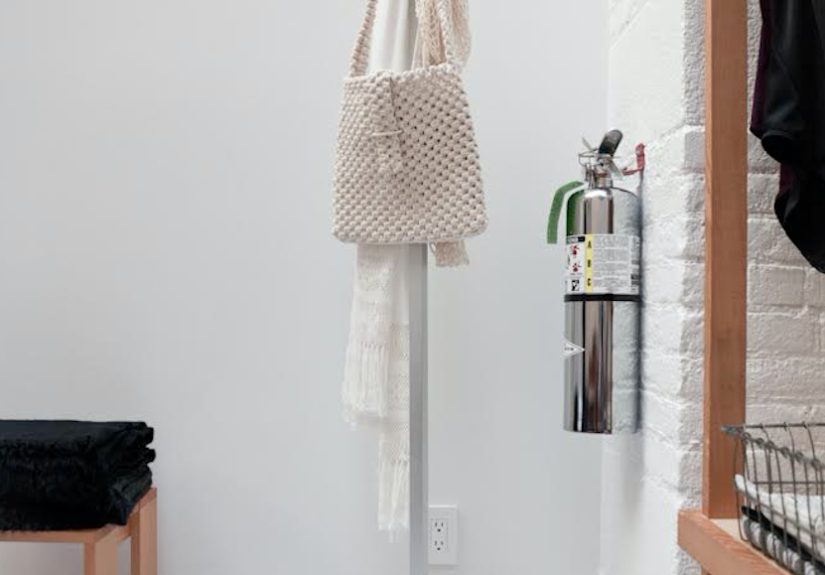
Wall mounts as design: Instead of hiding the extinguisher in a closet, mount it in a beautiful
niche or on a clean, painted wall near an exit. Treat it like a necessary “tool object,” the way you would a
stylish broom or ladder. -
Built-in recesses: During a remodel, you can recess a cabinet or nook into the wall near the
kitchen or hallway to hold the extinguisher flush with the surface. Add a minimal door or glass panel so
it’s both accessible and visually tidy. -
Labeling without visual chaos: Use small, well-designed labels or icons to indicate the extinguisher’s location,
rather than giant fluorescent stickers. Your guests will still be able to find it in an emergency without
your kitchen looking like a warehouse.
The goal is simple: if you hide it, you’ll forget it. Make it visible, but make it pretty.
Step 7: Learn How to Use It (PASS to the Rescue)
In the heat of the momentsometimes literallyyou won’t have time to read the back label. Practice the
basic steps now so they’re second nature later. Fire experts use the acronym PASS:
- P – Pull the pin.
- A – Aim low at the base of the fire.
- S – Squeeze the handle slowly.
- S – Sweep from side to side until the flames are out.
A few golden rules:
- Only attempt to put out small, contained fireslike a pan flare-up or tiny wastebasket fire.
- Make sure you have a clear path to an exit before you start.
- If the fire is spreading or you feel unsafe, leave immediately and call emergency services.
It’s smart to walk through PASS with every adult (and older teen) in the house when the extinguishers first arrive.
If your remodel includes a home handover meeting with your contractor, add “fire extinguisher locations and use”
to the agenda alongside “how the fancy new appliances work.”
Step 8: Maintenance: The Part Everyone Forgets
A dusty extinguisher you haven’t looked at in ten years is not a plan; it’s décor. To make sure your investment
actually works when you need it:
- Check the pressure gauge monthly. The needle should be in the green zone.
- Inspect the body. Look for rust, dents, leaks, or cracked hoses.
- Keep it clean. Wipe off grease or dust build-up, especially in kitchens and garages.
- Follow the manufacturer’s replacement timeline. Many disposable extinguishers are designed
to be replaced every 10–12 years, even if never used. - After any useeven briefreplace or professionally recharge it. Don’t just put it back and hope for the best.
Consider adding “check extinguishers” to your seasonal chore list, along with cleaning dryer vents and testing smoke alarms.
Safety isn’t glamorous, but losing your new kitchen to an avoidable fire is much less glamorous.
Step 9: Remodeling-Specific Tips for Smarter Fire Safety
Because you’re in remodel mode, you can bake fire safety into the design instead of tacking it on afterward.
Here’s how to make your new space both beautiful and safer:
-
Coordinate with your electrician. When planning new outlets, under-cabinet lights, or a panel upgrade,
talk briefly about fire risks and the best places for extinguishers and smoke detectors. -
Plan extinguisher nooks on the drawings. Have your designer or architect mark exact locations
(with heights) on floor plans so the contractor doesn’t guess or forget. -
Avoid blocking access. Don’t bury an extinguisher behind a sliding pantry, tall trash pull-out,
or built-in bench. If you must disguise it, make the door easy to open fast. -
Think about nighttime safety. If your remodel involves relocating bedrooms or adding a primary suite,
consider extinguisher placement and escape routes from those spaces as carefully as you do lighting and sightlines. -
Pair with other safety upgrades. While you’re at it, update smoke alarms, consider interconnected
units, and add carbon monoxide detectors where appropriate.
The end result: a home that doesn’t just photograph beautifully, but is thoughtfully prepared for real life.
Real-Life Experiences: What Homeowners Learn the Hard (and Easy) Way
Want to pressure-test your extinguisher plan? Listen to the stories of people who’ve actually had to use one.
These composite examples reflect what many homeowners and remodelers report after near-misses and close calls.
1. The “New Kitchen, Old Habits” Grease Fire
Mia and Jordan finally splurged on their dream kitchen: a six-burner gas range, open shelves, marble everywhere.
On a busy weeknight, Jordan heated oil for fried chicken, got a work call, and turned away “for just a second.”
The oil flashed, flames climbed the backsplash, and suddenly that pristine kitchen looked very different.
The good news? Their designer had insisted on placing a 5-pound ABC extinguisher on the wall just outside
the kitchen doorway. Jordan remembered the PASS steps, stood near the exit, and put out the blaze in seconds.
The bad news? The dry chemical powder covered half the kitchen and required professional cleaning.
Their takeaway: they kept the ABC extinguisher but added a fire blanket in a slim case inside a lower
cabinet closer to the stove for minor flare-ups. They also added a rule: if you’re frying, you’re not multitasking.
2. The Garage That Dodged Disaster
Rob’s garage was the usual mix: bikes, paint cans, a water heater, a workbench that had seen better days.
During a whole-house overhaul, his contractor pointed out that his single, tiny extinguisherclipped to a shelf
behind a stack of storage binswas not going to cut it.
They upgraded to a 10-pound ABC extinguisher mounted by the interior door, with nothing blocking it.
Six months later, a spark from a power tool ignited sawdust and some scrap cardboard. Rob killed the power,
grabbed the extinguisher, and quickly put out the fire. His insurance adjuster told him that without that
extinguisher, the entire garageand possibly the housewould likely have been lost.
His lesson: garages and workshops deserve “real” extinguishers, not just the smallest can on sale at the home center.
3. The Design-Forward Fire Extinguisher That Started Conversations
Nora cares about aesthetics almost as much as safetyshe’s the type who will reject a perfectly good appliance
because she hates the logo. When she remodeled her small city apartment, she chose white, minimalist
extinguishers and had her contractor recess a niche near the kitchen entry.
The niche has a simple wood trim and a tiny engraved icon instead of a loud sticker. The extinguisher almost
looks like part of the décor, and guests ask about it all the time. Nora jokes that it’s “functional sculpture,”
but there’s a serious benefit: everyone who visits sees it, knows where it is, and hears her two-second PASS tutorial.
Her takeaway: if you design safety features thoughtfully, people actually notice and remember themin a good way.
4. The Extinguisher That Didn’t Work
Not all stories end well. One couple discovered during a small kitchen fire that their dusty extinguisher
tucked under the sink behind cleaning supplieshad lost pressure years ago. The gauge was in the red, the hose
was cracked, and when they squeezed the handle, nothing happened. They escaped unharmed, but the kitchen didn’t.
After the rebuild, they set calendar reminders to check extinguishers twice a year and replaced all disposable units.
The new extinguishers live in visible spots, and everyone in the family knows exactly where they are.
Bringing It All Together
Choosing a home fire extinguisher isn’t as fun as picking pendant lights, but it’s one of the few decisions
that could literally save your homeand your life. During a remodel, you have a unique chance to:
- Select the right class and size for each area.
- Plan smart, accessible locations on your floor plans.
- Choose models that work with your design instead of against it.
- Build in maintenance habits and quick PASS training for the whole household.
When the dust settles and the final coat of paint dries, you’ll have more than just a beautiful space.
You’ll have a home that’s stylish, functional, and thoughtfully protectedRemodelista style.