Table of Contents >> Show >> Hide
- The “Catholic Connections” in Plain English
- Why This Was a “Big Deal” Historically
- Why It Was a “Big Deal” Legally (Even in Modern Times)
- So Why Did Meghan’s “Catholic Connections” Still Matter in 2017–2018?
- Meghan’s Conversion Moment: Symbolism, Respect, and Royal Reality
- What This Reveals About the Monarchy in 2025 (Yes, Still)
- What Would Have Been the Real “Big Deal” Scenario?
- Conclusion: The Headline Was SpicyThe Reality Is More Interesting
- Experiences: What This Topic Feels Like in Real Life (and Why People Relate)
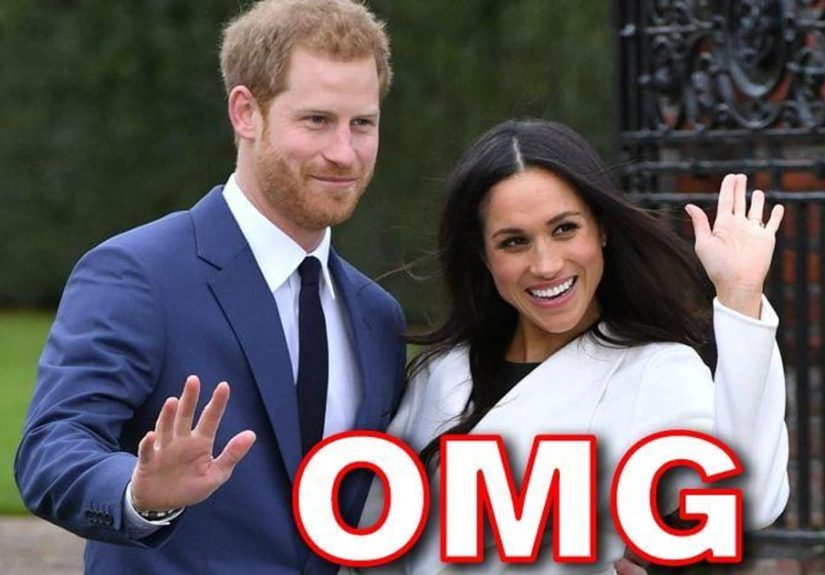
Quick reality check: Prince Harry isn’t newly engaged todayhe’s married to Meghan, Duchess of Sussex. But if we rewind to their engagement era, the “Catholic connections” angle really did carry weight, because in royal-world, religion isn’t just personal. It’s constitutional. It’s history. It’s centuries of paperwork and side-eyes.
So why did headlines and commentators perk up at the idea that Harry’s future spouse had Catholic ties? Because the British monarchy is intertwined with the Church of England in a way that makes religious trivia feel like legal trivia. And when legal trivia meets a wedding, it becomes everyone’s businessespecially when you’re in (or near) the line of succession.
The “Catholic Connections” in Plain English
When people said Meghan had “Catholic connections,” they weren’t claiming she was secretly running a Vatican fan club from a palace broom closet. The connection most commonly referenced was straightforward: Meghan attended Immaculate Heart, an all-girls Catholic school in Los Angeles, and that detail resurfaced loudly when the engagement became public. The school itself became a mini media character in the storybecause of course it did.
1) Catholic school background (and why people made a big deal out of it)
Meghan’s education included years at a Catholic school with traditions, community identity, and plenty of symbolic imagery that tabloids love to zoom in on. It’s a normal life detail for millions of Americansuntil you attach it to “Prince Harry” and suddenly it’s treated like a plot twist.
2) Not the same as being Catholic (and Meghan’s actual faith path)
Here’s the important nuance: attending Catholic school doesn’t automatically mean someone is Roman Catholic. Reporting around the time of the wedding emphasized that Meghan was raised Christian, and ahead of the wedding she was baptized and confirmed into the Church of England in a private ceremony. That wasn’t a random spiritual rebrand; it was closely tied to royal tradition and the role of the monarch as Supreme Governor of the Church of England.
Why This Was a “Big Deal” Historically
To understand the drama, you have to understand that Britain’s monarchy was forged in the heat of religious conflict. The crown isn’t just a family heirloomit’s also a religious office in the constitutional sense. That’s why old laws about who can inherit the throne got very specific about Catholicism.
The ancient vibe: “No Catholics, no Catholics married to royals”
For centuries, laws tied to succession and the monarchy’s relationship to Protestantism excluded Catholics from the throneand historically, even marrying a Catholic could affect someone’s place in the line of succession. This wasn’t polite interfaith boundary-setting. It was an iron gate made of legislation and historical baggage.
The Act of Settlement (1701) is one of the big documents people cite because it helped define the Protestant nature of succession and the expectation that the sovereign be in communion with the Church of England. For a long time, that framework also helped fuel the “Catholic spouse = problem” narrative.
Why It Was a “Big Deal” Legally (Even in Modern Times)
Now for the plot twist that many headlines missed: by the time Harry and Meghan got engaged, the rules had already been modernized.
Succession rules changedmarrying a Catholic stopped being a deal-breaker
The Succession to the Crown Act 2013 ended the disqualification that came from marrying a Roman Catholic. That change came into force in 2015 across the relevant realms. Translation: if a royal in the line of succession marries a Catholic, that marriage alone no longer boots them out of the succession. So the “Catholic connection” panic had a strong retro flavor.
But one giant restriction still exists
Here’s where it stays complicated: while marrying a Catholic no longer disqualifies you, being a Roman Catholic monarch is still a major constitutional barrier. The monarch’s role is bound up with the Church of England, and that’s not just symbolicit’s built into the identity of the crown.
So even with modernization, “Catholic connections” remain sensitive because they trigger questions about what changes and what doesn’t. The monarchy is trying to look like a modern institution while still wearing a centuries-old constitutional coat that doesn’t always fit today’s values.
So Why Did Meghan’s “Catholic Connections” Still Matter in 2017–2018?
Because royal stories aren’t just about what’s legally true. They’re about what people believe is true, what they remember from history class, and what headlines can turn into a “Wait… can they even do that?” moment.
1) The public doesn’t read acts of Parliament for fun
Most people understandably don’t track the details of succession law updates. “Royals + Catholic” triggers a well-worn mental shortcut: “Isn’t that forbidden?” That reflex is rooted in historyeven if the law has evolved.
2) Harry’s position in the line of succession made it feel higher-stakes
At the time of the engagement announcement, Prince Harry required the sovereign’s consent to marry because of his place near the top of the line of succession. When you’re close enough to matter, details get magnified. A lot.
3) The monarchy’s religious identity is still a live wire
Even in the 2020s, religion and the crown can still stir controversy. For example, coverage in 2025 described how a British monarch praying publicly with a pope was viewed as historically significantwhile also drawing criticism from some Protestant voices. That’s not about one couple’s personal faith; it’s about how tightly the institution is woven into religious identity and tradition.
Meghan’s Conversion Moment: Symbolism, Respect, and Royal Reality
Meghan’s reported baptism and confirmation into the Church of England before the wedding is one of those details that seems small until you understand royal context. She didn’t “have to” convert in a strict legal sense to marry Harrybut joining the Church of England aligned with tradition, and it reduced the theological static around a globally televised ceremony.
It also helped frame the union as respectful to the monarch’s role as head of the Church of England. In royal life, gestures of respect aren’t only emotional; they’re institutional signals. The message was: “We’re not here to pick a fight with the constitution. We’re here to get married.”
What This Reveals About the Monarchy in 2025 (Yes, Still)
The bigger takeaway isn’t “Catholic school scandal.” It’s that the monarchy is constantly negotiating between:
- Modern social reality (interfaith families are normal, global Britain is pluralistic, people marry across traditions every day),
- Historic constitutional identity (a Protestant crown tied to the Church of England), and
- Public storytelling (where nuance is often replaced by “CAN THEY EVEN DO THIS?!”).
Harry and Meghan’s story landed at a moment when royal tradition was already being updatedsuccession rules, public expectations, and the whole “royals should act like humans” movement. That’s why the Catholic-connection angle felt like a big deal: it highlighted the tension between a modern romance narrative and an institution with ancient religious roots.
What Would Have Been the Real “Big Deal” Scenario?
If Meghan had been Roman Catholic and Harry were much closer to the throne (think: heir apparent territory), the conversation would have been louder, not necessarily because of current law about marrying a Catholic, but because the public would immediately jump to the monarch’s religious requirements and the Church of England connection.
In other words, the “big deal” isn’t “Catholic spouse = banned” anymore. The “big deal” is that the monarchy still has a religious identity baked into its constitutional DNA, and people are still figuring out how that identity fits in a modern, multi-faith society.
Conclusion: The Headline Was SpicyThe Reality Is More Interesting
When Prince Harry’s engagement brought Meghan’s Catholic-school ties into the spotlight, it wasn’t just celebrity trivia. It was a reminder that royal marriages can trigger constitutional questionsreal ones, not just tabloid onesbecause the monarchy isn’t purely cultural. It’s a legal-religious institution with a long memory.
So yes: “Catholic connections” were a big deal. Not because a Catholic school background is shocking (it’s not), but because it spotlights the monarchy’s ongoing balancing act between tradition, law, and modern life. And if you’re watching the royal family like it’s a never-ending series, this was one of those episodes where the backstory matters more than the cliffhanger.
Experiences: What This Topic Feels Like in Real Life (and Why People Relate)
Even if you’ve never had a crown, a carriage procession, or a global audience judging your veil, the emotional core of the “Catholic connections” conversation is something a lot of people recognize: what happens when love crosses a boundary that other people treat like a rulebook.
In real families, faith differences often show up in ordinary placesholiday plans, baptism questions, which grandparents get invited to what ceremony, and the awkward moment when someone asks, “So… what will the kids be?” Couples can feel like they’re doing relationship calculus when they just want to pick a date and eat cake. Add a famous last name, and that pressure multiplies.
One common experience is discovering that your relationship is suddenly a “topic.” Maybe it’s not the national constitution, but it’s the family group chat, the neighborhood gossip circuit, or that one aunt who treats tradition like it’s a law enforcement agency. People who marry across faith lines often talk about how they didn’t realize how much meaning others attach to symbolswhere the wedding takes place, who officiates, what vows are said, which music is chosen, and whether a ceremony is “valid” in someone else’s eyes.
Another relatable experience: choosing what to keep, what to blend, and what to let go. Some couples create a “both/and” approachcelebrating Christmas and also honoring other traditions, attending different services on different days, or creating brand-new rituals that feel like home. Others prefer a “this is our lane” approachpicking one tradition for the wedding but making space for both families in day-to-day life. Neither choice is automatically right; what matters is whether the couple feels respected rather than managed.
Then there’s the experience of public interpretation. Most people don’t have headlines, but they do have opinions coming at them: coworkers, classmates, friends, social media. When someone’s background includes a Catholic school, a Protestant upbringing, or a later conversion, outsiders may simplify it into a single label and act like they solved a mystery. In reality, faith identity can be complicated: cultural, family-based, personal, evolving, or sometimes just “I went to that school because it was a good school.”
Finally, there’s the very human experience of making a choice that signals respect. In high-profile settings, joining a spouse’s tradition can be read as diplomacy. In ordinary life, it can be read as loveor as pressureor as both. Couples often navigate this best when they’re honest about motivation: “I’m doing this because it matters to you,” or “I’m doing this because it feels right for me,” rather than “I’m doing this so your uncle stops giving me speeches at Thanksgiving.”
That’s why the Prince Harry/Meghan conversation resonated so widely. It wasn’t only royal drama. It mirrored real-life situations where two people try to build a shared future while everyone else argues about the rulebook. And whether you’re marrying into a monarchy or just into a loud family, the challenge is the same: protect the relationship, honor what matters, and remember that the marriage is supposed to be about the couplenot the comment section.