Table of Contents >> Show >> Hide
- How We Ranked These Soul Eater Villains
- The 20+ Best Soul Eater Villains From the Anime and Manga
- 1. Medusa Gorgon
- 2. Asura, the Kishin
- 3. Arachne Gorgon
- 4. Crona and Ragnarok
- 5. Noah and the Book of Eibon
- 6. Justin Law
- 7. Free
- 8. Mosquito
- 9. Giriko
- 10. Mifune
- 11. Eruka Frog
- 12. Shaula Gorgon
- 13. The Mizune Sisters
- 14. Jack the Ripper
- 15. The Clowns
- 16. Ragnarok
- 17. Blair (Early-Series Antagonist)
- 18. Gopher
- 19. Evil Humans and Kishin Eggs
- 20. Dark and Black Clowns
- 21. Arachnophobia as an Organization
- What Makes Soul Eater’s Villains So Unforgettable?
- Fan Experiences and Lessons From Soul Eater’s Villains
In a world where your lab partner might also be a sentient scythe and the moon
laughs at you (literally), it takes a special kind of maniac to stand out as a
villain. Soul Eater isn’t just known for its stylish action and jazzy
opening themes – it’s beloved because its villains are weird, layered, and often
just a little too relatable. From mad scientists in hoodies to a literal god of
terror, the bad guys in this series push the heroes to their limits and drive
the story’s themes of madness, fear, and growth.
Below, we’ll rank the 20+ best Soul Eater villains from both
the anime and manga, looking at how dangerous they are, how much they shape the
plot, and how deeply they live rent-free in fans’ minds. Expect spoilers, soul
resonance, and more snakes than your average reptile house.
How We Ranked These Soul Eater Villains
Before we dive into the list, here’s the simple ranking formula – no magic
circles required:
-
Story impact: How much their schemes change Death City and the
world at large. -
Power and threat level: From “mildly inconvenient” to
“please call Lord Death immediately.” - Character depth: Motivations, backstory, and emotional weight.
-
Memorability: Iconic fights, quotes, visual design, and how
often fans still talk about them.
Fan-voted rankings from sites like Ranker help show which bad guys the audience
loves to hate the most, while official bios and manga details flesh out their
histories and abilities. Together, they give us a well-rounded picture of the
best Soul Eater villains ranked.
The 20+ Best Soul Eater Villains From the Anime and Manga
-
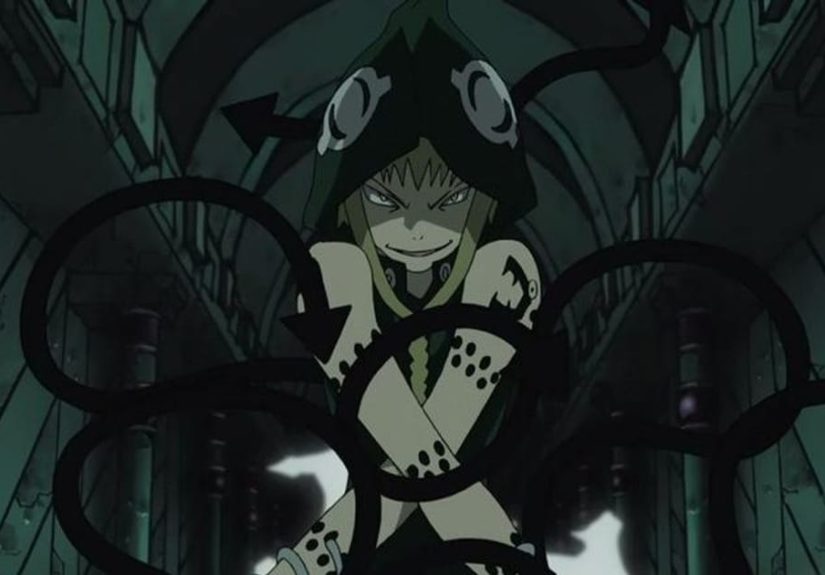
1. Medusa Gorgon
Let’s be honest: if you ask most fans who the best Soul Eater
villain is, Medusa is the first name that slithers out. A snake-themed witch
with a lab full of horrifying experiments, Medusa combines the worst traits
of a controlling parent, unethical scientist, and chaos-loving revolutionary.Medusa infiltrates the DWMA as the school nurse, smiling sweetly while
secretly working to free the Kishin Asura. Her vector-arrow and vector-plate
magic, plus the snakes crawling through her own body, make her just as
creepy in combat as she is emotionally. She’s also responsible for Crona’s
trauma and for developing black blood, the substance that weaponizes
madness itself. Cold, brilliant, and endlessly manipulative, Medusa is the
prototype of the “cool-headed anime villain” – and it’s no surprise she
tops many fan rankings. -
2. Asura, the Kishin
Asura is what happens when fear puts on a pinstripe suit and decides to end
the world. Once one of Shinigami’s powerful warriors, he becomes the
Kishin – a god of madness – by devouring souls in a
desperate attempt to escape his own paranoia. His madness wavelength spreads
terror globally, turning normal people into unstable threats and forcing the
DWMA to re-evaluate how they protect the world.Asura isn’t just physically powerful – his presence warps reality and
sanity. By the time he relocates to the moon and builds an army of clowns
and corrupted followers, it’s clear he isn’t just a boss fight; he’s the
living embodiment of the series’ core theme: that fear, left unchecked, can
consume everything. -
3. Arachne Gorgon
If Medusa is chaos in a hoodie, Arachne is chaos with a business plan.
The oldest of the Gorgon sisters, she founded Arachnophobia and created the
first demon weapons centuries before the main story. That single act rewrote
the history of meisters and weapons, making her indirectly responsible for
much of the world’s current power structure.Arachne spends centuries hidden, dispersing her body as countless spiders
and waiting for the right moment to return. When she does, she turns her
organization into a global threat, manipulating technology, souls, and
madness. Calm, elegant, and terrifyingly patient, Arachne is the kind of
villain who doesn’t need to shout to be scary – she just smiles and lets
her plans tighten like a web. -
4. Crona and Ragnarok
Crona is one of the most tragic antagonists in the series. Raised as a
weapon by Medusa and bonded with the demon sword Ragnarok through black
blood, Crona is emotionally fragile, traumatized, and conditioned to obey
cruelty. For a long stretch of the story, Crona is on the wrong side –
fighting Maka and the others while desperately craving genuine kindness.Ragnarok, the loud, abusive weapon living inside Crona’s body, acts as both
comic relief and emotional horror. Their dynamic shows how deeply Medusa’s
experiments dehumanize her own child. When Crona later plays a role in
Asura’s arc, it cements them as one of the most complex villains-turned
antiheroes in Soul Eater. -
5. Noah and the Book of Eibon
Noah walks in late to the party and still manages to feel like a final boss.
As the avatar of the Book of Eibon’s “Greed” and later other aspects, he
collects souls the way some people collect trading cards. His pocket
universe inside the book turns the cast into unwilling participants in a
deadly tour of the seven deadly sins.Noah’s power isn’t just raw strength – it’s the way he twists knowledge and
curiosity into weapons. His betrayal of Arachnophobia and brutal defeat of
Mosquito show just how dangerous he is, even among villains. In many ways,
Noah represents a different kind of madness: obsession and the hunger to own
everything. -
6. Justin Law
Justin Law starts as one of the coolest “good guys” – a quiet, music-loving
death scythe who literally fights with headphones on. Then the clowns and
madness wavelength get involved, and Justin becomes one of the series’
most unsettling antagonists.After his corruption, he turns his devotion away from Shinigami toward more
unhinged loyalties, eventually aligning with Noah. Watching a trusted DWMA
weapon flip sides gives weight to the idea that nobody is completely safe
from madness. His fall from grace adds emotional punch to every confrontation
that follows. -
7. Free
Free is the immortal werewolf with the heart of a himbo and the power of a
walking disaster. After stealing the witch Maba’s eye, he’s thrown in prison
for two centuries before Medusa breaks him out to join her faction. He can
use ice magic, spatial traps, and near-instant regeneration, making him a
legit threat despite his clumsy, comedic personality.Free shines as a villain because he’s dangerous without being cruel. He’s
grateful to Medusa, torn between self-interest and the mess he’s been pulled
into, and eventually ends up helping broker peace between witches and the
DWMA. In a cast full of ruthless masterminds, Free is the rare antagonist
you’d actually hang out with… cautiously. -
8. Mosquito
Mosquito looks like a shriveled old man, but don’t be fooled – he’s one of
Arachne’s most loyal and dangerous followers. He can shift into younger,
more powerful forms from different centuries of his life, each with a unique
combat style, including a hulking bruiser form and an agile, deadly
aristocrat form.His blood-draining nose, monstrous transformations, and centuries of
experience make him one of the most physically formidable villains. His
eventual defeat at Noah’s hands is shocking specifically because Mosquito
had seemed almost unstoppable up to that point. -
9. Giriko
Giriko is what happens if you give a chainsaw sentience, legs, and a foul
mouth. A demon weapon aligned with Arachne, he can fight alone using chains
extending from his body, and he’s also an enchanter capable of creating
golems and passing his memories down through generations.Giriko’s thrill-seeking violence and centuries-long grudge make him a
constant source of tension whenever he’s on screen. His connection to
Arachnophobia’s ancient history and his later partnership with Noah keep him
relevant long after many henchmen would have been discarded. -
10. Mifune
Mifune is one of the most morally gray “villains” in the series. A legendary
samurai nicknamed the “God of the Sword,” he initially opposes the DWMA
because he’s trying to protect Angela, a young witch, from exploitation.
Black☆Star’s clashes with Mifune are some of the best choreographed fights
in Soul Eater, full of technique and raw emotion.Although he works for Arachnophobia, his loyalties are always clearly with
Angela, not Arachne. He’s proof that in this world, the DWMA doesn’t always
monopolize righteousness. As an antagonist, he challenges the heroes’
assumptions just as much as their combat skills. -
11. Eruka Frog
Eruka is a frog-themed witch trapped in a nightmare internship: she tries to
oppose Medusa, fails, and ends up with snakes embedded in her body as
insurance. Every mission she carries out for Medusa is done under threat of
being ripped apart from the inside.This makes Eruka a fascinating minion-villain. She’s cowardly, emotional,
and often hilarious, but she’s also a reminder of how Medusa exploits even
fellow witches. Over time, she becomes more sympathetic and even helps
bridge the gap between witches and DWMA, which gives her a satisfying arc
beyond simple comic relief. -
12. Shaula Gorgon
Shaula, the youngest Gorgon sister, rules as the main villain of
Soul Eater NOT! While she doesn’t appear in the original anime,
she fits perfectly into the universe’s witch hierarchy. Using scorpion-based
powers and mind control, she sends brainwashed fighters into Death City to
test the DWMA’s defenses and assert her dominance.Shaula’s presence shows how the Gorgon family keeps producing trouble
across timelines and spin-offs. She brings a more direct, brutal energy than
her sisters – less science, more stinger. -
13. The Mizune Sisters
The Mizune witches start as a group of squeaky, mouse-like sisters who seem
almost harmless – until they combine. After Medusa manipulates them, they
become part of her faction, able to merge into increasingly powerful forms
that fire deadly energy beams from their “whiskers.”The Mizune clan is a great example of how Soul Eater turns cute
designs into horror. Their grief, manipulation by Medusa, and later shift
in allegiance give them more emotional texture than a typical “witch squad.” -
14. Jack the Ripper
Jack the Ripper appears early in the story as a serial killer consumed by
souls and madness, serving as one of the first reminders that kishin eggs
are real, dangerous, and walking around like urban legends. He’s not as
complex as later villains, but he sets the tone: this world’s evil isn’t
abstract – it’s sharp, bloody, and close.As an opening villain, Jack is important because he defines the job: meisters
and weapons aren’t just playing hero; they’re preventing humans from
becoming monsters. -
15. The Clowns
The clowns are literally weaponized madness – manifestations of Asura’s
wavelength given physical form. With eerie smiles and regenerating bodies,
they exist to spread insanity and test high-level characters like Justin and
the main cast on the moon.They’re not deeply characterized, but visually, they’re some of the most
striking enemies in the series. They feel like nightmares that learned how
to fight back, turning every encounter with them into a horror set-piece. -
16. Ragnarok
While we’ve already talked about Crona, Ragnarok deserves his own mention as
a villain. As the demon sword fused into Crona’s black blood, he constantly
bullies and belittles his meister, even physically emerging from Crona’s
body just to punch them in the head.Ragnarok is both comic and cruel, the embodiment of the abuse baked into
Crona’s upbringing. He’s not plotting world domination, but he embodies the
intimate, personal kind of villainy that leaves scars long after the battle
is over. -
17. Blair (Early-Series Antagonist)
Blair is more of a fake-out villain, but she still deserves a place here for
how she complicates the heroes’ mission. Initially mistaken for a witch,
she’s targeted by Maka and Soul, only for them to realize she’s a powerful
magic cat with a playful streak and zero interest in being truly evil.Blair shows that not every target fits cleanly into “villain” or “hero.”
She forces Maka to question what it means to judge someone based solely
on reputation and species, and her chaotic-neutral energy keeps things
entertaining whenever she appears. -
18. Gopher
Gopher is Noah’s loyal follower, trailing him everywhere like a slightly
unhinged fanboy. But underneath the devotion, he’s extremely dangerous:
he possesses a rare Grigori-type soul, uses powerful energy-based attacks,
and can deploy wings made of his own soul.Gopher’s loyalty to Noah and his role in hunting down Maka give him a
specific narrative function: he represents how charisma and ideology can
twist talented people into tools for someone else’s obsession. -
19. Evil Humans and Kishin Eggs
Beyond named antagonists, the series is full of “evil humans” on the path
to becoming kishin eggs. These potential villains – murderers, sadists, and
soul-eaters-in-training – represent the everyday corruption that DWMA tries
to stop before it births another Asura.As a category, they may not each get deep backstories, but they’re vital:
they make the stakes concrete and remind us that madness doesn’t start with
a god – it starts with one bad decision repeated too many times. -
20. Dark and Black Clowns
Variants of the clown enemies, the Dark and Black Clowns intensify the
existential horror of Asura’s influence. They act as upgraded bosses, with
more refined combat abilities and an even stronger connection to the
Kishin’s madness wavelength.They push key characters to evolve their fighting styles and soul resonance,
serving as the final, surreal obstacles before confronting the heart of
madness itself. -
21. Arachnophobia as an Organization
Finally, while not a single character, Arachnophobia as a collective villain
deserves mention. From its army of golems and henchmen to its technological
experimentation with demon tools, the group operates like an evil mirror to
the DWMA – global, organized, and ideologically opposed.Arachnophobia raises the stakes from “monster-of-the-week” encounters to
full-on war, making every victory feel like a strategic win rather than just
a flashy fight scene.
What Makes Soul Eater’s Villains So Unforgettable?
Taken together, these villains show why Soul Eater still stands out
in anime conversations years after it first aired. The series doesn’t rely on
simple “evil for evil’s sake.” Instead, it plays with:
-
Fear and madness as themes: From Asura’s global wavelength to
Medusa’s experiments, the true enemy is often the erosion of sanity. -
Morally gray antagonists: Characters like Mifune, Crona, and
even some witches force you to question who really counts as a villain. -
Visual storytelling: The art style amplifies each villain’s
personality – spider motifs for Arachne, snakes for Medusa, exaggerated clown
designs for Asura’s minions. -
Emotional stakes: Many villains are tied closely to the
heroes’ growth – Crona to Maka, Justin to the DWMA, Medusa to Stein and Crona.
Whether you’re here for the philosophy of fear or just the incredibly stylish
fights, the villains of Soul Eater do more than stand in the heroes’
way. They shape the world, challenge the DWMA’s rules, and keep fans arguing
about “who’s the best” long after the credits roll.
Fan Experiences and Lessons From Soul Eater’s Villains
Ask longtime Soul Eater fans which villain hooked them, and you’ll get
a small sociology study. Some people vividly remember watching Medusa walk down
a dark hallway, snakes writhing under her skin, and realizing this wasn’t just
going to be a goofy shonen show. Others talk about the moment Asura first
awakens – the way the tone shifts from “school with weapons” to “the world might
actually fall apart.”
Rewatching the series as an adult hits differently. Crona’s storyline, for
example, feels far more painful when you recognize the emotional abuse and
isolation. Villains like Medusa become less “cool witch with snakes” and more
a study in how far someone will go when they treat other people as tools, even
their own child. Fans often mention that Crona’s arc helped them recognize
cycles of manipulation or unhealthy relationships in real life – heavy stuff
for a show with a dancing sun.
There’s also something oddly cathartic about watching the villains lose. When
Mifune falls, or when Noah is finally taken down, it isn’t just a power-level
victory; it’s the payoff of watching characters confront fear, trauma, and
guilt. Maka’s insistence on reaching out to Crona, even when it’s dangerous,
resonates with viewers who believe in second chances but also know they don’t
always work out cleanly.
On the lighter side, these villains are a gift to the cosplay and fan-art
community. Medusa’s minimalist black outfit, Arachne’s gothic elegance, and
Asura’s wrapped, unsettling design show up at conventions year after year.
Fans trade tips on how to animate vector arrows with LEDs or how to make a
convincing Ragnarok emerging from a Crona cosplay. Even secondary villains like
Eruka and the Mizune sisters have dedicated communities who appreciate their
quirky designs.
If you’re rewatching the series or reading the manga, one fun way to engage
with the villains is to track your emotional reactions. Who scares you now that
didn’t scare you before? Whose motivations suddenly make more sense? Does your
personal “best villain” shift from Asura’s cosmic threat to Medusa’s intimate
cruelty, or to someone like Noah whose greed feels eerily modern? Those shifts
say as much about where you are in life as they do about the show.
Ultimately, the best Soul Eater villains work because they’re
not just obstacles; they’re mirrors. They reflect fear, obsession, selfishness,
and the temptation to give in to madness instead of facing pain. That’s why, no
matter how many new anime drop every season, fans keep coming back to this
bizarre little world with its grinning moon and unforgettable rogues’ gallery.