Table of Contents >> Show >> Hide
- Why the VIC-20 Still Inspires Hardware Mischief
- What an ISA Slot Brings to a 6502 Home Computer
- The Core Trick: Turning the VIC-20 Expansion Port Into an ISA-Style Bus
- Networking on a VIC-20 Through an ISA Ethernet Card
- Alternative Paths: Networking Without an ISA Slot
- What Else Could You Do With a VIC-20 ISA Slot?
- If You Want to Try It: A Practical Checklist
- Hands-On Experiences: What It Feels Like to Put a VIC-20 on the LAN
- Conclusion
- SEO Tags
If you’ve ever looked at a Commodore VIC-20 and thought, “You know what this needs?
A full-on ISA expansion slot and a network card,” congratulations: you are exactly
the kind of delightful troublemaker retrocomputing depends on.
This isn’t just a “because we can” stunt (okay, it is a little). It’s also a surprisingly clean lesson in how
old buses work, how signals get translated, and why the humble VIC-20’s expansion port is basically an invitation
to do ridiculous, educational things with hardware.
In this article, we’ll unpack how a VIC-20 can be adapted to speak ISA well enough to use an Ethernet card on a LAN,
what makes the hack tricky (timing, interrupts, and missing control signals), and what “networking” realistically means
on a machine that can run out of RAM while thinking about RAM.
Why the VIC-20 Still Inspires Hardware Mischief
The VIC-20 sits in a special spot in home-computing history: it helped turn “computer” from a niche hobby object into
something you could plausibly buy in a regular store, take home, and learn on. It’s famously approachabledown to the
friendly marketingand it shipped with very modest built-in RAM and a crisp-but-narrow text display that’s charming
until you try to write an essay on it.
The real secret sauce for hardware hackers, though, is the expansion port. Unlike many modern devices
that hide everything behind proprietary controllers and glue logic, the VIC-20 exposes a buffet of useful signals.
Address lines, data lines, read/write control, clocksenough to make a hardware tinkerer’s eye twitch with possibility.
That openness is why the VIC-20 has had decades of expansions: RAM packs, cartridges, I/O adapters, and modern add-ons
that would make its original engineers raise an eyebrow. An ISA slot is just a particularly bold entry in that tradition.
What an ISA Slot Brings to a 6502 Home Computer
ISA (Industry Standard Architecture) is the classic internal expansion bus from early IBM PCs and compatibles. When people
say “ISA,” they often mean the 8-bit PC/XT-style bus or the later 16-bit AT-style bus. For a VIC-20 project, the 8-bit side
is the sweet spot: it maps nicely to an 8-bit data bus, and it’s enough to host a surprising pile of vintage cards.
An ISA slot gives you a standardized way to connect hardware that expects:
- Memory and I/O addressing (so the CPU can talk to the card through specific addresses)
- Read/write strobes (signals that say “this is a read” or “this is a write”)
- Interrupt lines (the card can yell “hey!” when it needs attention)
- Power rails (because chips enjoy electricity almost as much as humans enjoy coffee)
On a PC, the CPU and chipset do a lot of the grunt worktiming, buffering, and making sure devices don’t all talk at once.
On a VIC-20, you’re the chipset now. That’s the fun part. Also the part where you learn why “bus contention” is a phrase
engineers say with a thousand-yard stare.
The Core Trick: Turning the VIC-20 Expansion Port Into an ISA-Style Bus
The headline hackgiving the VIC-20 an ISA slotcomes down to a deceptively simple idea:
route the VIC-20’s expansion signals to an ISA connector, then generate whatever extra control lines ISA expects.
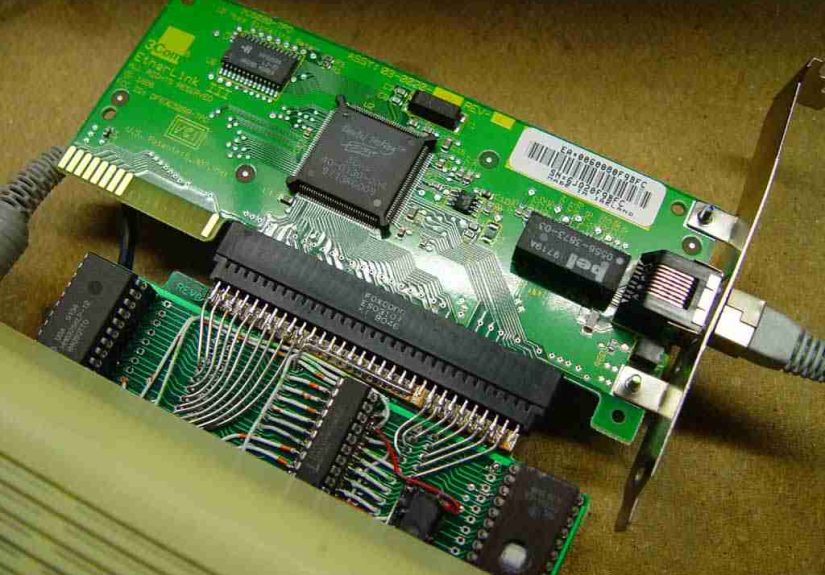
In the classic build documented and discussed widely in the retro community, most ISA connections are direct from the VIC-20’s
expansion connector, and only a small set of missing signals need to be createdspecifically a reset signal and separate I/O read/write
strobes for clean ISA-style communication.
Signal Translation 101 (a.k.a. “Make the Card Understand You”)
At a high level, you’re dealing with a few categories of signals:
- Address lines (which register or port are we talking to?)
- Data lines (the byte we’re reading or writing)
- Control signals (read vs. write, memory vs. I/O, and when the data is valid)
ISA expects explicit signals for I/O reads and writes. The VIC-20 has its own logic and timing, and bridging the two can require
small logic circuits or programmable logic to create “ISA-friendly” strobes at the right moment.
If you’ve never worked at the signal level, here’s the “aha” moment: you can’t just connect wires and hope.
Even if two systems are both 5V TTL-ish, the timing and meaning of each signal matters. Think of it like two people
speaking English, except one of them only listens on the third beat of every fourth measure.
Why I/O Space Is the MVP
One clever design decision in the VIC-20-to-ISA approach is to use an I/O region rather than trying to carve out “unused” RAM space.
Memory maps on classic machines can be surprisingly crowded (even when they look empty at first glance), and expansions can shuffle
things around. Using I/O space avoids some of the ugliest conflicts and makes it easier to treat an ISA card like what it is: an I/O device.
Of course, ISA itself has quirksespecially around timingand older cards can be picky. That’s why successful builds often involve
careful timing work, plus a bit of logic to keep interrupts predictable and stable.
Networking on a VIC-20 Through an ISA Ethernet Card
Let’s talk about the part that makes people grin: plugging in an ISA Ethernet card and declaring, with a straight face,
“My VIC-20 is on the LAN.”
In the well-known VIC-20 ISA-slot project, the goal was specifically to get an ISA network card workingone example discussed is a
3Com ISA Ethernet adapter. Once the ISA bus interface was stable, the VIC-20 could communicate with the card via I/O
registers, and interrupts could be handled through a fixed interrupt arrangement.
Picking a Card That Won’t Fight You
For an 8-bit-ish ISA interface, you generally want a card that is comfortable in an 8-bit slot and doesn’t demand fancy 16-bit transfers.
Two common families that retro folks tend to mention are:
- 8-bit 3Com EtherLink-era adapters (vintage, common, and well-understood)
- NE2000-compatible designs (simple register model, lots of historical software support)
The practical reason these get recommended is boring but important: they’re “classic enough” that documentation, schematics, and driver ideas
are easy to find, and their configuration tends to rely on straightforward I/O registers instead of exotic bus mastering features.
What “Getting on the LAN” Really Means on a VIC-20
Let’s set expectations without crushing dreams. A stock VIC-20 has very limited RAM available for programs, and even expanded machines are still
tiny by modern networking standards. That doesn’t mean “no networking.” It means you pick battles you can win.
Realistic, satisfying VIC-20 networking goals often look like:
- Basic packet send/receive demos (prove the bus + card interface works)
- Simple protocols (small footprints, fewer moving parts)
- Terminal-style use via gateways (telnet to BBSes, chat services, or LAN tools)
Think “networking as connectivity” rather than “networking as a modern web browser.” If you want to feel the magic, you don’t need
full TLS and a JavaScript engine. You need a blinking link light and a successful exchange of bytes that shouldn’t be possible.
Interrupts: The Part Everyone Tries to Avoid (and Then Can’t)
Networking hardware becomes dramatically easier when the card can interrupt the CPU to say “packet arrived” instead of forcing the CPU
to poll constantly. That’s why the VIC-20 ISA project begins with a fixed interrupt line and careful handlinggetting stable interrupts
is often the difference between “occasionally works” and “actually usable.”
The trick is balancing simplicity with reliability. A fixed interrupt line can keep things manageable, but you still need software that
acknowledges interrupts properly and doesn’t get stuck in a loop the moment the network gets chatty.
Alternative Paths: Networking Without an ISA Slot
The ISA-slot approach is gloriouslike installing a spoiler on a lawn mower. But it’s not the only way to connect a VIC-20 to networked
services, and understanding the alternatives helps you appreciate why ISA is both impressive and overkill.
“Modem Over Wi-Fi/Ethernet” Devices
One popular approach uses a modern Wi-Fi “modem” that plugs into the VIC-20’s user port and behaves like a classic Hayes-compatible modem.
You run terminal software, “dial” a telnet address, and suddenly your VIC-20 is chatting with BBSes and online services as if the year is 1983,
except the phone bill is zero and your router is doing the heavy lifting.
For many people, this is the most practical version of “VIC-20 networking” because the VIC-20 only needs to do what it already does well:
send and receive characters through serial-style I/O.
Serial-to-Ethernet Bridges
Another approach uses serial-to-network bridge devices that translate AT-style commands into TCP connections. From the VIC-20’s perspective,
it’s just talking to a modem. From the network’s perspective, it’s a tiny client opening sockets. It’s not as thrilling as running an ISA NIC,
but it’s extremely effectiveand it doesn’t require you to become a part-time chipset designer.
What Else Could You Do With a VIC-20 ISA Slot?
Once you have an ISA slot, it’s hard not to look at every ISA card and think, “Could the VIC-20 drive that?”
The answer is: sometimes, with a big asterisk and a healthy respect for limitations.
Cards that tend to be more plausible:
- Serial/parallel I/O cards (simple registers, lots of low-bandwidth uses)
- Gameport-style analog I/O (again, registers and timing)
- Basic sound cards if you treat them as I/O devices (though software effort rises fast)
Cards that are more “fun to imagine than fun to finish”:
- Graphics adapters (framebuffers and memory windows get complicated quickly)
- Storage controllers (possible, but you’ll spend quality time debugging and questioning life choices)
The pattern is simple: ISA hardware that behaves like a handful of I/O registers is friendlier to a small 6502-based machine.
Anything that assumes a PC-class memory map or driver environment will be a much steeper climb.
If You Want to Try It: A Practical Checklist
If this article has activated your inner hardware gremlin, here’s a sane way to approach a VIC-20 ISA-slot networking build without turning your desk into a smoke machine:
- Start with a stable VIC-20 setup (clean power, known-good machine, and ideally memory expansion for development headroom).
- Read the expansion port pinouts carefully and decide what logic you need to generate missing ISA strobes and reset behavior.
- Buffer where appropriate (bus interfaces are not the place to practice “minimalism”).
- Prove the bus with a simple ISA I/O card first (something that lights an LED or exposes easy registers).
- Only then move to an Ethernet card, and start with a minimal “read/write registers” test before attempting receive interrupts.
- Use a logic analyzer if you cantiming bugs are easier to fix when you can actually see them.
- Plan your “networking goal” (packet demo? simple LAN tool? telnet gateway?) so you don’t accidentally aim for “full modern internet.”
The biggest quality-of-life tip: treat this like a series of small victories. Bus up. I/O read works. I/O write works.
Interrupt triggers. Packet received. Packet sent. Celebrate each step. Retrocomputing is basically a long chain of high-fives with the past.
Hands-On Experiences: What It Feels Like to Put a VIC-20 on the LAN
The first “experience” most people report isn’t software at allit’s the moment you realize your workbench has quietly become a museum exhibit
that’s still alive. You’ve got a VIC-20 on one side, a PC-era ISA card on the other, and a handmade bridge in between that’s pretending the years
1981 and 1991 were close friends who shared notes in math class.
The early stages tend to feel like classic retro tinkering: lots of careful checking, lots of “why is this line stuck high,” and a sudden appreciation
for labels on cables. When you finally get clean reads from an ISA card register, it’s weirdly emotionallike you just taught a vintage typewriter
to nod politely at a smartphone.
Then comes the “networking” moment. If you’re using an ISA Ethernet card, you might start by reading the MAC address registers or verifying that
the card’s status flags change when a cable is plugged in. That’s when the project stops being abstract and becomes physical. LEDs flicker.
Link lights come on. You will almost certainly say, out loud, “No way,” even if nobody is in the room.
After that, the experience becomes a balancing act between ambition and reality. A VIC-20 can’t casually juggle big buffers, complex protocol stacks,
and fancy UI. So the happiest “live” use cases often look like small, meaningful wins: sending a tiny test frame, receiving a packet interrupt without
crashing, or using the network interface as a bridge to something else that does the heavy lifting.
A common “best of both worlds” experience is pairing the VIC-20 with a modem-style Wi-Fi device or serial-to-network bridge. That path feels immediately
usable: you boot into a terminal program, type familiar AT commands, and “dial” into telnet BBSes or chat servers. It’s the closest thing to time travel
that doesn’t involve paradoxesjust a keyboard, a blinking cursor, and a connection to a living community of people who still enjoy slow, text-based worlds.
If you do it over LAN, the whole vibe changes in the best way. You’re not “simulating” the pastyou’re letting a real 8-bit machine participate in a modern
network environment on its own terms. You start noticing how clean and satisfying simple protocols are. You start appreciating how much “internet” can be done
without images, autoplay, or pop-ups begging for your email address. And yes, you will eventually brag to a friend that your VIC-20 is online, and they will
respond with something like, “But… why?” That’s when you get to grin and answer, “Because it can be.”
The most memorable part of the whole experience is the mindset it creates. A project like this forces you to think in signals, cycles, and bytesnot megabytes.
It makes you plan. It makes you simplify. And when it finally works, it doesn’t feel like a normal upgrade. It feels like you pulled off a tiny engineering heist
against time itself.
Conclusion
Giving a VIC-20 an ISA slot and networking isn’t just a retro flex (though it’s an excellent retro flex). It’s a hands-on reminder of how transparent early
computer designs can be, how much power lives in a well-documented bus, and how far curiosity will carry you when you’re willing to build the missing parts.
Whether you chase the full ISA-slot approach with an Ethernet card or take a more practical route using modem-style networking, the payoff is the same:
you get to watch a “friendly computer” do something it was never supposed to dothen act like it always had that trick in its back pocket.