Table of Contents >> Show >> Hide
- What Internalized Misogyny Actually Looks Like
- 30 Women Reply
- 1. Trusting a man’s opinion first
- 2. Calling confident women “intimidating”
- 3. Being harsher on female bosses
- 4. Judging women’s appearance like it is a public utility
- 5. Believing “not like other girls” was a compliment
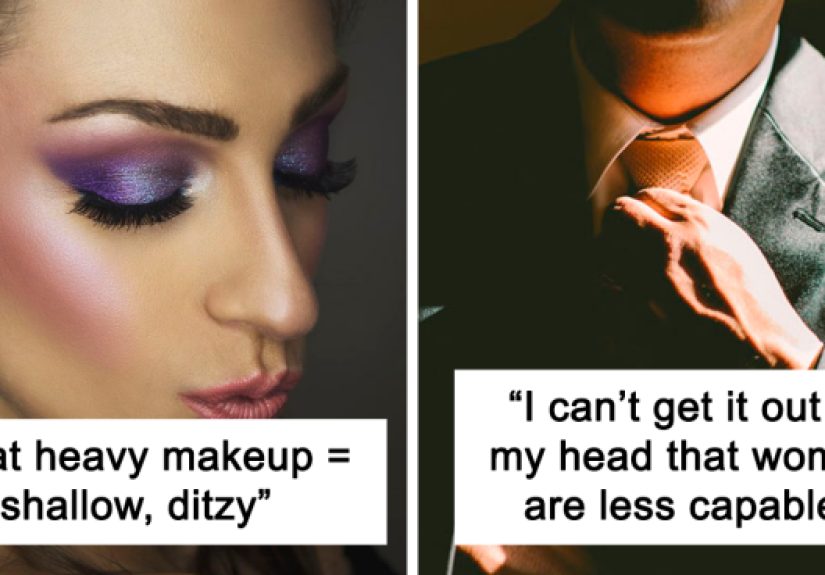
- 6. Thinking makeup means less substance
- 7. Suspicion toward attractive women
- 8. Policing teenage girls
- 9. Expecting women to smile
- 10. Treating female friendship as competition
- 11. Apologizing before speaking
- 12. Calling women dramatic
- 13. Expecting daughters to help more
- 14. Judging moms from every possible angle
- 15. Judging childfree women too
- 16. Praising myself for being “low maintenance”
- 17. Assuming women are overreacting to sexism
- 18. Being less forgiving of women’s mistakes
- 19. Treating men as default leaders
- 20. Equating niceness with femininity
- 21. Looking down on “girly” interests
- 22. Expecting women to absorb emotional labor
- 23. Confusing self-sacrifice with virtue
- 24. Holding women to impossible beauty math
- 25. Side-eyeing female ambition
- 26. Using gendered labels without noticing
- 27. Treating aging like a moral issue
- 28. Policing sexuality from both directions
- 29. Assuming women must be likable to be right
- 30. Being hardest on myself
- Why These Answers Feel So Familiar
- How To Unlearn It Without Pretending You’re Above It
- Additional Experiences Women Commonly Describe
- Conclusion
Note: The 30 replies below are composite, anonymized responses synthesized from recurring themes in research, essays, and public discussions. They are designed to reflect real patterns honestly, not to present verbatim one-to-one quotations from identifiable individuals.
Internalized misogyny is one of those phrases that can sound academic enough to make people’s eyes glaze over. But the idea itself is painfully familiar: it happens when women absorb sexist messages from family, school, media, work, religion, dating culture, and the internet, then turn those ideas inward or aim them at other women. In plain English, it is the patriarchy renting space in your brain and refusing to pay utilities.
It does not mean women are “naturally catty,” “bad feminists,” or hopelessly unfair to one another. It means many of us grew up in a culture that rewards women for being likable but not too loud, attractive but not too aware of it, ambitious but not “intimidating,” maternal but not exhausted, confident but not “full of ourselves.” That is an impossible job description, yet women are expected to nail it in heels, with good posture, and ideally while apologizing for taking up room.
Once you see internalized misogyny clearly, you start spotting it everywhere: in the way women are judged at work, in how girls learn to critique their bodies, in the double standards around motherhood, beauty, aging, sexuality, and leadership. It is subtle until it is not. And often, the first sign is not hatred. It is self-policing, comparison, and the weird feeling that other women must somehow be doing womanhood “wrong.”
What Internalized Misogyny Actually Looks Like
Sometimes it looks dramatic, like openly calling other women shallow, fake, dramatic, bossy, or untrustworthy. More often, it looks boringly ordinary. It sounds like assuming a male doctor, boss, or expert must know more before anyone has spoken. It sounds like saying a woman is “too much” for being assertive when a man with the same energy would be described as sharp, decisive, or leadership material.
It also thrives on contradiction. Women get criticized for caring too much about beauty, then punished for not caring enough. Moms are judged for working too much and for not working enough. Childfree women are told they are selfish, while overwhelmed mothers are asked why they “signed up for this.” Teenage girls are mocked for trends the culture later recycles with a luxury price tag. Female friendships are romanticized in one breath and treated like gladiator arenas in the next.
That contradiction matters because it explains why internalized misogyny is so sticky. You cannot simply “win” against a rulebook that changes every five minutes. Many women cope by distancing themselves from other women, trying to be “the cool one,” “the low-maintenance one,” “the rational one,” or the woman who never complains. The problem is that escaping the stereotype usually means reinforcing it for someone else.
30 Women Reply
1. Trusting a man’s opinion first
I hate how automatic this can feel. A woman can say the same thing first, and I still wait for a man to repeat it before my brain stamps it “credible.”
2. Calling confident women “intimidating”
Sometimes “intimidating” is just the polite word I use when a woman is direct, competent, and clearly not interested in shrinking herself to make everyone else comfortable.
3. Being harsher on female bosses
I can hear a woman manager set a boundary and instantly think she is cold. A man says the same thing, and somehow he is efficient. Annoying, but true.
4. Judging women’s appearance like it is a public utility
I notice women’s weight gain, wrinkles, bad highlights, or tired faces way too fast. My brain acts like it is doing analysis when it is really just doing damage.
5. Believing “not like other girls” was a compliment
For years I thought being different from girls was the prize, instead of asking why “girl” had been framed as the insult in the first place.
6. Thinking makeup means less substance
I catch myself assuming a woman who is polished, glam, or very feminine is less serious. As if eyeliner somehow deletes intelligence.
7. Suspicion toward attractive women
If a woman is beautiful, charming, and self-aware, some part of me still tries to assign her a villain role. That says more about my conditioning than about her.
8. Policing teenage girls
I have rolled my eyes at trends popular with teen girls, only to watch adults rebrand the same thing as chic, nostalgic, or genius six months later.
9. Expecting women to smile
I have definitely thought a woman seemed rude when she was simply neutral-faced. Men get to have expressions. Women apparently need customer-service software preinstalled.
10. Treating female friendship as competition
I have compared myself to my friends’ bodies, careers, houses, marriages, and skin like I was entering the Olympics of womanhood. Exhausting. Zero stars.
11. Apologizing before speaking
I still begin with “sorry” or “this might be stupid” even when I know exactly what I am talking about. It is like verbally tiptoeing into my own sentence.
12. Calling women dramatic
I have dismissed women’s anger as drama when it was actually clarity. Funny how male anger gets called passion, conviction, or a strong point of view.
13. Expecting daughters to help more
I have been quicker to ask girls to clean up, watch younger kids, remember birthdays, or keep the peace. Boys get “help me out.” Girls get training.
14. Judging moms from every possible angle
I have judged working moms for being absent and stay-at-home moms for being dependent. The hypocrisy is almost athletic.
15. Judging childfree women too
I have caught myself thinking a woman without kids must be selfish, then immediately getting angry that mothers are overloaded. The contradiction is right there.
16. Praising myself for being “low maintenance”
I used to wear exhaustion like a badge because men liked that I needed little, asked for little, and complained less. It was not chill. It was self-erasure.
17. Assuming women are overreacting to sexism
I have thought, “Maybe she is reading too much into it,” right up until the same thing happened to me and suddenly I had a PowerPoint presentation ready.
18. Being less forgiving of women’s mistakes
I remember female mistakes longer. A man fumbles and gets a comeback arc. A woman fumbles and somehow becomes a cautionary tale.
19. Treating men as default leaders
In group settings, I still sometimes look to the nearest man to lead even when the most capable person in the room is clearly a woman.
20. Equating niceness with femininity
I was taught that being a good woman meant being agreeable, soft, helpful, and endlessly understanding. Boundaries felt rude for a very long time.
21. Looking down on “girly” interests
I have taken books, music, hobbies, and aesthetics less seriously because they were loved by girls and women. Culture does that all the time, and I absorbed it.
22. Expecting women to absorb emotional labor
I notice when women forget birthdays, lose patience, or stop caretaking. I barely notice when men were never assigned that job to begin with.
23. Confusing self-sacrifice with virtue
I learned that a good woman is tired, accommodating, and available. Rest felt selfish. Saying no felt mean. Burnout felt weirdly moral.
24. Holding women to impossible beauty math
I still understand the ridiculous formula: be beautiful, but effortless; sexy, but not attention-seeking; polished, but not vain. It is nonsense, but I know it by heart.
25. Side-eyeing female ambition
I have silently admired ambitious women and resented them at the same time, as if their success exposed some failure in me instead of proving more was possible.
26. Using gendered labels without noticing
Bossy, shrill, high-maintenance, frigid, needy, bitter. It is amazing how often the vocabulary for criticizing women arrives faster than the vocabulary for understanding them.
27. Treating aging like a moral issue
I have judged women for trying too hard to look young and judged other women for “letting themselves go.” Apparently women are supposed to age gracefully, which usually means invisibly.
28. Policing sexuality from both directions
I have judged women for being too sexual, not sexual enough, too picky, too casual, too loud about desire, too quiet about desire. There is apparently no approved setting.
29. Assuming women must be likable to be right
I have discounted a woman’s point because her tone bothered me. Men get to be correct while unpleasant. Women are expected to deliver critique with a smile and snacks.
30. Being hardest on myself
At the center of it all, my most frequent form is self-surveillance. How I look, sound, age, mother, work, love, lead, and fail. Sometimes the strictest sexist in the room is the one I brought with me.
Why These Answers Feel So Familiar
These responses sound familiar because internalized misogyny does not come from nowhere. It is built through repetition. Girls receive messages early about being pretty, pleasant, careful, and desirable. Women later receive a more advanced edition of the same manual: do excellent work, but do not seem power-hungry; care for everyone, but never seem resentful; age naturally, but definitely not visibly. It is difficult to move through a culture like that without absorbing some of its rules.
Workplace culture amplifies the problem. Women are often expected to take on more invisible labor, more smoothing-over, more emotional management, more “can you just handle this?” tasks that keep teams functioning but do not always translate into status or promotions. That can create resentment toward other women who do not volunteer for the same chores, even when the real issue is the unequal expectation itself.
Beauty culture also plays a starring role. Women are taught to monitor their bodies almost like they are public projects. The pressure can be contradictory and relentless: be thin, but healthy-looking; age well, but never look like you tried too hard; stand out, but not in a way that invites criticism. Once that surveillance becomes normal, women may start applying the same harsh lens to one another.
Then there is the internet, a place where every complicated gender issue gets flattened into a nickname by lunchtime. Online language about “pick-me girls,” “cool girls,” “girlbosses,” and “trad wives” can sometimes identify real patterns, but it can also turn feminist critique into spectator sport. Instead of challenging systems, people start speed-evaluating individual women like they are contestants on a game show called Who Is Doing Womanhood Incorrectly Today?
How To Unlearn It Without Pretending You’re Above It
The goal is not to become a flawless feminist robot who never has a biased thought again. The goal is to notice the thought before it becomes a worldview. When you judge a woman quickly, ask: would I react the same way if a man did this? If the answer is no, that is useful information.
It also helps to get specific. Instead of saying, “I just don’t like her,” ask what exactly bothers you. Is she rude, or is she direct? Is she performative, or just visibly ambitious in a way women are often discouraged from being? Is your discomfort about her behavior, or about the fact that she is breaking a rule you were taught to obey?
Another step is resisting comparison as a survival hobby. Other women are not evidence against your worth. Their beauty does not cancel yours. Their ambition does not expose your failure. Their motherhood choices are not a referendum on yours. Patriarchal systems benefit when women stay distracted, busy, insecure, and suspicious of one another. Solidarity is not just morally appealing. It is efficient.
Finally, give yourself permission to replace perfection with honesty. Many women feel ashamed for having internalized misogynistic thoughts at all, which only drives the pattern underground. A better response is: there it is, that old script again. Then rewrite it. Slowly. Repeatedly. Sometimes with grace, sometimes with embarrassment, and sometimes while deleting a draft text that absolutely did not need to be sent.
Additional Experiences Women Commonly Describe
A lot of women describe internalized misogyny not as one giant belief, but as a thousand tiny moments that pile up like receipts in a coat pocket. A meeting starts, and a woman who has prepared all week feels herself soften her language before she even opens her mouth. She says, “This may be a dumb idea,” though it is not dumb, just because being confidently wrong feels less socially survivable for her than it does for the men around the table. Later, when another woman speaks sharply, she privately flinches and labels her abrasive, even though she knows the comment was accurate. By lunch, she has been both the target and the carrier of the same bias.
Others describe it through appearance. They say they can walk into a room and scan women faster than furniture: who looks polished, who looks tired, who is too dressed up, who is not trying enough. Some remember being girls and learning almost immediately that beauty was both currency and a trap. Be pretty enough to be praised, but not so aware of it that you seem vain. Be desired, but never too knowingly. Many women say that this double bind did not stay in adolescence. It followed them into jobs, relationships, motherhood, and middle age.
Parenting brings another layer. Women talk about feeling judged constantly, sometimes by strangers, sometimes by relatives, and often by other women who are themselves under impossible pressure. A mother who works late is accused of missing precious time. A mother who scales back is asked about her lost ambition. A woman who does not want children gets treated like she skipped an exam everyone else was forced to take. Internalized misogyny thrives in these no-win setups because it encourages women to blame one another for systems that were never designed fairly in the first place.
Some women say the experience is most obvious in female friendship. They love their friends deeply, yet still catch themselves comparing salaries, skin, marriages, houses, waistlines, and social ease. They may distrust women who seem effortlessly attractive or assume a highly feminine woman is shallow before she says hello. Others admit they once built their identity around being “the easygoing girl” who did not need much, did not ask for too much, and definitely was not “dramatic.” It often takes years to realize that this persona was less a personality and more a peace treaty signed under pressure.
And then there is self-talk, the most frequent witness in the room. Women describe narrating themselves all day long: too loud, too quiet, too old, too emotional, too ambitious, too soft, too much. That voice can sound private, but it did not originate in private. It was assembled from comments, expectations, warnings, jokes, policies, dress codes, beauty standards, performance reviews, family roles, and cultural scripts repeated until they felt personal. Recognizing that can be freeing. It means the voice is learned, not destiny. And anything learned can, with enough practice, be unlearned.
Conclusion
If there is one useful takeaway from these 30 responses, it is this: internalized misogyny is common, but it is not inevitable. Women are not failing because they have absorbed sexist ideas. They are responding to a culture that has rehearsed those ideas for them since childhood. The real work is not pretending to be untouched by those messages. It is catching them in motion, refusing to glorify them, and choosing something better.
That “something better” is not perfection. It is curiosity over contempt. Solidarity over competition. Boundaries over guilt. Precision over stereotype. It is learning to notice when you are being harsher on women than on men, harsher on other women than on yourself, or hardest of all on yourself alone. Progress often starts there, in the awkward pause between the old script and the new one.