Table of Contents >> Show >> Hide
- What People Mean When They Say “SDR”
- How a USB Serial Adapter Ends Up Talking in RF
- What the Original Project Actually Demonstrated
- Why This Is Brilliant Even Though It Is Messy
- Where This Fits in the SDR Family Tree
- What This Hack Is Actually Good For
- What This Hack Is Not Good For
- The Compliance and Common-Sense Part Nobody Should Skip
- Why the Story Still Matters Today
- Final Thoughts
- Extended Experience Section: What This Kind of Hack Feels Like in Real Life
- SEO Tags
There are two kinds of maker discoveries. The first kind arrives with a polished product page, a heroic spec sheet, and marketing language that promises to “redefine the category.” The second kind happens when someone stares at a cheap USB serial adapter and thinks, “You know what this needs? Radio-frequency mischief.” This article is about the second kind, which is obviously the more entertaining one.
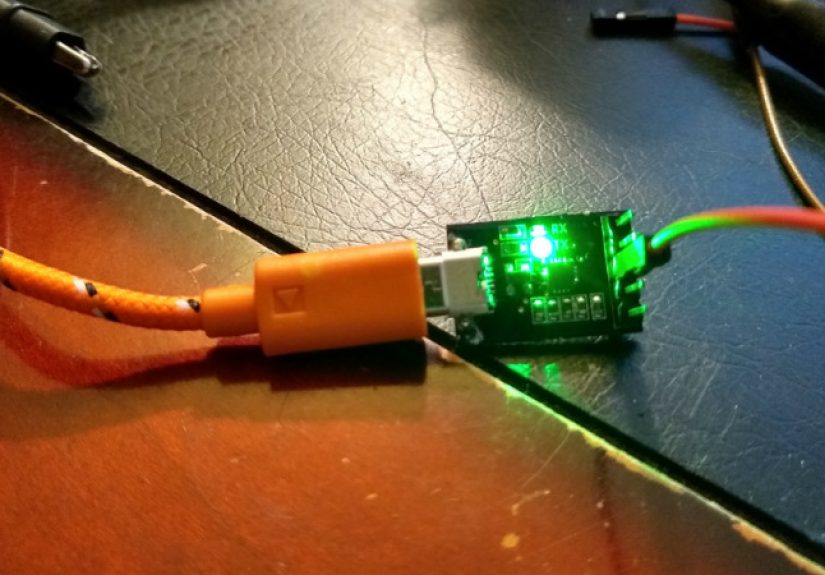
The headline Your USB Serial Adapter Just Became A SDR sounds like clickbait wearing a soldering iron, but the idea behind it is real. In a now-famous hardware experiment, a humble USB-to-UART adapter based on parts like the FT232RL was pushed far beyond its normal day job of talking to microcontrollers. Instead of just spitting out serial data, it was used to generate radio-frequency signals, including AM audio around 1 MHz and control signals that could operate a 27 MHz toy truck. That is equal parts clever engineering, spectral chaos, and “please don’t let compliance testing see this.”
To be clear, this does not mean your drawer full of USB serial dongles has secretly been auditioning for a role in the next software-defined radio startup. But it does mean a modern USB serial adapter can act like a crude, software-driven RF transmitter when the conditions are right. And that makes the project a perfect excuse to talk about what SDR really is, why this hack works, and why it is both brilliant and gloriously imperfect.
What People Mean When They Say “SDR”
A traditional radio relies heavily on dedicated hardware: mixers, filters, modulators, demodulators, oscillators, and all the other wonderful analog blocks that make RF engineers either smile or age rapidly. A software-defined radio shifts as many of those functions as possible into software. Instead of building a different piece of hardware for every signal type, you digitize the signal and let software do the heavy lifting.
That is why SDR became such a big deal. One platform can be repurposed for AM, FM, single sideband, digital modes, spectrum analysis, and more, depending on the front end and the code driving it. A low-cost RTL-SDR dongle made that idea famous for receiving. More capable hardware like HackRF and USRP platforms expanded the idea into serious lab work, security research, education, and wireless development.
So is a USB serial adapter really an SDR? Kind of. It is fairer to call it an SDR-like transmitter hack. It is software-controlled. It generates RF. It can modulate signals in clever ways. But it is not a polished transceiver, not a precision instrument, and definitely not the sort of device you’d hand to someone and say, “Here, build a clean air interface.” It is a spectacular proof of concept that lives somewhere between signal generation and radio art.
How a USB Serial Adapter Ends Up Talking in RF
1. Baud Rate Becomes Frequency
A modern USB-to-UART bridge can move data very quickly. Parts like the FT232RL support high baud rates, and that matters because serial data is just timed voltage transitions. When you push those transitions fast enough, they stop feeling like sleepy logic signals and start looking suspiciously like the beginning of a radio source.
In the serial-port-SDR project, software generates carefully chosen byte streams and throws them at the adapter’s TX pin. That TX line toggles rapidly enough to produce a square wave. If you target a 1 MHz fundamental, the serial port is configured at twice that rate, around 2,000,000 baud, so the repeating bit pattern produces a stable base frequency. That is already wild enough. Your “programming cable” is no longer just talking to a bootloader; it is impersonating a radio transmitter.
2. Fast Edges Create Harmonics
Here is where the trick gets juicier. The TTL output edges on some USB-UART chips are fast. Very fast. And fast edges mean strong harmonics. A square wave does not contain just one frequency; it contains the fundamental plus a series of harmonics extending upward. That means a 1 MHz square wave can spray energy into much higher bands.
In the original experiments, this behavior allowed the project to reach well beyond the medium-wave band. Harmonics were observed high into VHF territory, including a 67 MHz harmonic from a 1 MHz output. That is not because the serial adapter suddenly grew a grown-up RF chain. It is because square waves are messy little overachievers.
3. Software Supplies the Modulation
The last ingredient is software. The project used code to shape the outgoing serial data so the emitted RF carried information. In one example, audio from a WAV file was converted into an amplitude-modulated signal and transmitted around 1 MHz. In another, the output could control a 27 MHz RC toy through harmonic energy. The same boring-looking serial port could behave as a crude CW source, an AM transmitter, and a general RF experiment platform.
That software-centric control is what gives the hack its SDR flavor. The hardware is not inherently designed to be a radio, yet software repurposes it into one anyway. It is the engineering equivalent of teaching a stapler to play jazz.
What the Original Project Actually Demonstrated
The original serial-port-SDR project is not just a theory exercise. It showed real, audible, measurable results. One of the best demonstrations was transmitting audio on 1 MHz using an FT232RL-based serial adapter. The signal could be received with an RTL-SDR setup, and it also worked on a normal AM radio. That last detail is what makes the whole thing feel less like abstract DSP talk and more like practical wizardry. A regular radio could hear what was coming out of a serial TX pin and a length of wire.
Another crowd-pleasing stunt was controlling a 27 MHz RC truck. That does not mean the setup suddenly became a reliable consumer-grade remote-control system. It means there was enough energy, in the right place and format, to trigger the toy from short range. That is both hilarious and educational. If a cheap USB adapter can boss around a toy truck by accident-adjacent design, it tells you a lot about how much hidden RF behavior exists in “digital” hardware.
The project logs also make something very important clear: the signal is dirty. The output is loaded with spurs and harmonics, and the higher harmonics suffer from instability and multiplied phase noise. In plain English, the hack works, but it works like a raccoon driving a shopping cart downhill. Yes, it is moving. No, you should not use it for daily commuting.
Why This Is Brilliant Even Though It Is Messy
The best hacks are not always the cleanest designs. Sometimes they are valuable precisely because they reveal something fundamental. This one reveals three big truths.
First, digital hardware leaks analog reality. Engineers often talk as if systems are neatly divided into digital and analog worlds. Reality laughs at that. Fast logic edges, clocking behavior, line impedance, cables, and layout all create analog consequences. A USB serial adapter may be a digital interface on paper, but in the physical world it is absolutely capable of radiating RF energy.
Second, software can repurpose commodity hardware in absurdly creative ways. SDR itself was already proof of that idea. The serial-port experiment pushes it further by showing that even hardware never intended to be radio equipment can become RF-capable under software control.
Third, cheap tools can still teach expensive lessons. A serious SDR platform is still the right choice for real work. But a ten-dollar adapter that accidentally teaches you about harmonics, modulation, spectral purity, and filtering is one heck of a lab assistant.
Where This Fits in the SDR Family Tree
If the serial adapter stunt sounds familiar, that is because it sits in a broader tradition of turning everyday electronics into radio tools. The RTL-SDR revolution turned inexpensive TV tuner hardware into a wildly capable receive-only SDR. Later, projects like osmo-fl2k repurposed cheap USB-to-VGA adapters into transmit-only SDR platforms by abusing video DAC behavior in clever ways.
The USB serial adapter hack belongs in that same glorious family photo. It is the scrappier cousin with fewer manners. Compared with an RTL-SDR, it is not a receiver. Compared with HackRF, it is nowhere near as flexible or clean. Compared with a USRP, it is basically wearing a fake mustache and pretending to have a PhD. But it still belongs in the conversation because it shows how far software and signal theory can stretch commodity hardware.
What This Hack Is Actually Good For
- Learning RF fundamentals: You can see, hear, and measure modulation, harmonics, and spectral impurities in a very hands-on way.
- Educational demos: It is a memorable way to explain why edge rates matter and why “digital” does not mean “RF-free.”
- Bench experiments: For low-power, tightly controlled setups, it can serve as a crude RF source for exploration.
- Mental rewiring: Once you understand this project, you stop looking at ordinary interfaces as fixed-purpose devices and start seeing signal generators hiding in plain sight.
What This Hack Is Not Good For
- Clean transmissions: The output is rich in unwanted harmonics and spurs.
- Regulatory comfort: Intentional RF emission in the United States falls under FCC rules, and “but it was funny” is not a legal defense.
- Long-range or reliable use: This is a stunt-capable experiment, not a robust communications platform.
- Replacing real SDR gear: If you need receive chains, filtering, calibration, stability, wider tuning, or proper RF performance, buy the real tool.
The Compliance and Common-Sense Part Nobody Should Skip
Any article about improvised RF transmission should pause here and put on its adult supervision glasses. In the U.S., devices that intentionally emit RF energy are regulated. Even low-power unlicensed devices are not free to spray interference around like confetti. The serial-port-SDR project itself came with the obvious warning: do not transmit on frequencies or at power levels you are not authorized to use.
That matters because this hack is especially rich in harmonics. You are not just generating one nice, polite signal. You are generating a whole family reunion of unintended emissions. Without serious filtering, shielding, proper loading, and responsible test conditions, you can cause interference in places you never intended. The project is brilliant. Blindly copying it next to real services is not.
The safest way to think about it is as an educational experiment that belongs in tightly controlled conditions, ideally with proper RF hygiene. This is not the radio equivalent of “just plug it in and see what happens.” That path ends with a useful lesson, but possibly not the lesson you wanted.
Why the Story Still Matters Today
Plenty of hardware headlines age like milk. This one aged like a weird little bottle of garage-made hot sauce: niche, surprising, and somehow still delightful years later. The reason is simple. It captures the maker spirit at its best. It takes a cheap tool, ignores its job description, and discovers a deeper truth about how electronics behave.
It also reminds us that SDR is not just about buying a radio peripheral. It is about adopting a mindset. That mindset says hardware is often more flexible than it looks, software can unlock behaviors people did not plan for, and the line between interface, instrument, and transmitter is sometimes thinner than the silkscreen suggests.
In a world where so much technology arrives sealed, certified, and emotionally unavailable, there is something deeply satisfying about a project that says, “Actually, your serial adapter contains enough timing precision and spectral chaos to sing through the air.”
Final Thoughts
Your USB Serial Adapter Just Became A SDR is a fantastic headline because it lands with equal parts truth and mischief. No, your adapter did not become a polished, general-purpose SDR in the commercial sense. But yes, a modern USB-UART bridge can be pushed into generating modulated RF signals through software, fast edges, and a very generous interpretation of its intended purpose.
That combination makes the project worth celebrating. It is educational without being dry, funny without being empty, and technical without requiring a giant budget. It also sneaks in one of the best lessons in electronics: once you understand the underlying signals, “normal hardware” starts to look a lot less normal.
So the next time you see a USB serial adapter in your parts bin, do not just think “firmware upload tool.” Think: logic levels, edge rates, harmonics, modulation, unintended antennas, and one tiny plastic dongle that briefly decided it wanted to be a radio. That is the kind of ambition we should all aspire to, preferably with a low-pass filter nearby.
Extended Experience Section: What This Kind of Hack Feels Like in Real Life
One reason this project keeps fascinating people is that it matches a very specific maker experience: the moment a familiar object stops being ordinary. Anyone who has spent time at a workbench knows that feeling. You start with a part you think you understand completely, usually because you have used it for years without drama. A USB serial adapter is one of those parts. It is humble. Predictable. Useful in the same way a screwdriver is useful. Then a project like this comes along and reveals that the adapter has been quietly moonlighting as an RF noisemaker the entire time.
The first emotional stage is disbelief. Surely this must be a wording trick. Surely “became a SDR” means “sort of related to radio if you squint hard enough.” But once you dig into the details and see that AM audio can be heard from a normal receiver, disbelief turns into the second stage: delight. This is where the topic becomes sticky. People do not remember dry definitions of edge rates and harmonics nearly as well as they remember the sentence, “A serial cable controlled a toy truck.” That is unforgettable.
The third stage is usually curiosity mixed with mild paranoia. You begin wondering what other everyday electronics are radiating, coupling, leaking, or aliasing behind your back. Suddenly the workbench looks different. The jumper wires look like accidental antennas. The dev board clock feels less innocent. The cable you always treated as a passive accessory now seems like an active participant in a whole invisible drama above the bench. That shift in perspective is incredibly valuable because it is how people move from assembling circuits to truly understanding them.
There is also a practical experience component here. Projects like this teach patience. They teach that “it emitted something” is not the same as “it emitted the right thing cleanly.” They force you to respect filtering, loading, bandwidth, and measurement. You discover very quickly that RF is unforgiving, and that a setup can work and still be terrible. That is not failure. That is education in its most honest form.
Maybe the best part is the storytelling value. Hacks like this become the examples people use later when explaining bigger concepts. A professor can talk about square waves and harmonics. A hobbyist can talk about FCC rules. A radio enthusiast can talk about dirty transmitters and why spectral purity matters. But once you attach those lessons to a cheap USB serial adapter pretending to be a radio, everyone suddenly pays attention. It is weird enough to be memorable and real enough to be useful. That combination is rare, and it is exactly why this topic keeps earning fresh readers years after the original experiment made the rounds.