Table of Contents >> Show >> Hide
- The Big Picture: When Mucinex Is “Probably OK” vs. “Not a Great Idea”
- What Is Mucinex, Exactly? (A Quick “Label Detective” Guide)
- Is Guaifenesin (Plain Mucinex) Safe During Pregnancy?
- What About Mucinex DM (Guaifenesin + Dextromethorphan)?
- Mucinex D and Decongestants: The Trickier Part
- How to Use Mucinex More Safely If Your Prenatal Provider Approves
- Pregnancy-Friendly Alternatives That Often Work Surprisingly Well
- When to Call Your OB/Midwife Instead of “Powering Through”
- FAQ: Quick Answers People Google at 2:00 a.m.
- Conclusion
- Real-Life Experiences: What This Decision Often Looks Like Day-to-Day (About )
Pregnancy has a way of making a normal cold feel like a full-time job you never applied for. One minute you’re fine, the next you’re coughing like a cartoon character and wondering if your baby can hear your sinuses arguing with gravity. That’s usually when the big question pops up: Can I take Mucinex while pregnant?
Here’s the truth (with zero scare tactics and maximum practicality): “Mucinex” isn’t just one medicine. It’s a brand with multiple formulassome are often considered reasonable options in pregnancy when used correctly, and some are better avoided (especially early on). The safest choice depends on which Mucinex product, which trimester, your symptoms, and your personal health history.
The Big Picture: When Mucinex Is “Probably OK” vs. “Not a Great Idea”
In many prenatal clinics, the ingredient most people mean by “Mucinex” is guaifenesin (an expectorant that thins mucus). The available research does not suggest a major increase in risk when it’s used appropriately, but data are limited, so many clinicians recommend being extra cautious in the first trimester. Later in pregnancy, it’s more commonly considered when symptoms are truly annoyingor when thick chest mucus is turning you into a human accordion.
The bigger concern is that some Mucinex products include other ingredients (like decongestants), and those can be more complicated during pregnancyespecially in the first 12 weeks.
What Is Mucinex, Exactly? (A Quick “Label Detective” Guide)
The word “Mucinex” on the box tells you almost nothing on its own. Flip the package and look for the active ingredients. Here are the common ones you’ll see:
1) Mucinex (plain)
- Active ingredient: guaifenesin
- Purpose: loosens and thins chest mucus (expectoration, not magic)
- Best for: chest congestion with a productive (or trying-to-be-productive) cough
2) Mucinex DM
- Active ingredients: guaifenesin + dextromethorphan
- Purpose: thins mucus + calms the cough reflex
- Best for: cough that won’t let you sleep, plus mucus
3) Mucinex D (and similar “D” products)
- Active ingredients: guaifenesin + pseudoephedrine (a decongestant)
- Purpose: chest mucus + nasal/sinus congestion
- Pregnancy note: decongestants are often avoided in the first trimester unless your clinician specifically recommends them
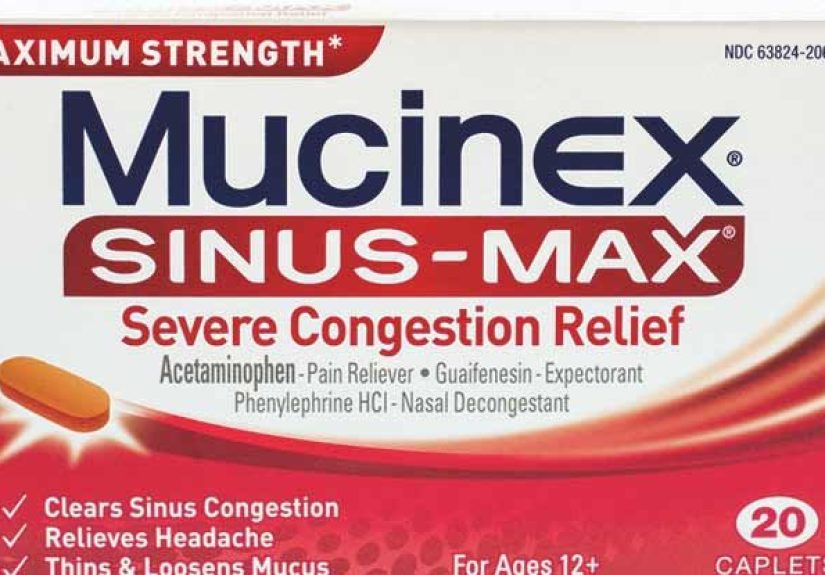
4) Multi-symptom versions (Sinus-Max, Fast-Max, “All-in-One,” etc.)
- May include: acetaminophen, phenylephrine, antihistamines, cough suppressants, and more
- Pregnancy note: combo products are where people accidentally take something they didn’t mean to
Rule of thumb: In pregnancy, many clinicians prefer single-symptom, single-ingredient products whenever possibleso you treat what you actually have, without unintentionally collecting extra ingredients like they’re Pokémon.
Is Guaifenesin (Plain Mucinex) Safe During Pregnancy?
Guaifenesin is an expectorant. It helps thin and loosen mucus so coughing becomes more productive (gross, but helpful). Most evidence suggests that if there is any increased risk, it appears to be low, but the research isn’t unlimitedso medical guidance tends to sound like: “Probably fine when truly needed, but don’t take it casually.”
Why some providers say “avoid it early”
The first trimester is when fetal organs are forming, and clinicians often recommend minimizing non-essential medications during that window. With guaifenesin, there are some mixed findings in older studies, and while the overall picture is reassuring, many prenatal providers still take a cautious approach early onespecially if symptoms can be managed with non-drug options.
Practical take
- First trimester: Ask your OB/midwife before using. Many will recommend trying non-med approaches first.
- Second/third trimester: Often considered a reasonable option for chest congestion when taken as directed.
- Any trimester: Don’t use it “just because.” Use it because it matches your symptoms.
What About Mucinex DM (Guaifenesin + Dextromethorphan)?
Dextromethorphan is a cough suppressant. Available data are generally reassuring when it’s used at recommended doses. The bigger pregnancy concern is usually not the cough suppressant itselfit’s the risk of combo products and accidentally taking unnecessary ingredients (or duplicating meds).
If you’re coughing so much that you can’t rest, can’t keep fluids down, or you’re pulling muscles you didn’t know existed, your prenatal provider may be open to a short course of a cough suppressant. But if your cough is productive (bringing up mucus), suppressing it too aggressively can be counterproductivesometimes your body is trying to do gross-but-important cleanup.
Mucinex D and Decongestants: The Trickier Part
Decongestants (especially pseudoephedrine) can narrow blood vessels. That’s part of how they relieve congestionbut it’s also why pregnancy guidance tends to be more cautious, particularly in the first trimester. Major OB guidance commonly recommends avoiding pseudoephedrine during the first 3 months unless the benefit clearly outweighs the risk.
Pseudoephedrine (often found in “D” products)
- Often avoided in the first trimester because some studies suggest a small association with rare birth defects.
- May be considered later if symptoms are severe and your clinician agrees.
- Can raise blood pressure and may be a poor choice if you have hypertension or preeclampsia risk.
Phenylephrine (common in on-the-shelf combo cold meds)
Many “daytime” multi-symptom cold products use phenylephrine. Beyond pregnancy considerations, there’s a practical issue: evidence reviews have questioned whether oral phenylephrine works well at all at typical OTC doses. In pregnancy, when you want the best benefit for the least exposure, a questionable payoff is… not ideal.
Bottom line: Avoid decongestant-containing Mucinex products unless your prenatal provider specifically okays themand be extra cautious in the first trimester.
How to Use Mucinex More Safely If Your Prenatal Provider Approves
If you and your provider decide Mucinex is appropriate, keep it boring (boring = safer):
1) Choose the simplest product that matches your symptom
- Chest mucus only? Consider plain guaifenesin.
- Dry, nonstop cough keeping you awake? Your provider may allow DM for a short time.
- Sinus pressure and stuffiness? Start with non-med options first; decongestants are the trickiest.
2) Follow label dosing and keep it short-term
For many extended-release guaifenesin tablets, typical adult labeling allows dosing every 12 hours with a daily maximum. Don’t exceed the package directions, and don’t crush or chew extended-release tablets (that can dump the dose all at once).
3) Avoid “stacking” ingredients
This is the sneaky one. If you take a combo cold medicine and then also take Tylenol, you might accidentally double-dose acetaminophen. Or you might combine multiple cough suppressants. Read labels like you’re proofreading a text before sending it to your crush: slowly and twice.
4) Skip alcohol-containing liquid cold meds
Some liquid cough/cold formulas contain alcohol. In pregnancy, choose alcohol-free products.
Pregnancy-Friendly Alternatives That Often Work Surprisingly Well
Before you medicate, try the stuff your grandmother would recommend (and your doctor will also recommend, just with better posture):
For chest congestion
- Hydration: warm fluids help thin mucus
- Humidifier or steamy shower
- Honey in warm water/tea (not for babies under 1 year, but fine for adults)
- Elevate your head while sleeping
For nasal/sinus congestion
- Saline spray or saline rinse (sterile/distilled water if using a neti pot)
- Nasal strips at night
- Warm compress over the cheeks/forehead
For sore throat + cough irritation
- Salt-water gargles
- Throat lozenges (check ingredients, don’t overdo medicated ones)
- Warm soup (yes, it counts as medicine emotionally)
When to Call Your OB/Midwife Instead of “Powering Through”
Some symptoms deserve a professional opinionpregnancy is not the time to win an award for suffering silently.
- Fever (especially persistent or high)
- Shortness of breath, chest pain, wheezing, or trouble breathing
- Dehydration (can’t keep fluids down, dizziness, very dark urine)
- Symptoms that last more than about 7–10 days or suddenly worsen
- Severe sinus pain, ear pain, or a cough producing blood
- If you have asthma or another lung condition and your breathing changes
FAQ: Quick Answers People Google at 2:00 a.m.
Is Mucinex safe while breastfeeding?
Guidance often considers guaifenesin unlikely to cause problems when used as directed, but data are limited. If you’re breastfeeding, it’s still smart to choose single-ingredient, alcohol-free products and check with your pediatrician or lactation consultantespecially for combo formulas containing decongestants, which may reduce milk supply in some people.
Can I take Mucinex “just to prevent a cough from getting worse”?
Usually, no. Medication is most appropriate when you have a symptom it treats. If you don’t have chest mucus, an expectorant isn’t doing much besides adding an extra substance your body has to process.
What’s the safest “Mucinex” choice if my provider says yes?
Often, the simplest answer is plain guaifenesin for chest congestionavoiding decongestant-heavy combos unless specifically recommended.
Conclusion
So, is it safe to take Mucinex while pregnant? Sometimesdepending on the formula. Plain Mucinex (guaifenesin) and Mucinex DM (guaifenesin + dextromethorphan) are commonly discussed as options when truly needed, especially later in pregnancy, but you should still check with your prenatal providerparticularly in the first trimester. Products like Mucinex D (with pseudoephedrine) and multi-symptom blends require extra caution because decongestants and extra ingredients can complicate the risk-benefit equation.
The safest approach is the least dramatic one: treat the symptom you actually have, choose single-ingredient products when possible, use the lowest effective dose for the shortest time, and loop in your OB/midwife if you’re unsure. When it comes to pregnancy and cold meds, “simple” isn’t just a vibeit’s a strategy.
Real-Life Experiences: What This Decision Often Looks Like Day-to-Day (About )
People rarely ask about Mucinex in a calm, well-rested state. The question usually arrives when you’re pregnant, congested, and emotionally attached to the idea of breathing through your nose again. Here are a few realistic (and very common) ways this plays out, based on the kinds of scenarios prenatal clinics hear all the time.
Experience 1: “I’m 9–11 weeks and terrified to take anything.”
Early pregnancy often comes with extra cautionsometimes from your provider, and sometimes from your own brain doing late-night Olympic-level worry. In this stage, many people try non-med approaches first: hot showers, humidifiers, saline spray, honey in tea, and sleeping propped up like a stylish wedge of cheese. If chest congestion builds and the cough becomes relentless, some will message their OB portal with a very specific question: “Is plain guaifenesin okay for me right now?” That specificity matters. “Can I take Mucinex?” is harder to answer than “Can I take guaifenesin 600 mg extended-release for two days?” A lot of first-trimester patients ultimately decide to wait it out unless symptoms are interfering with hydration, sleep, or asthma control.
Experience 2: “I’m 18–28 weeks and I just need to sleep.”
In the second trimester, the conversation often shifts from “I don’t want to take anything” to “I can’t function like this.” A common story: mucus settles in the chest, coughing ramps up at night, and suddenly you’re awake at 3 a.m. negotiating with your own lungs. In these cases, people often have better luck with a two-step plan: (1) mucus-thinning basics (fluids + humidifier), and (2) a short, provider-approved medication choice that matches the symptomplain guaifenesin for thick mucus, or a short course of a cough suppressant if the cough is dry and nonstop. Many patients also become label experts during pregnancy, double-checking that they didn’t accidentally buy a “D” product with a decongestant they’re trying to avoid.
Experience 3: “I bought a combo cold med and then realized it had three extra ingredients.”
This is almost a pregnancy rite of passage. Someone grabs a multi-symptom “Fast-Max” style product, gets home, reads the label, and realizes it contains a decongestant, a pain reliever, and a cough suppressantwhen all they wanted was help with mucus. The usual next move is to swap to single-ingredient options and treat symptoms individually. People often report feeling more in control (and less worried) when they stop taking “kitchen sink” formulas and start taking only what’s needed.
Experience 4: “My provider said: try everything else first, then medicate if needed.”
This is probably the most common experience of all. Many prenatal teams encourage conservative measures first, then recommend a medication only if symptoms are disrupting sleep, hydration, or breathingbecause stress, poor sleep, and dehydration can also take a toll. Patients who follow that plan often feel less guilt about taking a medication later because they know they tried the low-risk options first and made a deliberate choice with guidance.