Table of Contents >> Show >> Hide
- Meet the Mississippi Wall-Mount Kitchen Faucet
- Why Choose a Wall-Mount Kitchen Faucet?
- How the Soap Holder and Flat Levers Work in Daily Life
- Planning Your Installation: Height, Reach, and Sink Pairing
- Styling Ideas: Where the Mississippi Faucet Really Shines
- Care and Maintenance Tips
- Is the Mississippi Wall-Mount Faucet Right for You?
- Real-Life Experiences with the Mississippi Wall-Mount Faucet
- Conclusion
Some kitchen fixtures quietly do their job. Others walk into the room, flip their perfectly square levers, and say,
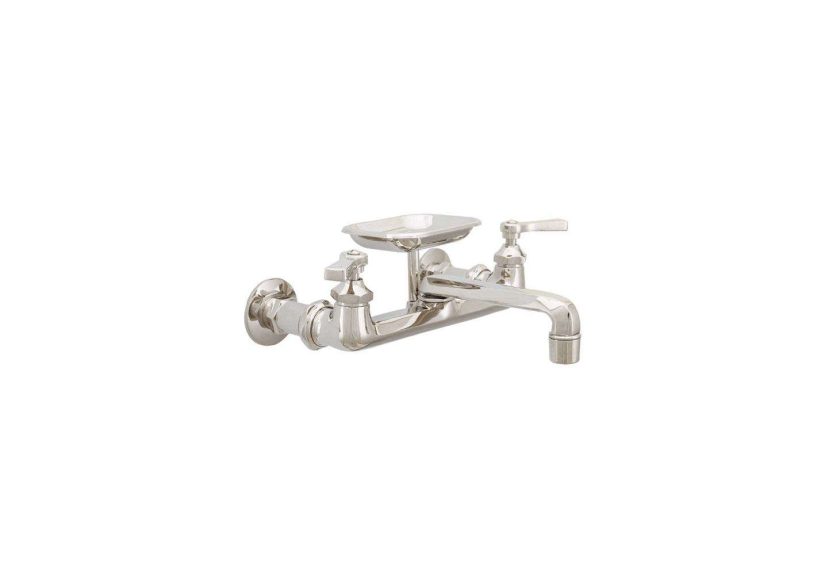
“You’re welcome.” The Mississippi Wall-Mount Kitchen Faucet with Soap Holder and Flat Levers is
definitely in the second group. It’s part workhorse, part jewelry for your backsplash, and it happens to be
cleverly designed for real-life cooking chaos.
If you love a kitchen that feels a bit like a classic European cookspace with a modern twist, this faucet lands right
in that sweet spot. Wall-mounted, solid brass, with a built-in soap tray and crisp, geometric handles, it mixes
1930s glamour with everyday practicality.
In this guide, we’ll look at what makes the Mississippi faucet special, how wall-mount kitchen faucets behave
in real homes, what to consider before you drill into that backsplash, and how to style and care for this piece so it
stays gorgeous for years.
Meet the Mississippi Wall-Mount Kitchen Faucet
The Mississippi collection is designed to echo the streamlined elegance of the 1930s, with bold lines and a strong,
architectural presence. This isn’t a flimsy fixture that disappears; it’s an anchor
point for your entire sink wall.
Key Specs at a Glance
- Construction: Solid brass body for durability and weighty, premium feel
- Cartridges: Drip-free ceramic disc cartridge system for smooth, long-lasting operation
- Installation type: 2-hole wall-mount, 8” centerset (bridge-style layout)
- Spout reach: Approximately 8” from the wall, good for standard kitchen sinks
- Flow rate: Up to 1.8 GPM at 60 psi, meeting common U.S. water-efficiency requirements
- Finishes: Offered in multiple tarnish- and corrosion-resistant finishes (commonly polished
chrome, nickel, or brass) - Soap holder: Integrated brass tray measuring roughly 4 7/16” wide x 3 5/16” deep
- Handles: Flat lever handles with a geometric, square profile for precise control
On paper, those specs say “solid, efficient faucet.” In person, the Mississippi looks like it just stepped
out of a boutique hotel kitchen. The exposed bridge, the squared-off handles, and the chunky soap deck all read as
thoughtfully designed rather than purely utilitarian.
Design Details: 1930s Glamour for Modern Kitchens
The Mississippi faucet is inspired by early 20th-century industrial fixtures, but softened for residential use. The
geometric silhouette and square levers give it a tailored, almost tailored-suit look: clean lines, sharp edges, no
unnecessary ornament.
Because it’s wall-mounted, the “bridge” (the bar that visually connects the hot and cold sides) sits
proudly above the backsplash instead of hiding under the sink. Bridge-style faucets are beloved by designers for the
way they add a little architectural structure to a kitchen wall, especially when paired with classic materials like
subway tile, beadboard, or limewashed plaster.
The flat levers are more than just pretty: they’re easy to grip even with soapy hands or when you’re
juggling a pot. And the integrated soap tray keeps your bar soap or scrub brush from sliding around the counter,
which is an underrated but very real joy on a Monday night.
Why Choose a Wall-Mount Kitchen Faucet?
Before falling in love with any specific model, it helps to understand the personality of wall-mount faucets in
general. They behave differently than standard deck-mounted faucets, and that’s both their biggest strength and
their main caveat.
Benefits: More Space, Easier Cleaning, Strong Style
Several manufacturers and design pros highlight a few consistent advantages of wall-mounted faucets:
- More counter space. Because the faucet is anchored to the wall instead of the sink deck, your
counter or sink rim stays cleaner and more open for soap dishes, cutting boards, and prep work. - Easier cleaning. No baseplate, no tight grout lines around the faucet body, and fewer places for
gunk to collect. A quick swipe of a cloth along the wall and sink edge is usually enough. - Customizable height. Unlike deck-mount faucets that are fixed in place, wall mounts can be set
higher or lower depending on your sink and cooking style (within reason and code). - Big visual impact. Designers often use wall-mount faucets as a focal point because the faucet
sits at eye level, front and center on the backsplash.
For small kitchens in particular, that extra counter space and streamlined look can make everything feel less cluttered
and more intentional.
Drawbacks: Installation, Costs, and Compatibility
Wall-mount faucets do come with a few strings attached:
- More complex installation. The plumbing lines need to be inside the wall at the correct height and
spacing, which usually means opening the wall and hiring a pro, especially for remodels. - Higher total cost. The faucet itself may cost more than a basic deck-mount, and the labor for
routing or rerouting plumbing in the wall can add to the budget. - Limited layout options. Not every kitchen has a suitable wall or enough depth behind the sink to
house the pipes and rough-in valves. Some walls simply can’t be opened easily. - Maintenance access. If something fails inside the wall, repairs can be more involved than swapping
out a deck-mounted faucet where the plumbing is exposed under the sink.
None of these are deal breakers, but they are things you’ll want to think through before you build your entire
backsplash around a wall-mount showpiece.
How the Soap Holder and Flat Levers Work in Daily Life
One of the most charming features of the Mississippi faucet is the integrated soap holder. Instead of a separate dish
that slides around or leaves a ring on your counter, the built-in tray is part of the faucet body itself.
That little deck is sized to hold a standard bar of dish soap, a scrub brush, or a small sponge. Because it’s
elevated, anything sitting on it dries faster and doesn’t turn into a soggy mystery puddle on your counter.
The flat levers also punch above their weight. Lever handles are often recommended for universal design because you can
operate them with the side of your hand, a wrist, or even an elbow if your hands are full. Flat levers make that even
easier and look crisp against a tiled wall.
For frequent cooks, having clearly separated hot and cold levers also makes fine-tuning water temperature feel more
precise than a single-mix handle. That can be a small but real plus when you’re rinsing greens, tempering
chocolate, or thawing something delicate.
Planning Your Installation: Height, Reach, and Sink Pairing
A wall-mount faucet isn’t something you eyeball and hope for the best. Mounting height, spout reach, and sink
depth all work together to determine whether your faucet feels “just right” or “why does this splash
so much?”
How High Should You Mount It?
Design resources and faucet makers often suggest that wall-mounted faucets sit roughly 6–8 inches above the
countertop or sink deck, for comfortable use without excessive splashing.
For a kitchen sink, you also want about 6 inches or more from the end of the spout to the bottom of the sink basin so
you can fit pots and sheet pans underneath. Deeper farmhouse or apron-front sinks can handle a
higher faucet; shallower undermounts usually do better with a slightly lower mount to reduce spray.
Getting the Reach Right
The Mississippi faucet’s roughly 8-inch spout reach is designed to clear most kitchen sinks comfortably.
Ideally, the stream of water should land close to the drain, not halfway up the bowl or on the front wall of the sink.
If you’re planning new cabinetry and sink placement, sketch out a side profile: wall, backsplash, faucet, and
sink. That quick drawing can save you from the heartbreak of water hitting the lip of the sink instead of the center.
Wall Conditions and Plumbing
Before committing to any wall-mount faucet:
- Confirm that the wall behind your sink can be opened and that there’s enough depth for supply lines and
fittings. - Plan for blocking or support inside the wall so the faucet isn’t only relying on the plumbing for support.
- Work with a licensed plumber to set the 8-inch centers accurately — being off by even a fraction of an inch
can turn installation into a headache.
The Mississippi faucet is designed for standard 8” centers, which makes it easier to spec in many traditional
kitchens, but the rough-in still has to be exact.
Styling Ideas: Where the Mississippi Faucet Really Shines
Because of its vintage-meets-modern vibe, the Mississippi Wall-Mount Kitchen Faucet plays well with several popular
kitchen styles:
- Classic white kitchens. Picture off-white shaker cabinets, warm brass or nickel hardware, and a
simple subway tile backsplash. The Mississippi faucet becomes a refined focal point that ties the whole wall
together. - Industrial-inspired spaces. With its exposed bridge and strong lines, it feels right at home with
concrete counters, dark grout, and open shelving. - European cottage or “unfitted” kitchens. The faucet’s built-in soap deck nods
to old-world utility rooms, especially when paired with a fireclay or enamel farmhouse sink. - Minimal modern. In a polished chrome or nickel finish, the flat levers and clean geometry work
with minimal cabinetry and slab backsplashes without looking fussy.
If you’ve ever struggled to find a faucet that feels both timeless and current, this one hits that balance
nicely. It’s not chasing a short-lived trend, but it doesn’t look like it came out of a builder’s
bulk faucet catalog either.
Care and Maintenance Tips
The Mississippi faucet is built from solid brass with durable finishes, but it still appreciates a little TLC.
- Daily cleaning: Wipe down with a soft cloth and mild soap. Avoid harsh abrasives or scouring
pads that can dull the finish. - Hard water care: If you live in an area with hard water, dry the faucet after heavy use and
occasionally soak the aerator in vinegar to remove mineral deposits. - Soap tray hygiene: Rinse the integrated tray periodically so soap residue doesn’t build up.
Because it’s metal, not ceramic, it stands up well to regular cleaning. - Handle feel: Lift and lower the flat levers gently; ceramic disc cartridges don’t need
much force and are designed for smooth operation over time.
As with any wall-mount faucet, keep an eye out for changes in water pressure or unusual drips. Addressing issues early
helps avoid opening the wall later for larger repairs.
Is the Mississippi Wall-Mount Faucet Right for You?
The Mississippi Wall-Mount Kitchen Faucet with Soap Holder and Flat Levers is a strong match if you:
- Love vintage-inspired or boutique-hotel style kitchens.
- Want your faucet to be a visible design feature, not just an afterthought.
- Are planning a renovation where opening the wall and roughing in new plumbing is already on the table.
- Value solid brass construction and ceramic disc reliability over bargain-bin fixtures.
It may not be ideal if you’re trying to swap out a faucet without touching the backsplash, or if you have a
tight budget for plumbing work. In those cases, a deck-mounted bridge faucet might give you some of the same visual
charm with simpler installation.
Real-Life Experiences with the Mississippi Wall-Mount Faucet
Specs and style are one thing, but how does a faucet like this actually feel once it’s installed and you’re
living with it every day? Let’s walk through a few realistic scenarios where the Mississippi faucet really
earns its keep.
The Weekend Cook’s Best Friend
Imagine a Saturday afternoon in a 1920s bungalow kitchen. You’ve got bread proofing on one counter, a pot of
stock simmering on the stove, and a mountain of herbs waiting in the sink. With the Mississippi faucet, you can swing
the spout right over your prep bowls, rinse produce without fighting for counter space, and tap the flat levers with
a wrist if your hands are covered in dough.
The built-in soap holder shines here. Instead of a plastic bottle rolling around the counter, a simple bar of dish
soap or a compact scrub brush lives on the tray, always within reach but never in the way. When you’re deep in
a cooking project, having those little things under control makes the whole kitchen feel calmer.
A Renovated Row House Kitchen
In narrow city row houses, counter space is gold. Homeowners who choose the Mississippi faucet for a galley kitchen
often do it for two reasons: freeing the sink deck and getting a clean, vertical focal point on the longest wall.
After the dust settles from the renovation, many people notice how much easier it is to wipe down the counters and
backsplash. There’s no faucet base to clean around, no awkward caulk line to scrub. Crumbs and spills have
nowhere to hide. The faucet becomes part of the wall architecture instead of a lump on the counter.
Over time, that ease of cleaning isn’t just a small perk; it’s what helps a busy kitchen stay welcoming
instead of constantly feeling like a cleanup project.
The Serious Home Barista
The Mississippi faucet also works surprisingly well for anyone who treats their kitchen sink like a coffee bar.
Because of its reach and height, it makes filling gooseneck kettles, rinsing portafilters, and cleaning pitchers feel
more like a dedicated cafe setup than a basic sink station.
The soap tray doubles nicely as a landing spot for a small tamping mat or espresso cleaning brush. When you’re
done pulling shots, you can rinse everything quickly, wipe down the tray, and the faucet wall is back to looking
perfectly composed.
Living with a Wall-Mount Faucet Long-Term
Over months and years, owners of wall-mounted faucets tend to notice the same pattern: the faucet itself becomes part
of the background — in a good way. It does its job without fuss, but every so often, you catch the light
reflecting off the finish or notice how the flat levers line up with your cabinet hardware, and you get a little
jolt of satisfaction.
The Mississippi faucet’s solid brass body and ceramic discs are designed for long-term use, which means the
handles should remain smooth and the spout steady if the faucet is installed correctly and maintained reasonably
well. In practice, most people interact with it dozens of times a day without thinking
about it — and that’s the mark of a good fixture.
The only thing that occasionally reminds you it’s a wall-mount is when you want to change something in the
backsplash or relocate the sink. Moving it is a bigger project than swapping a deck-mounted faucet, but for most
homeowners who choose this style, the faucet is part of the long-term plan, not a temporary placeholder.
Everyday Takeaway
In day-to-day life, the Mississippi Wall-Mount Kitchen Faucet with Soap Holder and Flat Levers behaves like a
well-designed tool that happens to look incredible. It saves a bit of space, makes cleaning easier, adds a lot of
personality to your kitchen wall, and supports everything from quick coffee duty to serious weekend cooking.
If you’re ready to commit to a wall-mount layout and want a faucet that feels substantial, thoughtfully
detailed, and quietly glamorous, the Mississippi is the kind of choice you enjoy every time you turn on the tap.
Conclusion
The Mississippi Wall-Mount Kitchen Faucet with Soap Holder and Flat Levers is more than a pretty face. Its solid
brass construction, ceramic disc performance, built-in soap tray, and strong 1930s-inspired lines give you a fixture
that carries its weight both visually and functionally.
It does ask for thoughtful planning and a bit more investment upfront, especially when it comes to plumbing in the
wall. But if you want a kitchen that feels intentional, timeless, and quietly luxurious, this faucet is one of those
upgrades that you’ll notice and appreciate every single day.