Table of Contents >> Show >> Hide
- Why Kyle Norton’s stack is worth studying
- Owner in 60 seconds: the business context
- Kyle Norton’s core app stack
- 1) Salesforce: revenue’s system of record
- 2) Snowflake: analytics that outgrows CRM dashboards
- 3) Salesloft: structured outreach and follow-up
- 4) Gong: conversation intelligence for what buyers actually said
- 5) Replayz.io: AI call scoring to scale coaching
- 6) Momentum.io: the “make it happen” layer across tools
- 7) DataLane: market intelligence for the local economy
- 8) Slack: the execution layer (and the reality check)
- 9) Notion: playbooks, enablement, and “the one place we wrote it down”
- How the stack works together (the real secret)
- What you can copy (without copying the exact tools)
- Common pitfalls (and how a focused stack avoids them)
- Conclusion
- Extra (≈): experience-based lessons from running a CRO stack at scale
Most people think “revenue” is a number. A CRO knows it’s a system: lead flow, messaging, sales execution, coaching, forecasting, and the unglamorous plumbing that keeps all of that from exploding on the last day of the quarter.
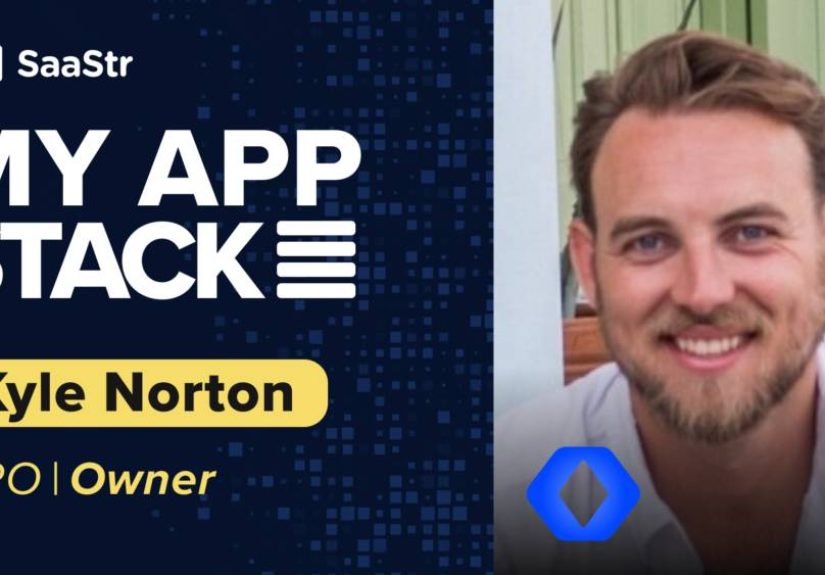
This is a look at the core app stack Kyle Norton uses as Chief Revenue Officer (CRO) at Owner a restaurant tech company helping independent restaurants grow direct online sales with tools like websites, online ordering, marketing automation, loyalty, and branded apps. The list is refreshingly focused. The magic is how the tools connect, not how long the receipt is.
Why Kyle Norton’s stack is worth studying
Kyle Norton leads Owner’s go-to-market engine the kind that scales fast enough to make “How are we doing?” a surprisingly complicated question. In a recent interview, Owner was described as scaling from a few million in ARR to approaching nine figures with Kyle in the CRO seat. That kind of growth tends to break sloppy processes, flimsy reporting, and manager bandwidth. So his stack is designed to do three things:
- Keep a single source of truth (so teams argue about strategy, not spreadsheets).
- Scale coaching (so performance improves without managers listening to every call forever).
- Turn insight into action (because “interesting” is not a revenue metric).
Owner in 60 seconds: the business context
Owner sells software to independent restaurants a segment with thin margins and intense competition (including delivery marketplaces). Owner positions itself as an all-in-one growth platform: an AI-powered restaurant website, direct online ordering, marketing and retention tools, loyalty/rewards, and often a branded mobile app so restaurants can win repeat orders without relying entirely on third-party apps.
For a revenue leader, this is a high-velocity environment: many leads, many calls, and lots of variability in customer situations. That means the stack has to be opinionated, integrated, and fast.
Kyle Norton’s core app stack
In a My App Stack share, Kyle called out nine tools that cover the full revenue workflow: CRM, warehouse, outbound execution, call intelligence, coaching, automation, collaboration, and documentation.
1) Salesforce: revenue’s system of record
Salesforce is the “home base” where pipeline, stages, ownership, and forecasting live. In a scaling org, it’s not just a database it’s the agreed-upon reality. When Salesforce is clean, leadership can ask better questions. When it’s messy, every meeting becomes an interpretive dance.
- Pipeline + forecasting structure
- Opportunity hygiene and handoffs
- Integration hub for sales tools
2) Snowflake: analytics that outgrows CRM dashboards
Kyle also emphasizes the data warehouse. As companies scale, “CRM-only reporting” starts to crack: product data, marketing attribution, support signals, and finance often need to be analyzed together. Snowflake gives RevOps a governed place to join data sources and build metrics that don’t change based on who made the chart.
- Unified reporting across GTM + product usage
- Cohorts, segmentation, and channel performance
- More durable metrics than spreadsheet-based reporting
3) Salesloft: structured outreach and follow-up
Salesloft is a sales engagement platform built for repeatable cadences sequences of emails, calls, and tasks that help reps move leads through a consistent motion. In high lead volume, consistency beats heroics. Cadences also create measurable activity data, which turns coaching into something more scientific than “I have a hunch.”
4) Gong: conversation intelligence for what buyers actually said
Gong records, transcribes, and analyzes sales calls. That matters because calls are where deals are won or lost and because rep notes (bless them) are often “optimistic nonfiction.” With conversation intelligence, leaders can spot patterns in objections, value prop confusion, and competitive mentions then fix the system, not just the symptoms.
5) Replayz.io: AI call scoring to scale coaching
Kyle’s favorite new addition is Replayz.io, which uses AI to score calls against a defined framework. Why CROs love this idea: coaching doesn’t scale linearly with headcount. Managers can’t review everything, but AI can. In Kyle’s share, call scoring helped move win rates from 38% to 53% over a 10-week window the kind of lift that can change hiring plans, quotas, and confidence.
Used well, call scoring does two things at once: it gives reps faster feedback, and it gives leaders a heat map of which skills are breaking across the team (discovery, objection handling, close, or even basic agenda setting).
6) Momentum.io: the “make it happen” layer across tools
Momentum.io sits between systems like Salesforce, Gong, and Slack to turn insights into actions. If your org ever said, “We have great data but nothing changes,” automation is usually the missing link. Momentum helps by posting structured briefs, nudges, and summaries where work happens and by reducing the manual CRM updates that mysteriously disappear whenever the calendar gets busy.
7) DataLane: market intelligence for the local economy
Selling into independent restaurants means your ideal buyers aren’t always neatly cataloged in a perfect database. DataLane focuses on structuring messy local business data into usable market intelligence, helping teams target the right accounts and contacts. In practical terms: fewer wasted touches, better territory design, and a cleaner picture of TAM and prioritization.
8) Slack: the execution layer (and the reality check)
Slack is where fast organizations operate: deal rooms, escalations, handoffs, and cross-functional coordination. Kyle’s stack leans into that reality by using automation (Momentum) to deliver the right information directly into channels so people don’t need a meeting to learn what changed.
9) Notion: playbooks, enablement, and “the one place we wrote it down”
Notion houses internal documentation: messaging, onboarding, enablement, process docs, and decision logs. This is less exciting than AI call scoring, but it’s a quiet superpower. When headcount grows, documentation is how you avoid rebuilding the same knowledge every time someone new joins.
How the stack works together (the real secret)
If you diagram this stack, the flow looks like a closed loop:
- Execution: Salesloft drives outreach and follow-up.
- Truth capture: Gong records what actually happened on calls.
- Skill improvement: Replayz scores and highlights coaching moments.
- Action routing: Momentum pushes summaries, risks, and next steps into Slack and updates Salesforce.
- Measurement: Salesforce tracks pipeline; Snowflake unifies broader performance and cohorts.
- Scale: Notion keeps playbooks and onboarding consistent as teams grow.
That loop matters because it shortens the gap between “We noticed a problem” and “We fixed it in the field.” If an objection is tanking win rates, you don’t want that insight trapped in a monthly deck. You want it in a coaching plan, a Notion playbook update, a Salesloft cadence tweak, and a Slack nudge this week.
What you can copy (without copying the exact tools)
Even if your company doesn’t sell to restaurants or doesn’t use these exact apps the architecture is portable. Here’s the framework behind it:
Build one truth layer, one coaching layer, and one action layer
- Truth layer: a CRM for operational reality + a warehouse for governed analytics.
- Coaching layer: conversation intelligence plus structured scoring/feedback against your playbook.
- Action layer: automation that pushes next steps where teams work every day.
Use a weekly rhythm that forces learning
A stack only pays off when it supports a cadence: pipeline review, forecast review, call review (sampled or scored), and one or two specific skill themes per week. The goal is compounding improvement not a shiny dashboard that gets admired and ignored.
Common pitfalls (and how a focused stack avoids them)
- Tool sprawl: Buying overlapping products that each solve a slice of the same problem.
- Dashboard theater: Pretty charts with unstable definitions and no operational change.
- Manager overload: Assuming coaching scales with headcount without new systems.
- Insights trapped in meetings: Learning that never turns into behavior change.
Conclusion
Kyle Norton’s app stack at Owner is a blueprint for modern revenue leadership: keep truth clean (Salesforce + Snowflake), standardize execution (Salesloft), learn from reality (Gong), scale coaching (Replayz), automate the glue work (Momentum), and make the whole thing usable day-to-day (Slack + Notion). It’s not about having the most tools it’s about having the right loop.
Extra (≈): experience-based lessons from running a CRO stack at scale
A stack like this looks tidy on paper. The lived experience is messier and more interesting. Here are practical lessons that tend to show up when you operate an integrated CRO stack in a high-velocity environment like Owner’s.
1) Adoption beats sophistication. The best tech stack in the world fails if reps don’t use it. In practice, teams win when the stack reduces friction: fewer tabs, fewer manual updates, fewer “Where do I find that?” moments. Automations that push the next step into Slack often outperform complicated dashboards, because they meet people in the flow of work.
2) Coaching improvements come from specificity. Managers often know a rep “needs to improve discovery,” but that’s like telling a chef to “improve cooking.” Call intelligence plus scoring changes the conversation: “You didn’t confirm the goal,” “You skipped impact questions,” “You talked 70% of the time,” “You never tested pricing.” Specific coaching creates repeatable change and makes enablement content far more targeted.
3) Your playbook is a product. When AI scoring reveals that a certain objection shows up in 30% of calls, the best teams don’t just coach harder. They update the playbook, update the Salesloft messaging, and run a short experiment: new talk track, new sequencing, new proof points. The playbook evolves the way software does shipped, measured, improved.
4) Data definitions are a leadership decision. Warehouses and analytics tools can’t resolve confusion if leaders keep shifting definitions. “Qualified lead,” “pipeline,” and “win rate” need stable meaning long enough to learn from. One of the biggest scaling experiences for revenue teams is discovering that consistency creates speed. Once everyone trusts the numbers, decisions happen faster and politics fade.
5) Slack can turn into noise without guardrails. Automation is powerful, but it can also become an alert firehose. The best approach is high-signal design: fewer notifications, clear ownership, and templates that make next steps obvious. A good Slack summary isn’t just “what happened” it’s “what’s nextP; who owns it; when it’s due.”
6) The biggest ROI is often “time returned.” The practical joy of an integrated stack is not that it feels futuristic. It’s that it returns time: less admin work for reps, less call listening for managers, fewer status meetings for cross-functional teams. That time gets reinvested into better discovery, tighter messaging, more customer learning, and stronger coaching which is how win rates and efficiency improve.
7) The stack is only as strong as the weekly rhythm behind it. Tools don’t run revenue; habits do. Great teams use the stack to run a tight cadence: pipeline review in Salesforce, performance trends in the warehouse, call insights from Gong, skill themes from scoring, and action items pushed into Slack. Over time, that rhythm becomes a compounding engine and the apps become the supportive cast.
If you’re borrowing this approach, start with the loop: capture reality, measure it reliably, coach it quickly, and route next steps into execution. Once that loop is strong, adding tools becomes optional not a coping mechanism.