Table of Contents >> Show >> Hide
- What Makes Traditional Moroccan Cement Tile – CT069 Stand Out?
- Why Cement Tile Still Has Serious Staying Power
- Where Traditional Moroccan Cement Tile – CT069 Works Best
- Traditional Moroccan Cement Tile vs. Ceramic or Porcelain
- Installation Tips That Matter More Than Pinterest
- How to Style CT069 in a Modern American Home
- Pros and Cons of Traditional Moroccan Cement Tile – CT069
- Final Verdict: Is Traditional Moroccan Cement Tile – CT069 Worth It?
- Experience Notes: What Living with Traditional Moroccan Cement Tile – CT069 Actually Feels Like
- SEO Tags
Some surfaces do their job quietly. Others walk into the room like they own the place. Traditional Moroccan Cement Tile – CT069 belongs firmly in the second category. It is the kind of tile that does not merely cover a floor or backsplash; it gives the entire room a point of view. One glance at a Moroccan-inspired cement tile pattern and the space suddenly feels warmer, more layered, and a whole lot less forgettable.
CT069 has the classic appeal people chase when they want a home to feel collected instead of cookie-cutter. It brings together old-world craftsmanship, geometric rhythm, and the soft matte texture that makes cement tile feel rich without being flashy. In an era of safe beige everything, that is a public service.
But beauty alone is not the whole story. If you are considering Traditional Moroccan Cement Tile – CT069 for a kitchen, bathroom, hallway, patio, or commercial space, you need more than admiration. You need the practical truth: what makes this style special, where it works best, how it compares with ceramic or porcelain, and what kind of care it actually needs in real life. This guide covers all of it in plain American English, with no design-snob decoding required.
What Makes Traditional Moroccan Cement Tile – CT069 Stand Out?
CT069 is appealing because it captures what people love most about Moroccan design: symmetry, movement, and visual depth. Moroccan patterns often use repeating geometry to create a sense of flow, and that makes them uniquely powerful in interiors. A room with the right patterned tile does not feel busy so much as intentional. It feels designed.
Traditional Moroccan cement tiles are also admired for their handmade character. Instead of looking stamped out by a machine with the emotional warmth of a tax form, they usually feature slight tonal variation, subtle surface movement, and tiny irregularities that make them feel real. That is part of the charm. Perfect uniformity is great for spreadsheets. It is less exciting on a floor.
CT069 as a Design Statement
The CT069 pattern works because it is strong without being impossible to live with. It has enough geometry to anchor a room, but it does not scream for attention every second of the day. In design terms, that makes it versatile. In homeowner terms, it means you can still enjoy it five years later instead of looking at it and wondering what emotional event led to that decision.
Many Moroccan cement tiles are available in an 8-by-8-inch format, and CT069 has been listed in that classic size. That scale is useful because it allows the pattern to read clearly without overwhelming smaller rooms. It also gives designers the option to use the tile wall-to-wall, as a framed “rug” inset, or as a punchy accent area in an otherwise quiet room.
Why Cement Tile Still Has Serious Staying Power
Cement tile has survived trend cycles for a reason. It offers a rare combination of artistry and durability. Unlike glazed ceramic tile, the color and pattern in cement tile are typically pressed into the surface rather than printed on top. The result is a matte finish with depth, softness, and visual richness that photographs beautifully and lives even better.
That handmade construction also helps explain why people become loyal fans. Cement tile does not feel cold and generic. It feels crafted. It carries a little soul. Designers love that because it adds texture to modern spaces, warmth to minimalist rooms, and authenticity to historic homes.
It Plays Well with Different Styles
One of the smartest reasons to choose Traditional Moroccan Cement Tile – CT069 is flexibility. While the pattern has clear North African inspiration, it does not lock you into one decorating style. It can look fantastic in:
Bohemian interiors with layered textiles, wood, brass, and plants.
Mediterranean spaces with plaster walls, warm neutrals, and arched details.
Modern homes that need one handcrafted feature to keep the room from feeling sterile.
Traditional kitchens and baths that benefit from old-world pattern and a custom feel.
That is part of the magic. CT069 is decorative, but it is not fussy. Bold, yes. Difficult, no.
Where Traditional Moroccan Cement Tile – CT069 Works Best
Kitchens
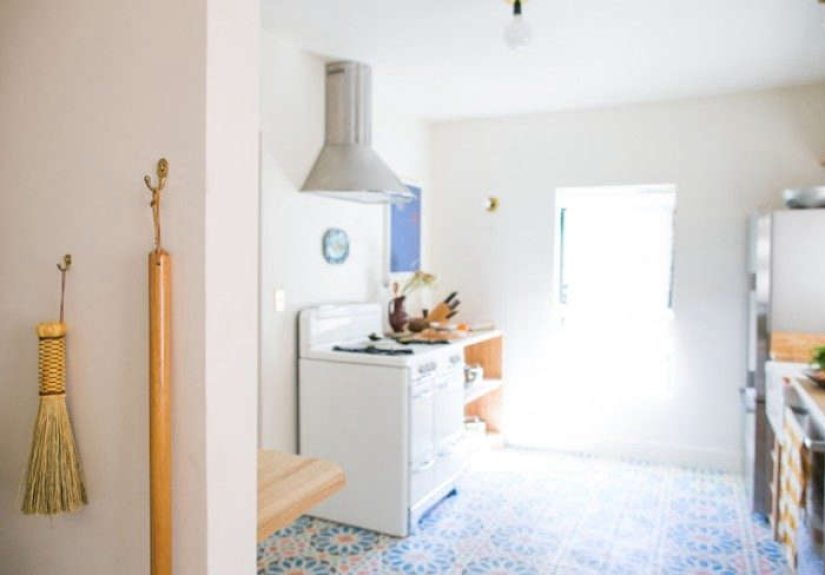
Kitchens are one of the best places to use Moroccan cement tile because they benefit from pattern and durability in equal measure. CT069 can transform a kitchen floor into the focal point of the room, especially when paired with simple cabinetry, warm wood, or painted millwork. It also works beautifully as a backsplash when you want something more character-rich than plain subway tile.
In kitchens, the secret is balance. Let the tile do the talking and keep the surrounding finishes a little calmer. White oak, creamy paint, unlacquered brass, matte black fixtures, and stone counters all pair well with a traditional Moroccan pattern.
Bathrooms
Bathrooms are practically made for this kind of tile. CT069 can turn a powder room into a jewel box or give a primary bath the feel of a boutique hotel. Use it on the floor for a stronger visual hit, or run it up a feature wall if you want a more immersive, decorative effect.
Because cement tile is porous, bathrooms require smart sealing and regular maintenance. That is not a deal-breaker, but it is a commitment. Think of it like owning a linen blazer: gorgeous, sophisticated, and not something you treat like a gym towel.
Entryways, Hallways, and Mudrooms
Few materials make a first impression like patterned cement tile. In an entryway, CT069 instantly announces that the house has personality. In a hallway, it can create rhythm and movement. In a mudroom, it adds style to a hardworking space that usually gets the design leftovers.
Patios and Outdoor Spaces
Many Moroccan cement tiles are suitable for indoor-outdoor applications, which is one reason designers love them. CT069 can add a resort-like feel to a patio, courtyard, or covered outdoor room. The matte surface often looks more natural outdoors than shinier materials.
That said, outdoor use depends on climate, sealing, and installation conditions. Cement tile is generally a much better fit in mild environments than in areas with harsh freeze-thaw cycles. Sun exposure, moisture management, and the type of sealer used all matter.
Traditional Moroccan Cement Tile vs. Ceramic or Porcelain
If you are comparing materials, here is the honest version. Cement tile usually wins on character. Ceramic and porcelain usually win on lower maintenance.
Choose cement tile like CT069 if you want:
Handmade variation
A soft matte finish
Deeper, more artisanal color
A custom, collected look
Choose porcelain if you want:
Less maintenance
Easier stain resistance
Lower installation sensitivity
A more uniform appearance
Neither option is universally better. The real question is what kind of homeowner you are. If you love materials that age, soften, and develop a bit of patina, cement tile is deeply satisfying. If you want a floor you never think about, porcelain may be more your speed.
Installation Tips That Matter More Than Pinterest
This is where many dreamy tile decisions meet reality. Traditional Moroccan Cement Tile – CT069 can look phenomenal, but only if it is installed properly. Cement tile is not the material to hand to someone who says, “Tile is tile, right?” That sentence has ended many beautiful plans.
What a Good Installer Will Do
A skilled installer will dry-lay the tiles first, blend pieces from multiple boxes to distribute variation, and confirm layout before setting anything permanently. They will also understand that cement tile should be sealed before grouting, because grout haze and staining are real risks with porous surfaces.
Grout color matters too. Very dark or highly staining grout can create unnecessary drama, and not the fun reality-TV kind. A test board or spare tile is worth the effort. So is choosing someone with actual cement tile experience rather than general confidence and a pickup truck.
Sealing Is Not Optional
Here is the big one: cement tile needs sealing. Usually that means sealing before grouting, then sealing again after grout cure, and resealing later depending on foot traffic and exposure. The exact schedule varies by product and sealer, but the principle does not. Skip sealing and you are basically inviting stains over for dinner.
Daily Care Is Simple, but Specific
Routine maintenance is easy once the tile is protected. Sweep or vacuum regularly to remove grit. Mop with a mild pH-neutral cleaner. Wipe up spills quickly, especially acidic ones like citrus, vinegar, tomato sauce, or wine. Avoid harsh chemicals and abrasive cleaners, which can dull the finish and shorten the life of the sealer.
How to Style CT069 in a Modern American Home
Use It Like a Rug
One of the smartest ways to use Traditional Moroccan Cement Tile – CT069 is as a “tile rug.” Frame the patterned field with border tiles or let it define a zone beneath a dining table, kitchen island, or entry bench. This technique gives you the visual richness of allover pattern without covering every inch of the room.
Pair It with Quiet Finishes
CT069 already brings energy, so the rest of the room does not need to audition for the same role. Pair it with plain cabinetry, limewash walls, simple stone, warm wood, or muted paint colors. The contrast makes the tile feel intentional rather than chaotic.
Repeat a Color, Not the Pattern
If the tile includes black, deep blue, terracotta, cream, or sage, echo one of those tones elsewhere in the room through textiles, art, cabinetry, or hardware. That creates cohesion without forcing the pattern to compete with more pattern. Your room should feel designed, not like a print shop had a sugar rush.
Pros and Cons of Traditional Moroccan Cement Tile – CT069
The Pros
CT069 delivers high visual impact, authentic handmade character, and timeless geometric style. It works across multiple room types and can elevate even simple architecture. It also suits homeowners who want a space to feel personal, layered, and a little less mass-produced.
The Cons
It requires sealing, thoughtful installation, and more care than ultra-low-maintenance materials. It can stain if neglected. It may develop patina. It often costs more upfront than basic ceramic options. In other words, it is not difficult, but it is not carefree either.
For many people, that trade-off is worth it. They are not buying tile just to fill a surface. They are buying atmosphere.
Final Verdict: Is Traditional Moroccan Cement Tile – CT069 Worth It?
Yes, if you want more than a functional finish. Traditional Moroccan Cement Tile – CT069 is worth considering when your goal is to create a room with character, warmth, and visual memory. It offers the kind of pattern that can make a kitchen feel soulful, a bathroom feel collected, and an entryway feel like an introduction rather than a hallway with shoes.
It is not the right tile for people who want zero maintenance and total uniformity. But for homeowners, designers, and renovators who appreciate craftsmanship, variation, and the beauty of a surface that looks alive, CT069 makes a compelling case. It is practical enough to use and beautiful enough to remember. That is a rare combination.
Experience Notes: What Living with Traditional Moroccan Cement Tile – CT069 Actually Feels Like
People are often drawn to CT069 because of the pattern, but what tends to keep them loyal is the atmosphere it creates after the install dust settles. A room with Moroccan cement tile does not just look different; it feels different. The matte finish softens the light in a way glossy tile never quite can. Morning sun does not bounce off it like a car dealership showroom. Instead, the color looks velvety and grounded, which gives the whole room a calmer, more settled mood.
In daily life, CT069 tends to become the feature guests notice first. Not in a loud, “look at me, I cost a fortune” way, but in a curious, “wait, what is that tile?” way. It starts conversations. People ask if it is old, handmade, imported, or original to the house. That alone says something important about the design value of the tile: it reads as meaningful. Even in a newer home, it can make the space feel as though it has a story.
Homeowners also tend to notice that this kind of tile changes slightly with use, and oddly enough, that is often part of the appeal. Cement tile is not a sterile material. It develops a lived-in quality. The surface can gain patina, the colors can deepen after sealing, and the room itself starts to feel more rooted. For people who love homes with personality, that evolution feels rewarding rather than inconvenient.
There are practical experiences too, of course. You become more aware of wiping spills quickly. You learn which cleaner to keep under the sink. You stop treating the floor like an indestructible sports court and start treating it like a crafted finish. But the routine is not dramatic. Once sealed and maintained properly, CT069 usually becomes part of the normal rhythm of the house: sweep, mop gently, reseal when needed, move on with life.
Design-wise, one of the nicest surprises is how flexible it feels over time. A kitchen with CT069 can shift from bohemian to classic to modern-rustic just by changing stools, lighting, paint, or hardware. The tile remains the anchor while the room evolves around it. That makes it easier to live with long-term than many trend-driven finishes that only make sense with one exact aesthetic.
There is also something deeply satisfying about the tactile honesty of cement tile. It does not pretend to be marble, wood, or something digitally printed to resemble “artisan vibes.” It is what it is: handmade, weighty, patterned, and just imperfect enough to feel human. In a world full of surfaces trying very hard to look expensive, CT069 often wins by looking authentic.
That authenticity shows up emotionally too. Spaces with Moroccan cement tile often feel more relaxed and welcoming. The pattern brings energy, but the matte texture keeps that energy from turning sharp or overwhelming. The room feels expressive without being exhausting. That is a difficult balance to hit, and CT069 does it well.
So the real experience of living with Traditional Moroccan Cement Tile – CT069 is not just about having a pretty floor or backsplash. It is about having a room that keeps giving back visually, season after season, long after the renovation adrenaline wears off. It becomes part surface, part mood, part identity. And honestly, that is a lot more fun than another forgettable gray rectangle pretending to be timeless.